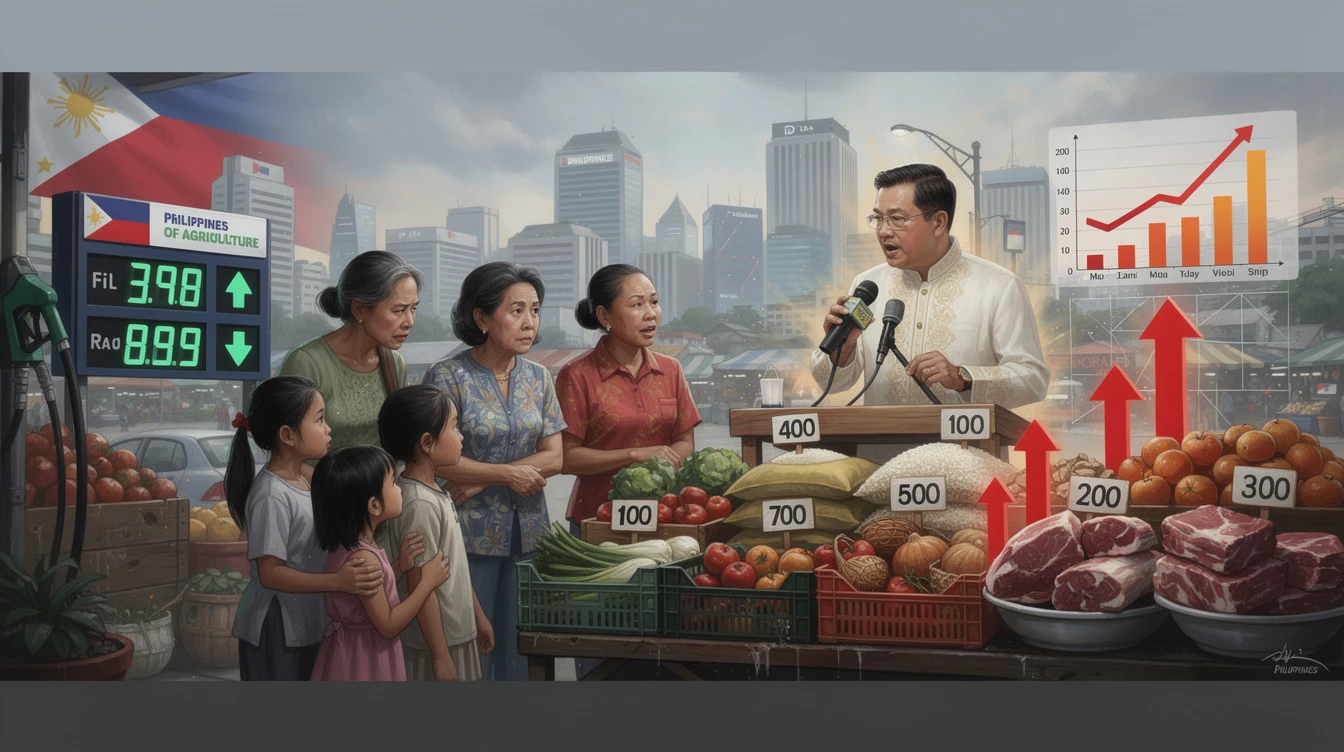
The Department of Agriculture (DA) stated Friday that expected oil price rollbacks next week will not significantly lower food prices for Filipino consumers, dampening hopes for immediate inflation relief.
DA officials explained that transportation costs are just one component in a complex food supply chain. Other factors like farmgate prices, trader margins, and weather disruptions have greater impact.
"While lower fuel costs help, they don't automatically mean cheaper vegetables or rice at the palengke," a DA spokesperson told PinoyPulse.com. "The effect takes time to filter through."
The announcement comes as Philippine inflation remains a top concern for President Ferdinand Marcos Jr.'s administration. Food prices have been particularly stubborn despite previous fuel price decreases.
Economists note that Filipino families spend over 40% of their budget on food. Even small price changes significantly impact household finances, especially for minimum wage earners.
The DA's warning suggests the government's economic managers face continued challenges in taming inflation. Recent typhoons and the El Niño phenomenon have further complicated the food supply situation.
"We monitor both farm production and logistics costs," the DA official added. "Right now, production challenges are offsetting any transport savings."
Market vendors in Divisoria confirmed the assessment, noting that wholesale prices from provinces haven't dropped. Many cited high farm input costs as the main driver of current retail prices.
The National Economic and Development Authority (NEDA) has previously emphasized the need for supply-side interventions. These include improving farm productivity and reducing post-harvest losses.
For overseas Filipino workers (OFWs), this means remittances will continue facing high purchasing pressure back home. Families dependent on padala may not see relief in their daily market expenses.
The DA statement aligns with Bangko Sentral ng Pilipinas projections of gradual inflation easing. Monetary policy alone cannot address supply chain bottlenecks affecting food prices.
Consumer groups expressed disappointment at the DA's assessment. They had hoped lower pump prices would quickly translate to cheaper basic goods.
"This shows we need more direct price interventions, not just reliance on oil market movements," a labor coalition representative stated.
The Department of Energy confirmed expected fuel price reductions next week. Diesel and gasoline prices are projected to drop by P1.50 to P2.00 per liter based on international trading.
However, the agriculture sector's heavy reliance on imported fertilizers remains a concern. Global fertilizer prices have not decreased in tandem with crude oil.
The DA continues implementing the Masagana Rice Program and other local production initiatives. These aim to reduce import dependency and stabilize domestic supply.
For ordinary Filipinos, the announcement means continued budget strain when buying fish, meat, and vegetables. The psychological impact of high food prices also affects consumer confidence.
This development is particularly significant for Philippine households still recovering from pandemic-era economic shocks. Food security remains a fundamental concern across income brackets.
The DA's transparent assessment helps manage public expectations about economic relief. It underscores the multidimensional nature of inflation facing the Philippine economy today.