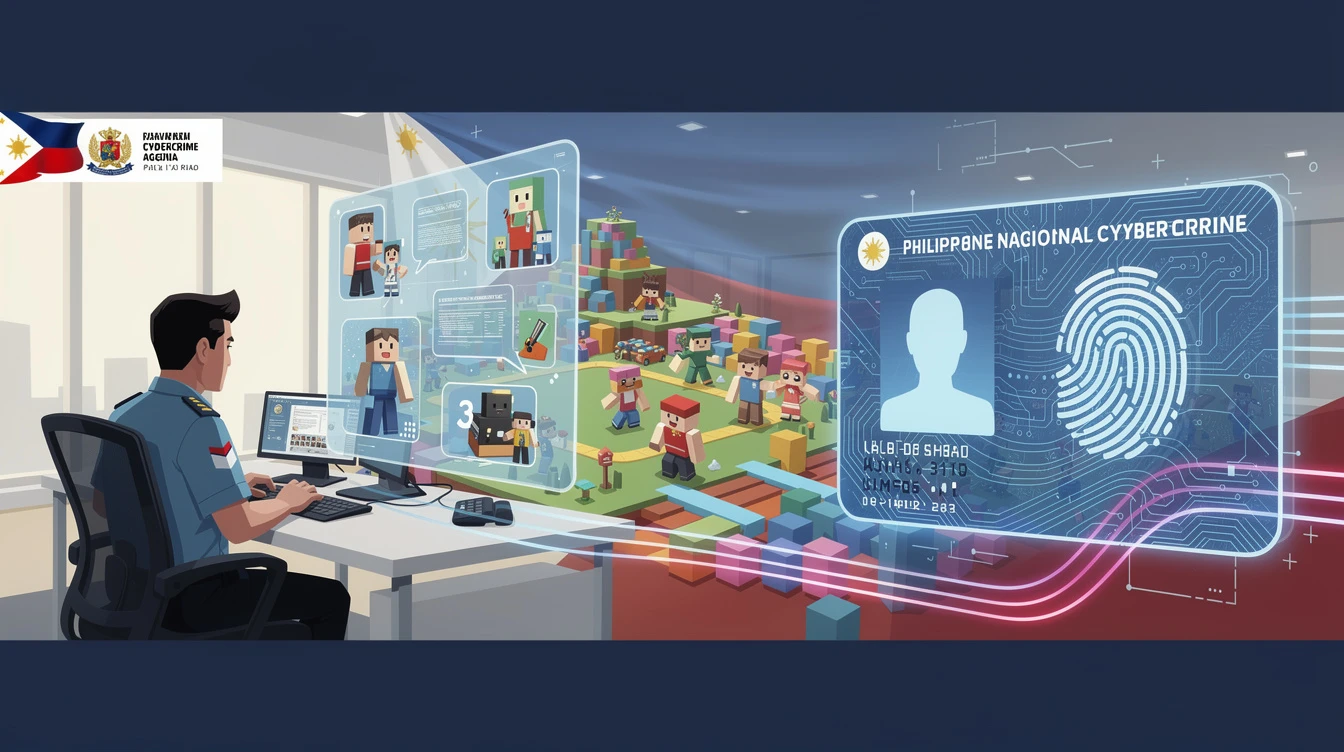
The Cybercrime Investigation and Coordinating Center (CICC) is formally urging global gaming platform Roblox to integrate the Philippine National ID System (PhilSys) into its user verification process to better protect children. CICC Executive Director Alexander Ramos stated the move aims to tighten age verification, citing current safeguards as insufficient for the platform's massive youth user base in the country.
"The safeguards of the platform are not enough to protect the youth," Ramos emphasized, highlighting specific concerns over Roblox's current reliance on facial recognition technology alone. The agency argues this method is weak and easily circumvented, potentially exposing minors to online risks.
CICC Undersecretary Angelo Tapales clarified that a ban on Roblox in the Philippines remains a final option. "It is entirely up to Roblox kung maba-ban sila o hindi," Tapales told GMA News Online. "It really depends on their commitment when they come here to the Philippines." The statement positions the National ID integration as a critical test of the platform's dedication to local user safety.
In response to inquiries, Roblox provided a statement to GMA News Online affirming its commitment to user safety. The company said it was "committed to maintaining the safety of its users within the platform," though it did not directly address the CICC's specific proposal regarding the PhilSys integration.
The push for PhilSys linkage represents a significant escalation in Philippine authorities' efforts to regulate digital spaces popular with children. With millions of young Filipinos active on Roblox, the government is seeking enforceable age gates to prevent exposure to inappropriate content and potential predators.
Integrating with the National ID system would create a direct, government-verified method to confirm a user's age and identity. This contrasts with Roblox's current system, which critics say can be fooled. The CICC's initiative signals a new phase of proactive cyber-policy enforcement aimed at global tech firms operating in the local market.
For Filipino families, especially parents of gamers and Overseas Filipino Workers (OFWs) with children back home, the outcome of this push is crucial. A stronger verification system could provide peace of mind, knowing their children's online interactions are better guarded by a reliable identity check.
The Philippine angle is central, as the CICC is leveraging a domestically developed system—the PhilSys—to solve a global platform's local safety gap. This sets a potential precedent for how other popular social and gaming apps might be regulated in the country, prioritizing national tools for digital governance.
This development matters profoundly to Filipino readers because it directly impacts household digital safety. It showcases the government attempting to hold a foreign tech giant accountable to Philippine standards, using a homegrown identification system to protect its most vulnerable citizens online.