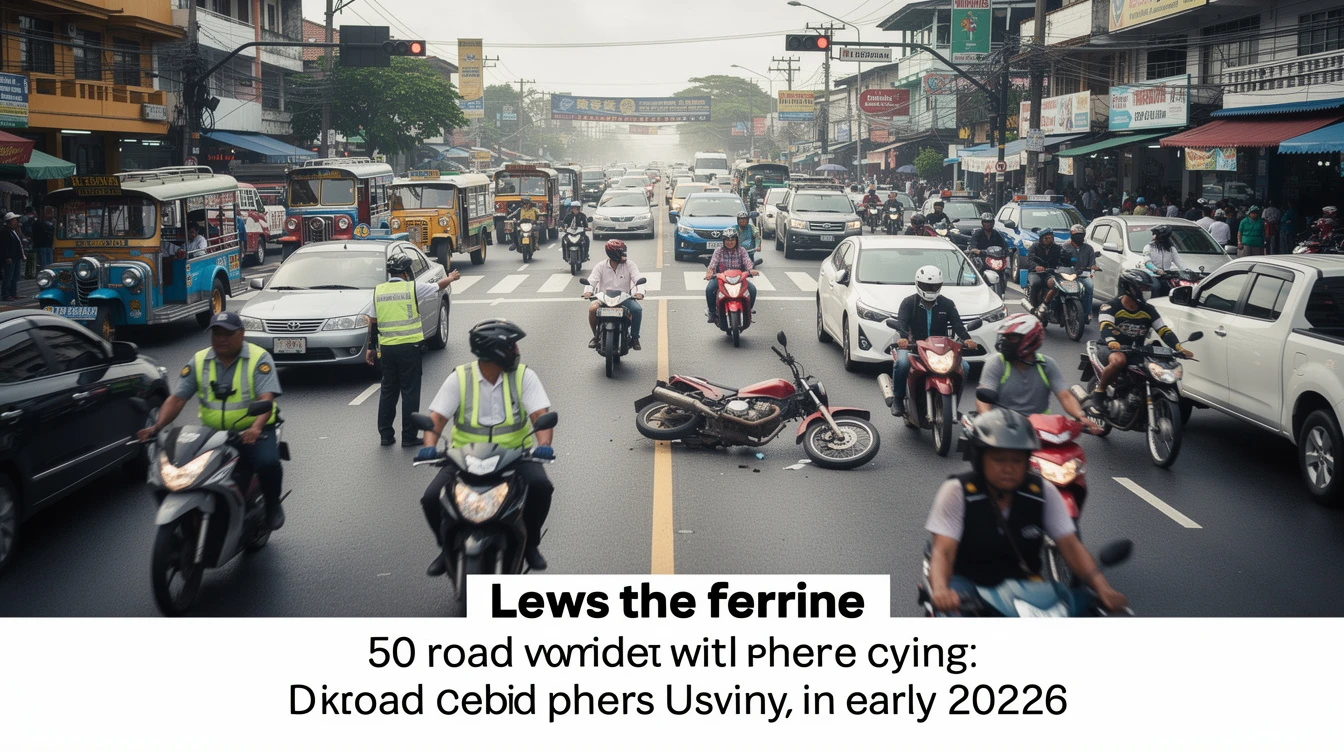
Cebu City has recorded 50 road accidents since the start of 2026, according to local traffic authorities monitoring the first weeks of the new year.
The figure emerges as the city prepares for Holy Week 2026, a period that saw 87 traffic incidents during the previous observance.
Authorities confirmed two separate vehicular collisions were recorded at the end of 2025 and the start of 2026.
Historical data reveals a deep-seated problem, with Cebu logging 15,218 vehicular accidents from January 2017 to March 2018 alone.
Almost 40% of those past incidents involved motorcycles, highlighting a persistent and deadly trend on Philippine roads.
"The data from the first part of 2026 is a continuation of a worrying pattern we have tracked for years," a Cebu City Traffic Office spokesperson stated.
The concentration of incidents in urban centers like Cebu mirrors national statistics from the Philippine Statistics Authority.
Road crashes consistently rank among the top causes of death and injury for Filipinos of working age.
For the millions of Filipino families who rely on motorcycles for daily transport and livelihood, the 40% involvement rate is a direct economic and safety threat.
The upcoming Holy Week, a major travel period for Filipino families, puts the issue in sharp focus.
Last year's 87 incidents during the religious holiday underscore the heightened risk during peak mobility seasons.
Traffic management along key arteries like Governor M. Cuenco Avenue is under increased scrutiny.
Authorities are urging drivers, especially motorcycle riders, to exercise extreme caution.
"Every accident represents a family tragedy, a loss of income, and a strain on our healthcare system," the traffic official added.
The early 2026 data serves as a critical benchmark for the effectiveness of new road safety campaigns.
Nationwide, the government's road safety program faces its first major test of the year during the Lenten exodus.
For overseas Filipino workers (OFWs), road safety at home remains a paramount concern for their families left behind.
Remittances often fund motorcycle purchases, making safe driving education a direct investment in OFW family welfare.
The economic cost of these accidents is staggering, impacting productivity and household stability.
Preventable road trauma drains resources from local government units and national health insurance funds.
Cebu's experience is a microcosm of the national transportation challenge facing the Marcos administration.
Infrastructure development must be paired with stringent enforcement and driver education to curb the trend.
The link between urban planning, public transport gaps, and reliance on risky vehicles like motorcycles is clear.
As Filipinos prepare for holiday travel, the 50 accidents in Cebu are a sobering reminder of the journey ahead.
The significance for Filipino readers is profound and multifaceted.
Road safety is not just a traffic statistic; it is a daily matter of life and death for millions of commuters, drivers, and pedestrians.
The high involvement of motorcycles, a crucial mode of transport for the working class and delivery economy, threatens household incomes.
For OFW families, ensuring loved ones are safe on the road is a constant worry that transcends borders.
This data demands a collective response from citizens, policymakers, and enforcers to protect every Filipino on the move.