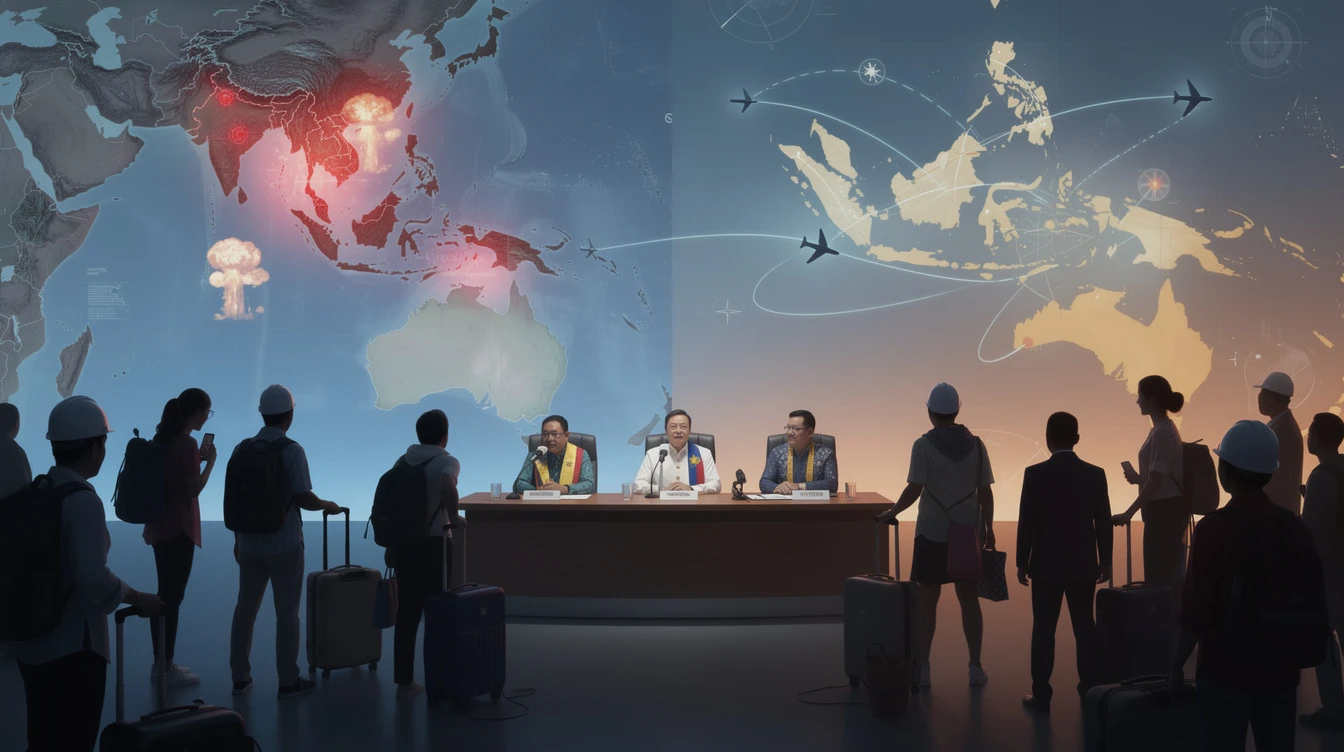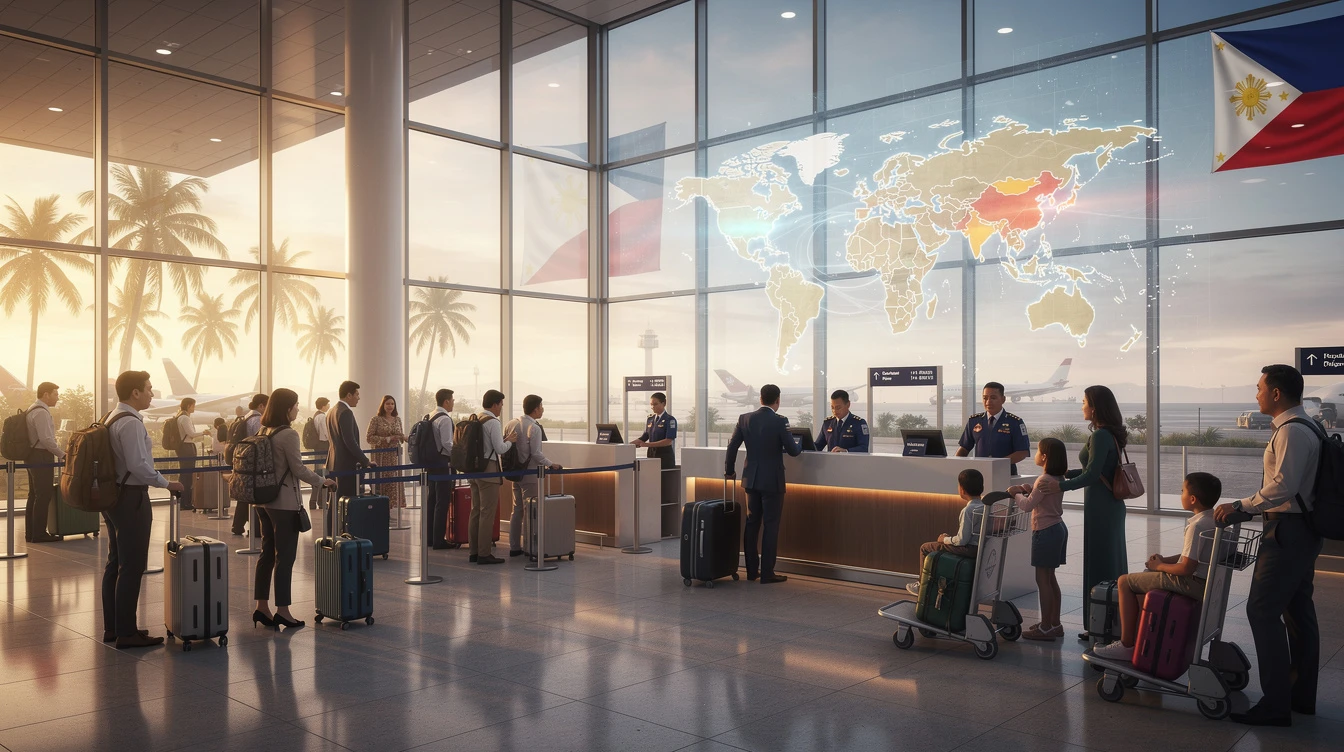
The Bureau of Immigration (BI) on Wednesday expressed optimism that the high volume of international passengers at Philippine airports will be sustained in the coming weeks despite escalating tensions in the Middle East. Commissioner Norman Tansingco stated the agency is preparing for continued travel activity through the peak summer season.
"We are still expecting a high volume of travelers," Tansingco said, noting that the BI has not yet observed a significant drop in passenger numbers. The statement comes as global aviation faces major disruptions from the conflict, affecting key air routes and oil prices worldwide.
Industry analysts warn that the combination of longer flight paths to avoid conflict zones and higher fuel costs is pushing airlines to raise fares globally. This development directly impacts Filipino travelers and the millions of Overseas Filipino Workers (OFWs) whose families depend on affordable air travel.
Henry Harteveldt, president of Atmosphere Research Group, confirmed that rerouting and fuel costs are primary factors when airlines decide to cancel flights or adjust pricing. For the Philippines, a nation with over 10 million citizens living and working abroad, any airfare increase creates immediate financial pressure on families.
The Philippine context is particularly sensitive because many OFWs are employed in Middle Eastern countries like Saudi Arabia, UAE, and Qatar. While these destinations aren't directly in conflict zones, flight paths between Asia and Europe often traverse affected airspace, potentially lengthening travel time and cost.
Commissioner Tansingco emphasized that the BI's primary role is to ensure efficient processing at immigration counters regardless of external factors. "Our personnel are ready to handle the expected influx," he assured, referencing the upcoming summer vacation period when travel traditionally peaks.
However, the Department of Foreign Affairs (DFA) maintains alert levels for several Middle Eastern countries, advising Filipinos to exercise caution. This creates a complex scenario where government agencies balance travel facilitation with citizen safety concerns.
Aviation experts note that Philippine carriers like Philippine Airlines and Cebu Pacific may face operational challenges if the conflict persists. Longer routes mean increased fuel consumption and potential schedule disruptions that could ripple through the entire travel ecosystem.
The timing is especially crucial as the Philippines approaches Holy Week and summer school breaks, typically peak travel periods for both overseas workers returning home and Filipino families going on vacation. Any significant fare increase could dampen these traditional travel patterns.
For OFW families, the situation presents difficult choices between reuniting with loved ones and managing household budgets. Remittances, which reached $33.5 billion in 2023, could be affected if more money must be allocated to travel costs rather than household expenses.
The BI's optimistic projection contrasts with global travel advisories suggesting caution. This disparity highlights the Philippine government's challenge in supporting its crucial overseas employment sector while acknowledging geopolitical realities that affect transportation logistics.
Tourism stakeholders are watching developments closely, as the Philippines aims to attract more international visitors. Any perception of travel instability or increased costs could impact the country's recovery in the vital tourism industry.
Ultimately, the Bureau of Immigration's preparedness reflects institutional confidence in continued mobility. But for ordinary Filipinos, the real test will be whether they can afford to maintain their transnational connections as global conflicts reshape the economics of air travel.