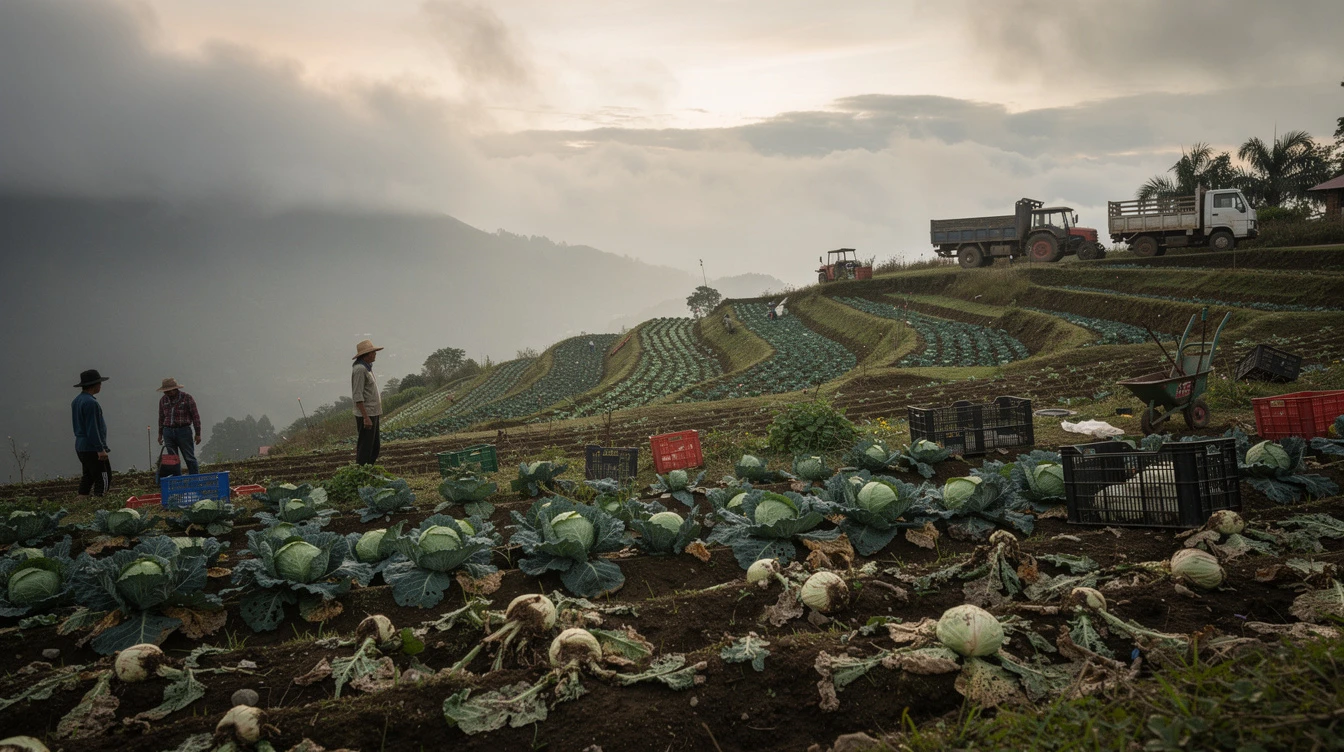
Farmers in Benguet, the Philippines' vegetable heartland, are abandoning their harvests, leaving crops like cabbage to rot in fields as surging fuel prices render harvesting and transport financially ruinous. The crisis, driven by Middle East conflict-induced oil price hikes, has collapsed farmgate prices while production costs have skyrocketed, creating impossible economics for growers.
According to reports, it now costs farmers 30 US cents to produce one kilogram of cabbage, which sells for as little as 5 cents at the farmgate. This massive loss per kilogram forces growers to choose between increasing their debt by harvesting or cutting losses by letting produce spoil.
"If we harvest it, our losses only increase because of labour, transportation and packing costs," explained Benguet farmer Romeo Wagayan, who represents hundreds facing the same dire choice. The situation has been exacerbated by buyers pulling out due to weak market demand and the unsustainable surge in logistics expenses.
The Philippine Statistics Authority recently reported continued high inflation in transport costs, directly impacting agricultural logistics. This price squeeze occurs while the country grapples with ensuring food security and stable prices for consumers under the Marcos administration's food affordability agenda.
Farmers in major producing towns like Atok are halting harvests entirely. The oversupply, combined with crippling transport costs from the highland province to lowland markets, has created a perfect storm. This waste comes amid ongoing government efforts to modernize agricultural supply chains and stabilize vegetable prices.
Industry groups have long warned about the vulnerability of Benguet's vegetable sector to fuel price shocks. The region supplies a significant portion of Metro Manila's vegetable needs, meaning the crisis could eventually impact urban market supplies and prices if it persists and reduces future planting.
The Department of Agriculture has monitoring mechanisms for farmgate prices, but immediate intervention for fuel-dependent harvest logistics remains a challenge. This crisis underscores the urgent need for localized cold storage and processing to prevent similar waste during price crashes.
For Filipino consumers and policymakers, the rotting vegetables in Benguet are a stark warning. They reveal how global oil price volatility, transmitted through transport costs, can directly devastate local food producers and threaten the stability of the national food supply chain, demanding more resilient agricultural support systems.