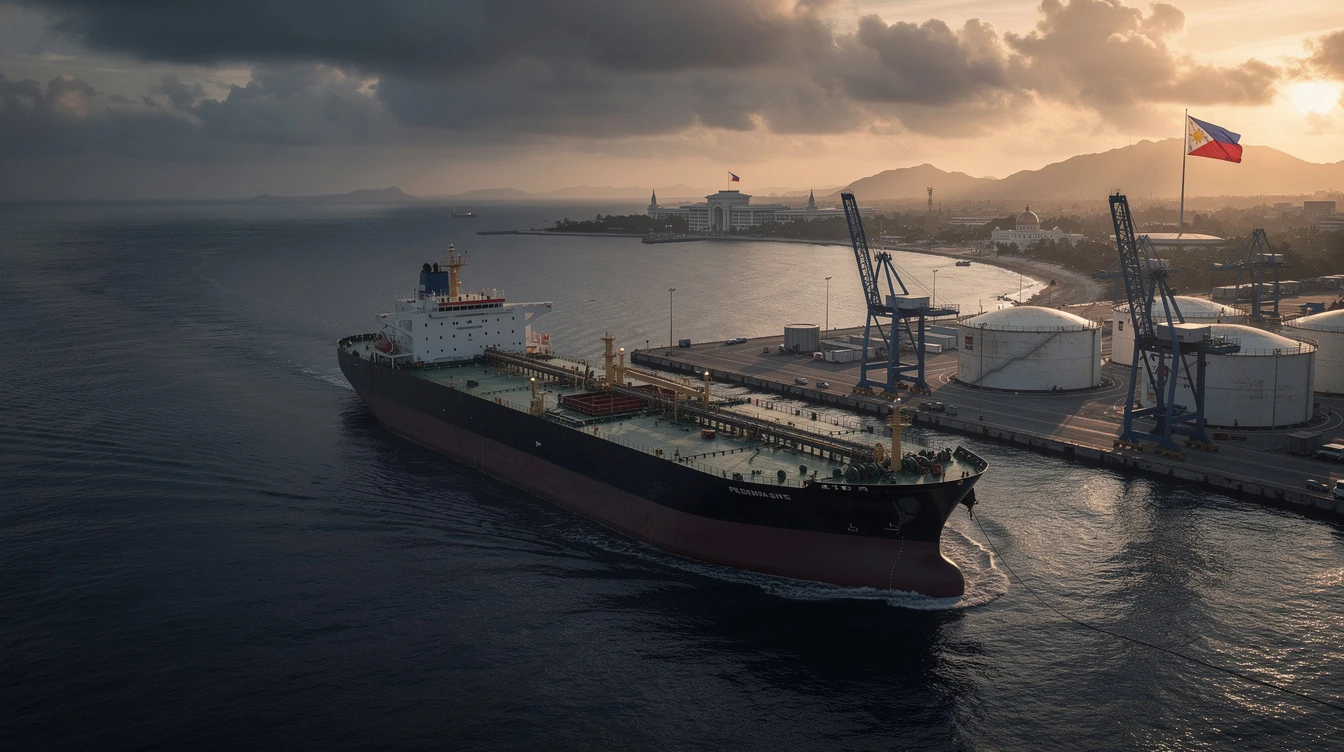
MANILA, Philippines — The Marcos administration received its first government-procured diesel shipment on Thursday, March 26, marking a state-led intervention to stabilize fuel supplies as global oil markets remain volatile.
First Diesel Shipment Arrives in Manila
The Department of Energy (DOE) confirmed the arrival of approximately 22.58 million liters (142,000 barrels) of diesel at Philippine ports, representing the first batch of a broader initiative to secure additional fuel supply. Energy Secretary Sharon Garin said the shipment is part of a plan to procure up to 2 million barrels of diesel.
142,000 Barrels: A Drop in the Bucket
While 142,000 barrels may seem substantial, it represents less than a single day's national consumption. The Philippines consumed 184.5 million barrels of petroleum products in 2024, averaging roughly 505,000 barrels daily across all fuel types. The newly arrived diesel shipment covers less than 0.3% of annual demand.
DOE Eyes 1 Million Barrel Diesel Contract
According to the DOE, authorities have secured supply contracts for 1 million barrels of diesel, equivalent to approximately five days of national consumption. Finance Secretary Ralph Recto separately announced that an additional 1.04 million barrels of diesel are expected to arrive next week, providing further buffer to the country's fuel inventory.
Current Inventory Levels Raise Red Flags
Data from the DOE showed the country's average fuel inventory stood at 45 days as of March 20. However, this national average masks critical disparities across fuel types, with certain products sitting dangerously below safe thresholds.
Jet Fuel and LPG Inventory Critically Low
The breakdown reveals stark vulnerabilities in the energy supply chain: kerosene reserves stand at 97 days, fuel oil at 61 days, and gasoline at 53 days. In contrast, jet fuel inventory covers only 38 days, while LPG sits at a mere 23 days—well below the recommended 30-day strategic reserve for import-dependent nations.
Philippines Remains Net Oil Importer
The Philippines produces minimal crude oil domestically and relies heavily on imports, primarily from the Middle East. This dependence exposes the country to geopolitical disruptions affecting key shipping routes, including tensions involving Iran's restrictions on the Strait of Hormuz, a critical chokepoint for global oil transportation.
Russia Returns to Philippine Energy Market
In a notable development, the country received its first Russian-sourced fuel supply in five years, with shipments arriving in Bataan. The delivery came after the United States temporarily eased sanctions on Russian oil exports, creating a brief window for procurement.
Energy Independence Remains Elusive
Despite these procurement efforts, energy security analysts caution that short-term supply additions cannot substitute for long-term structural solutions. The Philippines continues to explore domestic production from the Malampaya gas field while seeking new exploration partnerships to reduce import dependency.
President Ferdinand Marcos Jr. earlier indicated that VAT removal on fuel and potential reversals of oil deregulation policies remain under consideration as the government balances consumer protection with fiscal sustainability.