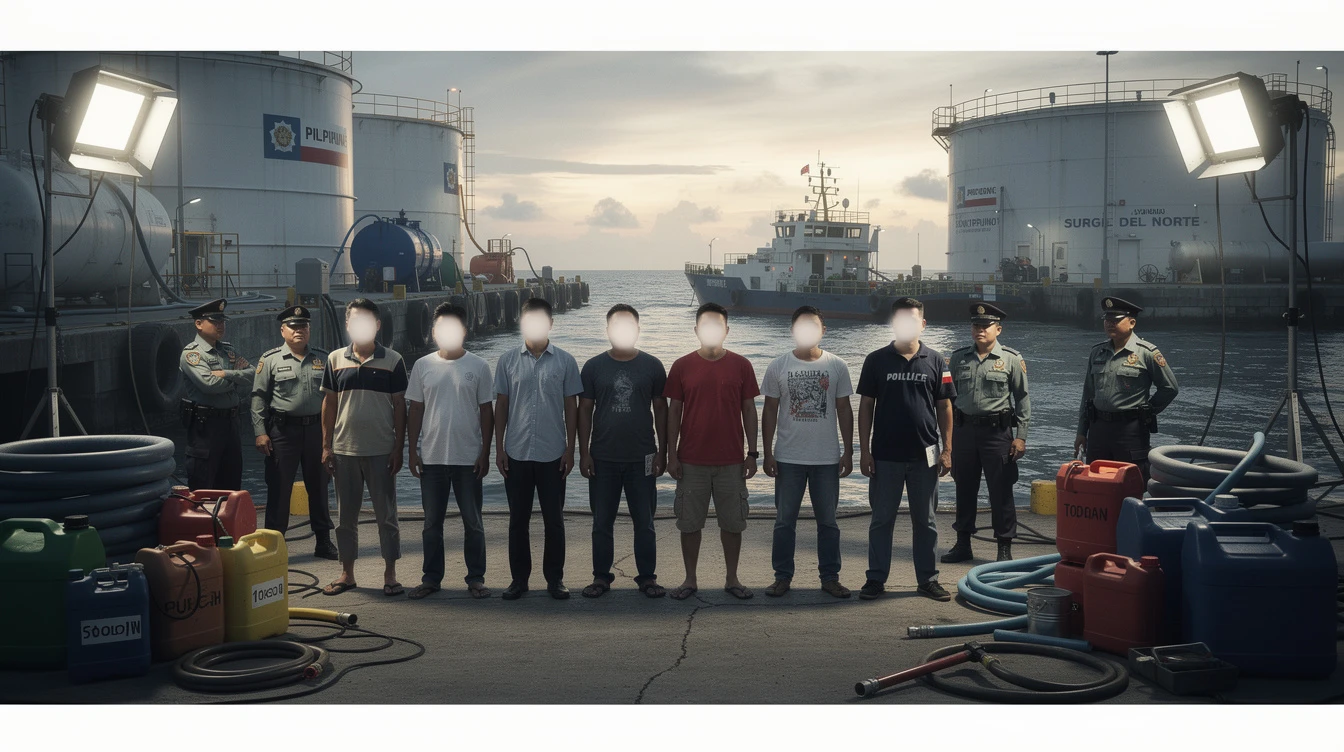
Philippine authorities arrested ten men and seized a trailer tanker containing an estimated 20,000 liters of suspected stolen diesel in a major anti-pilferage operation in Surigao del Norte on Thursday, targeting the illegal practice locally known as "Paihi."
The joint operation by the Philippine National Police (PNP) and the Philippine Drug Enforcement Agency (PDEA) stemmed from intelligence reports about the organized theft and diversion of petroleum products in the Caraga region.
"This is a significant blow to a syndicate engaged in 'Paihi,' which deprives the government of rightful revenues and harms legitimate businesses," said a PNP Caraga regional spokesperson in a statement.
The term "Paihi" refers to the clandestine siphoning of fuel, often from pipelines, storage facilities, or during transport, for illegal resale on the black market.
Such thefts have long plagued the Philippine energy sector, causing millions in losses for oil companies and the national treasury through unpaid taxes.
The seized trailer tanker, found in the suspects' possession, is now under custody as evidence for the filing of charges for theft and violation of the Anti-Fencing Law.
Authorities are investigating if the stolen diesel was intended for local sale or for transport to other regions, given Surigao's strategic coastal location.
Fuel pilferage operations often involve collusion with drivers or personnel, making systemic enforcement a persistent challenge for law enforcement agencies nationwide.
For Filipino consumers, oil theft can indirectly contribute to price volatility and supply issues, as losses are sometimes factored into the operational costs of companies.
The Bureau of Customs and the Bureau of Internal Revenue have also been alerted to probe potential tax evasion linked to the illegal fuel trade uncovered in the operation.
This arrest is part of a broader government crackdown on economic sabotage, which includes smuggling and large-scale theft of commodities like petroleum and agricultural products.
Energy officials have previously warned that 'Paihi' and similar schemes undermine the country's energy security and market stability, especially during global price shocks.
The successful operation in Surigao del Norte demonstrates improved inter-agency coordination, a key priority under the current administration's peace and order agenda.
For the average Filipino family, particularly those reliant on transport or fishing in regions like Caraga, a stable and fairly priced fuel supply is crucial for daily livelihood.
Illegal fuel sales may offer temporarily cheaper prices but come with risks, including substandard quality that can damage engines and vehicles over time.
The PNP has called on the public to report suspicious activities involving the transport or storage of petroleum products to help curb this form of economic crime.
This case matters deeply to the Philippines as it strikes at the heart of resource security and law enforcement. Fuel pilferage is not a victimless crime; it drains public coffers, distorts the market, and ultimately burdens legitimate taxpayers and consumers. For a nation grappling with high inflation and energy costs, curbing such illegal activities is essential for economic stability and fair pricing. The arrest sends a clear message that coordinated efforts are underway to protect a critical sector, ensuring that every liter of fuel contributes to the nation's development, not to the pockets of criminal syndicates.