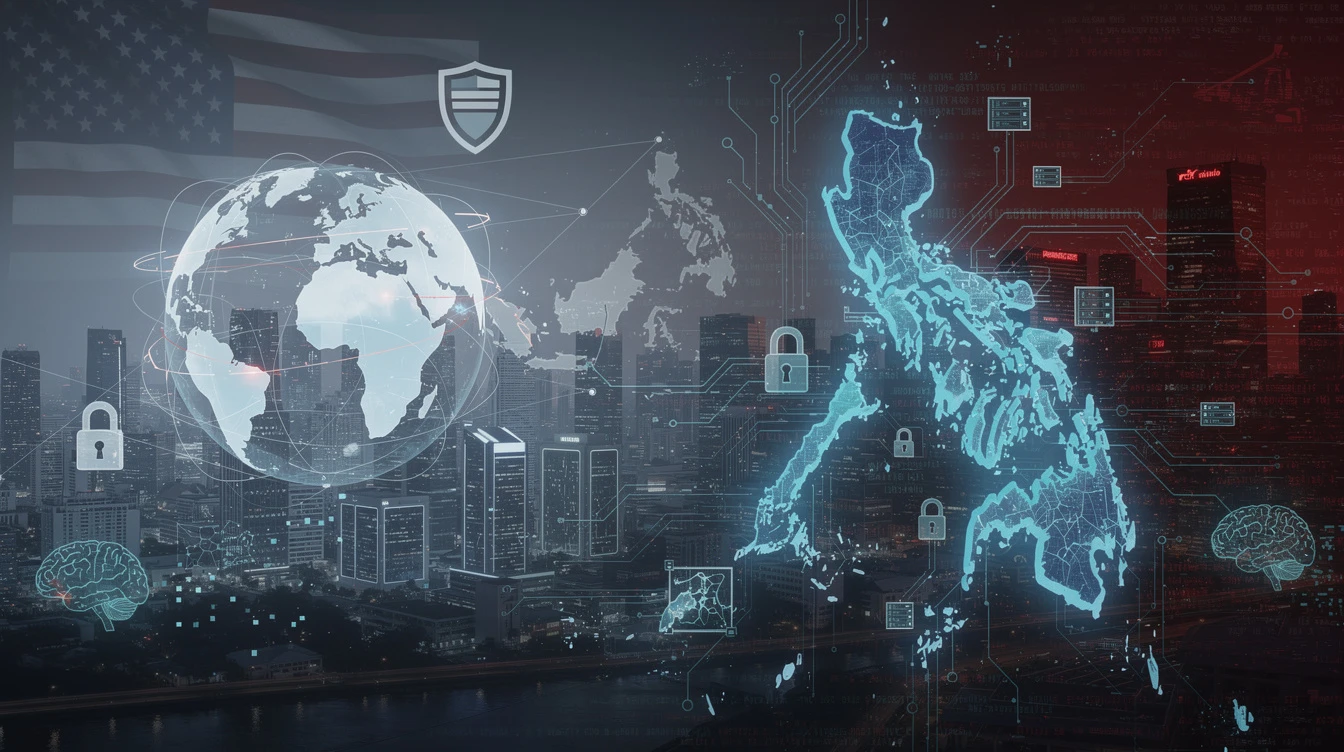
The US State Department has ordered a global warning about alleged artificial intelligence theft by Chinese firms, including DeepSeek , stirring a new chapter in the tech cold war. For the Philippines , a nation increasingly dependent on AI-powered services, this development raises urgent questions about data security, economic ties, and national sovereignty.
According to a recent Reuters report, the warning was issued on April 24, 2026, targeting what the US claims are systematic attempts by Chinese companies to steal proprietary AI models and use them for their own training. The move comes after OpenAI earlier accused DeepSeek of "distilling" US models to gain an advantage.
Warns
The State Department’s directive is not a quiet diplomatic note. It is a public, global alert designed to warn allies and partners about the alleged intellectual property theft. The warning specifically names DeepSeek and other unnamed Chinese firms.
The allegation centers on a practice known as "model distillation" or "knowledge distillation," where a smaller model is trained to mimic a larger, more advanced one. In February 2026, OpenAI told US lawmakers that DeepSeek was targeting US companies to replicate their models for Chinese military or commercial use.
This is not an isolated accusation. The US has long raised concerns about China’s industrial espionage in fields like semiconductors and AI . The new warning escalates that rhetoric into a concrete diplomatic action.
World
DeepSeek, a Chinese startup, gained global attention for its advanced AI models that rival US counterparts. But the company now faces serious allegations. The Reuters report cites internal documents and US intelligence suggesting that DeepSeek accessed proprietary data from US firms.
The company has denied the allegations, calling them baseless. However, the US State Department has instructed its embassies worldwide to brief host governments about the risks. This is a significant step that could affect international partnerships.
For the Philippines , which has growing tech ties with both the US and China, this warning creates a diplomatic tightrope. The Philippine government must balance its alliance with Washington and its economic interests with Beijing.
The Philippines is a major hub for Business Process Outsourcing (BPO) and digital services. Many Filipino companies use AI tools from both American and Chinese providers. A technology war could disrupt these supply chains.
If Chinese AI models are indeed compromised, local businesses that rely on them could face vulnerabilities. Data privacy is a growing concern, especially with the National Privacy Commission (NPC) enforcing strict rules.
Moreover, the Philippine government’s digitalization push, including projects in e-governance and fintech, relies on AI. Any tainted software could expose citizen data. The US warning serves as a reminder to audit technology sources.
According to an analysis by the Straits Times , the US action reflects a broader strategy to protect its tech leadership. For the Philippines, this means reassessing partnerships, particularly in defense AI and critical infrastructure .
Cybersecurity experts in Manila have urged caution. John Paul Vergara , a cybersecurity consultant, told PinoyPulse that the warning should not be taken lightly. "If AI models from China are found to be stealing intellectual property, your business data could be siphoned off," he said.
However, not everyone agrees with the alarm. Some analysts argue that the US warning is part of a geopolitical chess match. Dr. Maria Santos , a tech policy researcher, noted that "the Philippines must not pick sides hastily. We need independent verification."
The Tech Coalition in the Philippines is calling for the government to convene a task force to evaluate the risks. They recommend that all government AI procurements undergo third-party audits.
The US warning has already had ripple effects. Stock prices of some Chinese AI firms dipped after the news. The European Union is reportedly reviewing its AI supply chains.
The warning also complicates the United Nations’ efforts to establish global AI norms. Both the US and China are pushing for a rules-based order, but their visions are increasingly at odds.
For Filipino consumers, the immediate impact may be subtle. But as AI becomes embedded in banking, healthcare, and education, the security of these systems becomes paramount. This warning is a wake-up call.
The situation is fluid. The US State Department has not released specific evidence publicly, citing classified sources. However, they have promised to share details with allies.
China’s foreign ministry has condemned the warning, calling it a smear campaign. The Chinese government has long accused the US of "technological suppression."
In the coming months, the Philippine Congress may hold hearings on the matter. The Cybercrime Investigation and Coordinating Center (CICC) is likely to issue guidance.
Ultimately, the Philippines must chart its own course. The country cannot afford to be caught in the crossfire. A balanced approach that safeguards national interests while fostering innovation is essential.
China
As the global AI race accelerates, the warning from Washington is a stark reminder: technology is no longer just about convenience; it is about power. And the Philippines must ensure its digital future is secure from all threats.
The US State Department’s global warning about alleged Chinese AI thefts marks a critical turning point in international tech relations. For the Philippines, it underscores the urgent need to strengthen cybersecurity protocols and diversify technology partnerships. The days of trusting black-box AI are over. Transparency and due diligence must become the new standard.