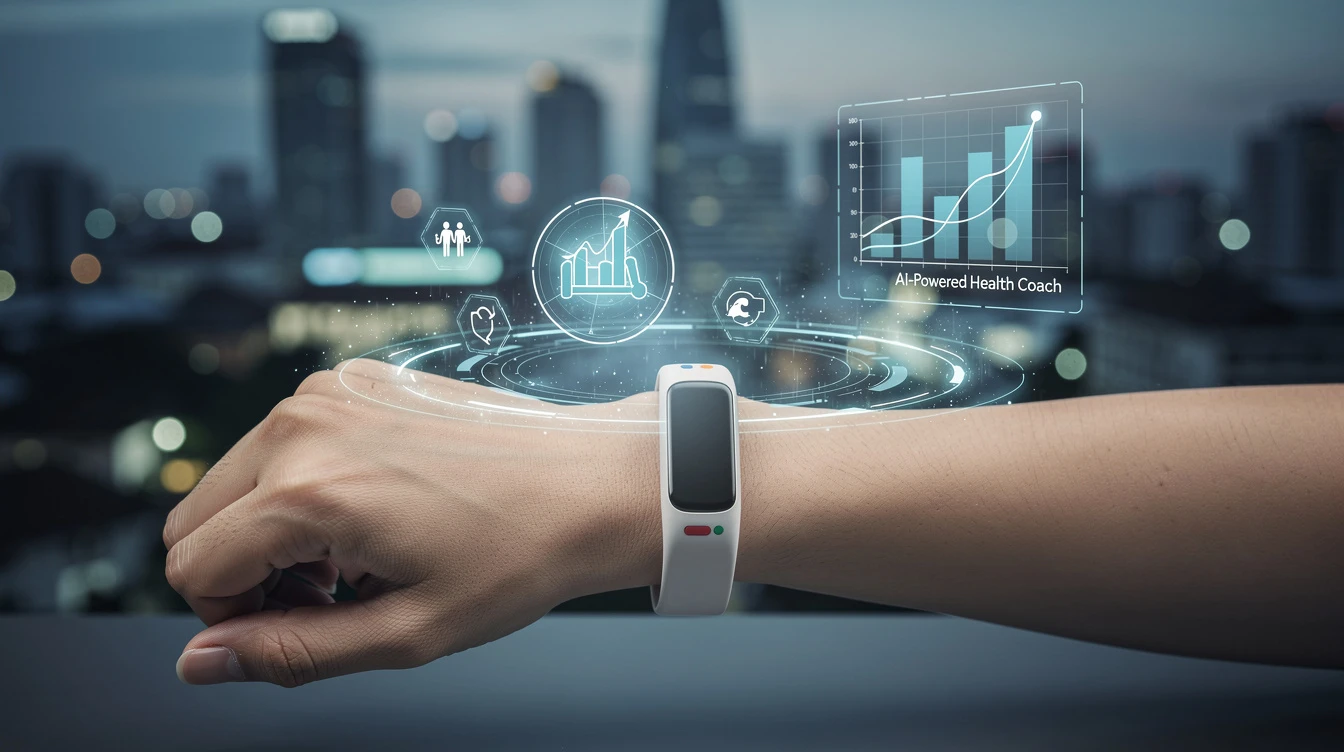
Google has officially unveiled the Fitbit Air , a screenless fitness tracker priced at $99, marking a significant shift in the company's wearable strategy five years after acquiring the Fitbit brand. Pre-orders opened on April 23, 2026, and the device will ship starting May 26, 2026. The tracker strips away the AMOLED displays and notification features of previous Fitbit models in favor of a minimalist, pebble-like design that passively collects health and fitness data around the clock.
Fitbit Air Price and pre-order details
The Fitbit Air is priced at $99.99 in the United States, according to Google's official announcement and multiple tech outlets. The base package includes the tracker, a Performance Loop band, a new pill-shaped USB-C magnetic charger, and a three-month free trial of Google Health Premium, the rebranded subscription service that was formerly Fitbit Premium. Customers who pre-order before May 25 will receive $35 in Google Store credit, effectively covering the cost of an additional band.
The device is available for pre-order now through the Google Store and select retailers. Google confirmed that the Fitbit Air works with both iOS and Android devices via the new Google Health app, making it a cross-platform fitness tracker from launch.
Screenless design and battery life
The Fitbit Air abandons the traditional display found on earlier Fitbit models. Instead, it uses a compact, lightweight form factor designed to be worn continuously without the distraction of notifications or screen interactions. Google says the device offers a week-long battery life, a significant improvement over earlier Fitbit Charge models that typically lasted five to seven days with a screen.
The tracker is available in multiple band options, including a Special Edition Performance Loop band co-designed with NBA star Stephen Curry . That band comes in rye brown with an orange accent. Standard bands come in colors including lavender and black.
Google Health app replaces Fitbit app
With the launch of the Fitbit Air, Google is retiring the Fitbit app entirely. All Fitbit users will transition to the new Google Health app, which serves as the central hub for all fitness and health data from the Air and future Google wearable devices. The app is available for download on both iOS and Android.
Google Health Premium, the paid subscription tier, costs $9.99 per month or $79.99 per year. Subscribers get access to deeper analytics, personalized workout plans, and the new Gemini-powered Health Coach.
Gemini AI Health Coach
The centerpiece of the Google Health app is the Health Coach , powered by Google's Gemini generative AI system. Similar to features found in competitors like Oura and Whoop, the Health Coach translates raw fitness data from the Fitbit Air into actionable advice. The AI analyzes sleep patterns, activity levels, heart rate variability, and other metrics to generate personalized recommendations.
Google says the Health Coach can answer natural language questions such as "How did I sleep last night?" or "What should I do to improve my recovery today?" The feature requires a Google Health Premium subscription.
"The Fitbit Air with Google Health Coach represents a new chapter for wearables, moving from tracking data to understanding it," said Rishi Chandra, Google's vice president of devices and services, in a blog post announcing the device.
Why Google went screenless
Industry analysts have noted that the screenless design aligns the Fitbit Air with the growing "always-on" wellness tracker segment dominated by brands such as Oura and Whoop. These devices prioritize continuous data collection and battery life over screen interaction, appealing to users who want minimal distraction during workouts and sleep.
Tech reviewers from Android Central described the Fitbit Air as "the screenless fitness band we've been waiting for," emphasizing its cross-platform compatibility and long battery life as key selling points. The device does not display notifications, calls, or messages, which Google says allows users to stay focused on their health goals without digital interruptions.
Fitbit brand transition and consumer impact
The rebranding of the Fitbit app to Google Health marks the symbolic end of the Fitbit brand as consumers knew it. Google acquired Fitbit in 2021 for $2.1 billion, and the Fitbit Air is the first device to launch without the familiar Fitbit branding on the companion app. Existing Fitbit users will be migrated to the Google Health app, though Google has said that all current Fitbit devices will continue to work with the new app for the foreseeable future.
For existing Fitbit owners, the transition means adapting to a new app interface and, for those who want the new AI features, a paid subscription. The Fitbit Air itself is a new product line, not a replacement for existing models like the Charge 6 or Versa 4, which remain available with screens.
Forward-looking statement
Google has not yet announced availability of the Fitbit Air in markets outside the United States, including the Philippines. The company said it will share international release plans in the coming months. With the May 26 launch date approaching, the screenless Fitbit Air signals Google's intent to compete directly in the minimalist health tracker space, betting that users will trade screens for simplicity and AI-powered insights.