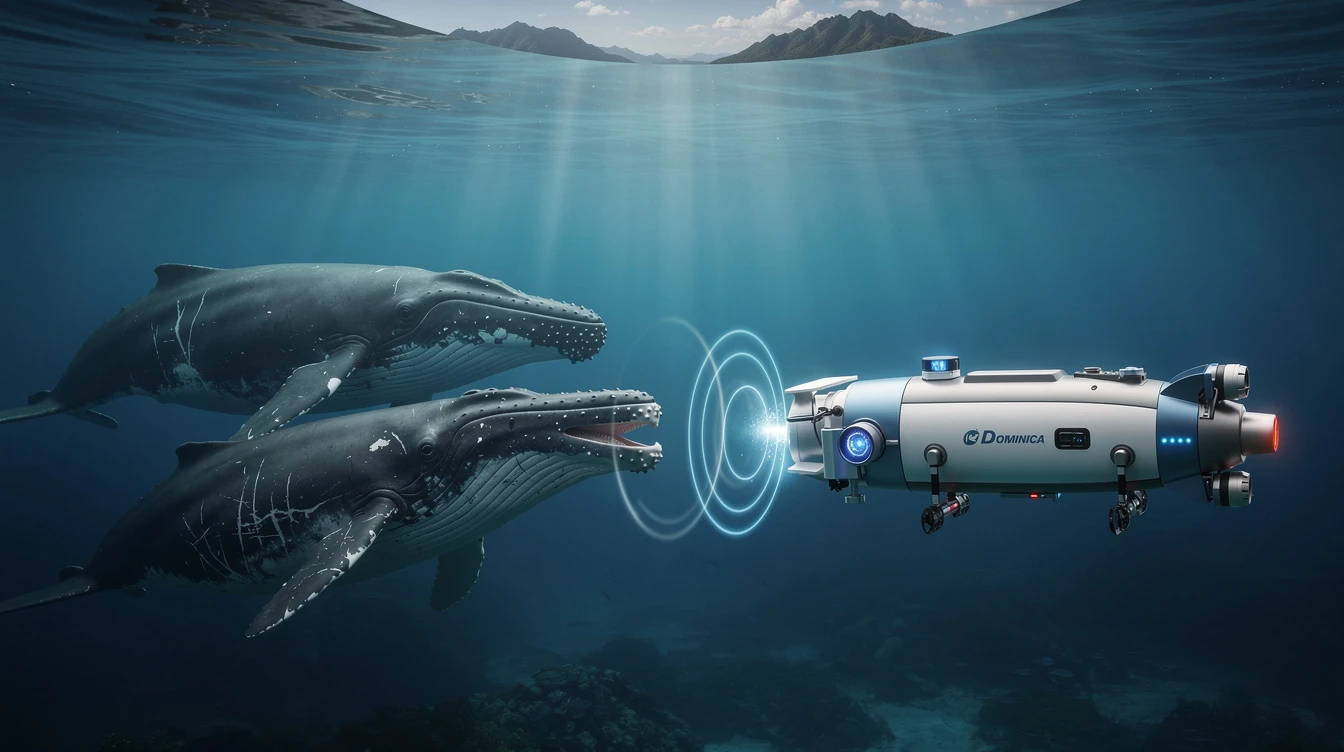
Scientists announced on May 1, 2026, that an autonomous underwater robot can now track sperm whale conversations in real time by listening to their echolocation clicks. The breakthrough, achieved off the coast of Dominica in the Caribbean Sea, allows researchers to follow whales without attaching tags or using noisy surface vessels. This technology could reshape how marine biologists study deep-diving sperm whales, a species known to dive to depths of over 1,000 meters in search of squid, and whose social vocalizations have long been a mystery. The glider, developed by a team from the Woods Hole Oceanographic Institution (WHOI), is the first to achieve real-time acoustic tracking of a wild marine mammal. For Filipino researchers and conservationists, the implications extend to protecting whale populations in the Philippine Seas, a global hotspot for cetacean diversity.

How the Underwater Robot Works

The autonomous glider is a torpedo-shaped, battery-powered vehicle about 1.8 meters long. It does not use propellers but instead changes its buoyancy to glide upward and downward through the water column, making it nearly silent. This silence is critical for eavesdropping on sperm whales, which communicate using rapid sequences of clicks known as codas.

The glider carries adigital acoustic sensor that listens for sperm whale clicks in real time. Onboard processing algorithms identify the signature patterns ofsperm whale vocalizations and determine the direction from which the sound arrives. The robot then autonomously adjusts its course to follow the sound source. The entire process happens without human intervention while the glider transmits data to shore via satellite every few hours. Researchers can also monitor the whale movements nearly live from a control center.


From Suction Tags to Silent Drones

Previously, scientists relied onsuction-cup tags attached to whales for a few days at a time, or on ship-based hydrophones that required a vessel overhead. The tags fall off, and ships create noise disturbance. The glider eliminates both limitations. According to the WHOI project lead, the robot can track whales for weeks at a time over distances of hundreds of kilometers. This capability enables researchers to study entire sperm whale clans as they travel and socialize, something that was impossible with older methods. The glider can also follow whales during deep dives when they are beyond the reach of surface-based listening devices.

Why Sperm Whale Conversations Matter

Sperm whales are among the most vocal animals on the planet. Their clicks serve dual purposes: echolocation for hunting prey and social communication. Different clans have distinct dialects—much like human languages. By recording and tracking these calls over time, scientists can analyze social structures, migration routes, and even the effects of ocean noise pollution. In the waters around Dominica, the glider tracked a pod of 10 sperm whales for13 consecutive days, capturing over 5,000 codas. This data revealed new patterns of coordinated foraging behavior.

Implications for Philippine Waters

The Philippines is home to some of the world's most important sperm whale habitats, including theSulu Sea, Bohol Sea, and the waters off Palawan. These areas are also busy shipping lanes and fishing grounds. Noise from ships and seismic surveys can mask whale calls, affecting their ability to hunt and communicate. The new glider technology could be deployed in Philippine seas to monitor resident sperm whale populations noninvasively. Local marine biologists fromUP Diliman’s Marine Science Institute have already expressed interest in adapting the technology for local research. The glider’s low cost—roughly $150,000 per unit compared to a research vessel costing millions—makes it an attractive option for Philippine institutions.

Real-Time Data for Conservation

The glider’s ability to transmit data in near real time allows researchers to adjust their studies dynamically. For example, if the glider detects a decline in click frequency or an unusual migration path, scientists can deploy additional instruments or notify authorities. In the context of the Philippines, this could mean rapid responses to ship strikes, entanglement in fishing gear, or acoustic disturbance from oil and gas exploration. TheDepartment of Environment and Natural Resources could use such data to inform marine protected area management. The glider's data stream is also open-source, meaning anyone with internet access can view the live whale tracking map.

Challenges and Future Refinements

The glider cannot yet distinguish between individual whales or identify specific codas in real time—it simply follows the general sound source. The team is now working on upgrading the onboard AI to recognize different clan dialects and even predict whale behavior. Battery life remains a limitation: current models can operate for 30 days before needing retrieval. However, solar-powered versions are in development, which could extend missions to months. For Philippine conditions, where strong currents and shallow reef areas are common, the glider will need hull reinforcements and shallower-diving profiles.

Significance for Filipino Readers

The Philippine archipelago sits at the center of global marine biodiversity. Over27 species of whales and dolphins have been recorded in its waters, including endangered sperm whales. The introduction of real-time, autonomous tracking technology offers Filipino scientists a powerful new tool that reduces cost and human impact. It also opens the door for citizen-science participation: the data is open-source, and Filipino students can analyze glider recordings as part of their research. As climate change and ocean noise intensify, having a persistent underwater ear in Philippine waters will help protect these deep-sea giants for future generations.