The Philippine National Police (PNP) announced Sunday it destroyed ₱22.8 million worth of marijuana and arrested one suspect during 18 operations across the Cordillera region from April 6 to 12.
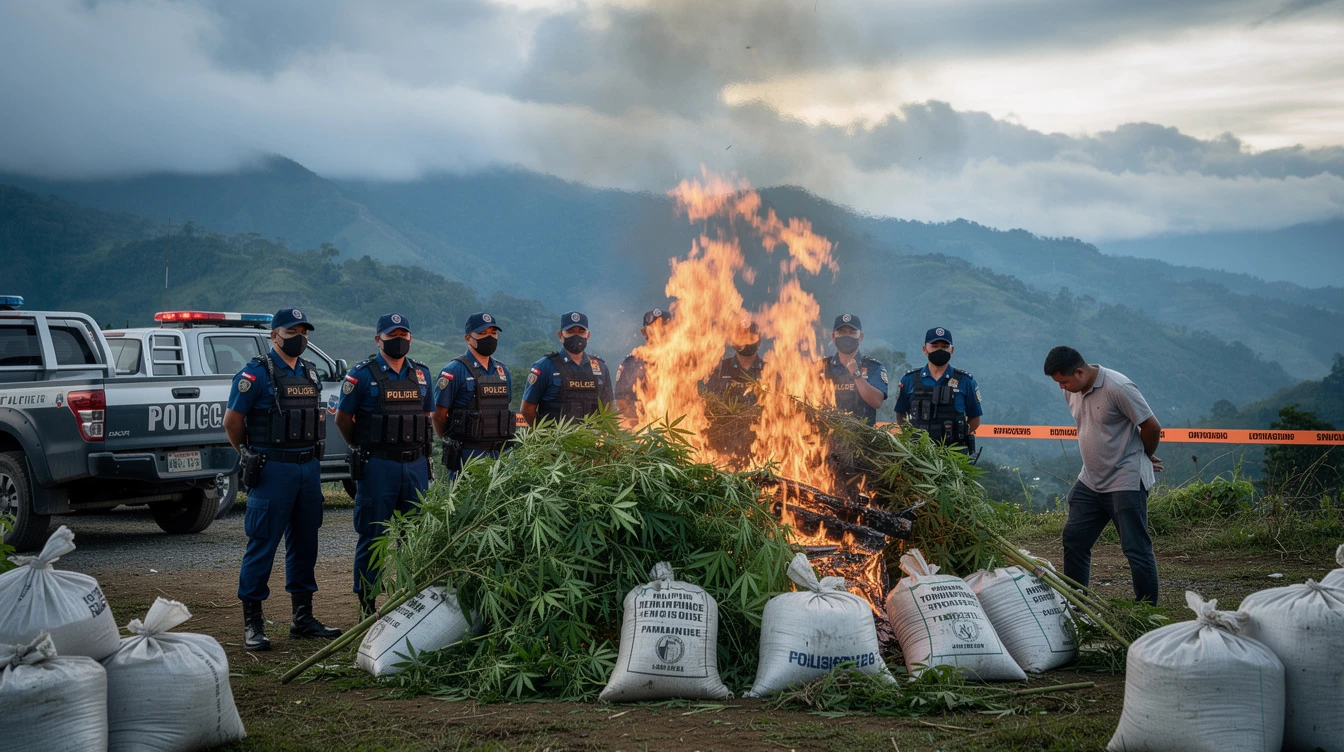
Police burned 71,873 fully grown marijuana plants in targeted raids, according to an official PNP statement released to media.
The operations also led to the arrest of one individual identified as a High-Value Individual (HVI) in the local drug trade.
PNP Chief General Benjamin Acorda Jr. commended the Cordillera police for their intensified campaign against illegal drugs.
"This significant accomplishment reflects our relentless effort to curb the proliferation of marijuana in the region," Acorda stated in the release.
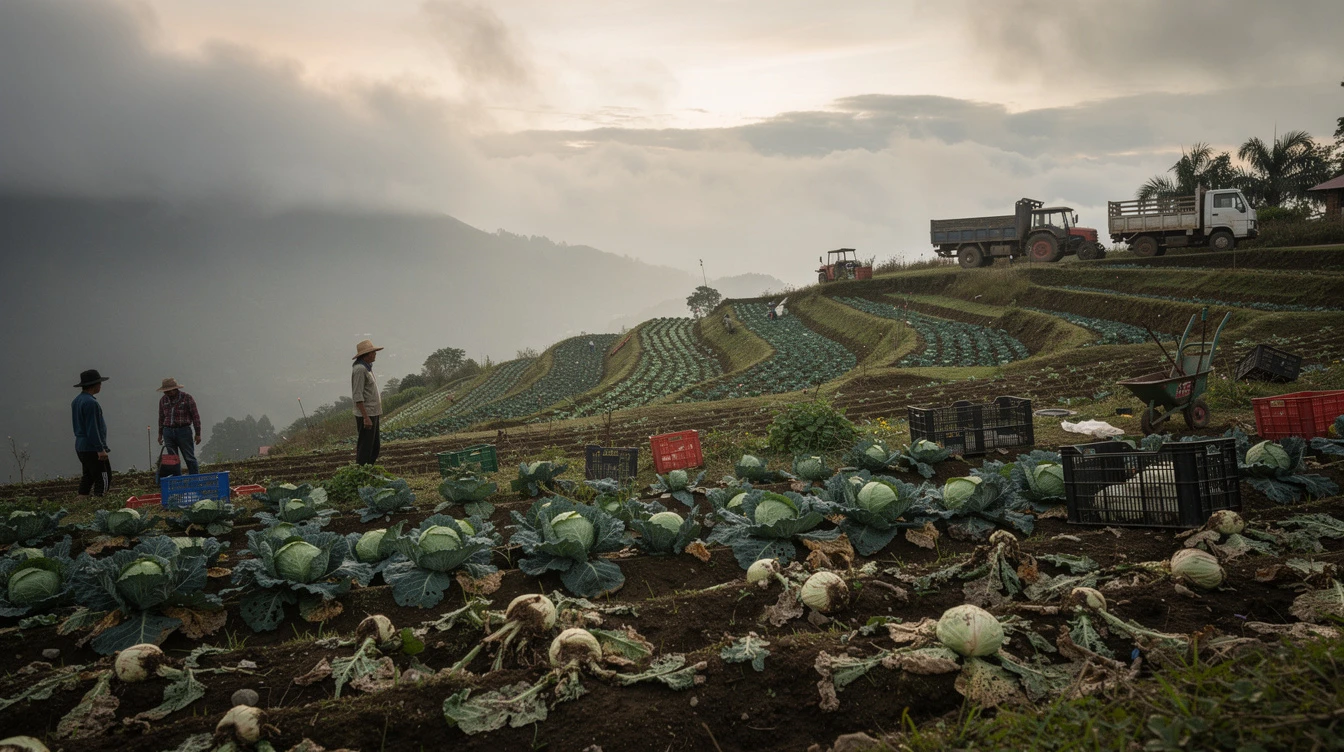
The Cordillera Administrative Region, encompassing mountainous provinces like Benguet and Kalinga, has long been known as a major cannabis cultivation area.
Its remote terrain and thick forest cover have made it a challenging area for law enforcement to monitor and control.
The week-long operations involved personnel from the Police Regional Office-Cordillera and the Philippine Drug Enforcement Agency (PDEA).
Authorities conducted manual eradication and burning of the discovered plantations immediately upon discovery.
This prevents the harvested plants from entering the illegal drug market in urban centers like Metro Manila.
The PNP statement did not disclose the exact locations of all raids to protect operational security for future missions.
However, past operations have frequently targeted towns in Benguet, such as Kibungan and Bakun, known for illicit cultivation.
The arrested HVI is now facing charges for violation of the Comprehensive Dangerous Drugs Act of 2002.
This law imposes life imprisonment and fines ranging from ₱500,000 to ₱10 million for cultivation and possession.
The PNP emphasized that the destruction of the plants follows strict chain-of-custody and evidence-handling protocols.
This ensures the evidence is properly documented before being burned in the presence of local officials and media.
The successful operations are part of the Marcos administration's continued "war on drugs," which has shifted focus.
Current policy stresses demand reduction, rehabilitation, and targeting supply chains and high-value targets.
For Filipino families, especially those with OFW relatives, drug proliferation remains a top community safety concern.
The influx of illegal drugs fuels petty crime, addiction, and violence in neighborhoods nationwide.
The destruction of ₱22.8 million in potential street drugs directly impacts the supply chain feeding local users.
It also demonstrates the government's ongoing commitment to interdict drugs at their source in the provinces.
The Cordillera operations show a strategic focus on source regions rather than just street-level enforcement in cities.
This is significant for national security, as drug trade profits can fund other criminal and insurgent activities in remote areas.
For the Filipino public, these results offer a measure of assurance that law enforcement is active.
Yet, they also underscore the persistent challenge of eliminating deep-rooted illicit agriculture in poor, upland communities.
The PNP's report highlights the need for sustained, holistic approaches combining law enforcement with socio-economic programs.
Such programs would offer farmers in the Cordillera legal and sustainable alternatives to cannabis cultivation.
The week's tally marks a substantial seizure but is likely just a fraction of the total cannabis grown in the region annually.
Continuous operations are expected as part of the PNP's mandate to fulfill the government's anti-drug objectives.