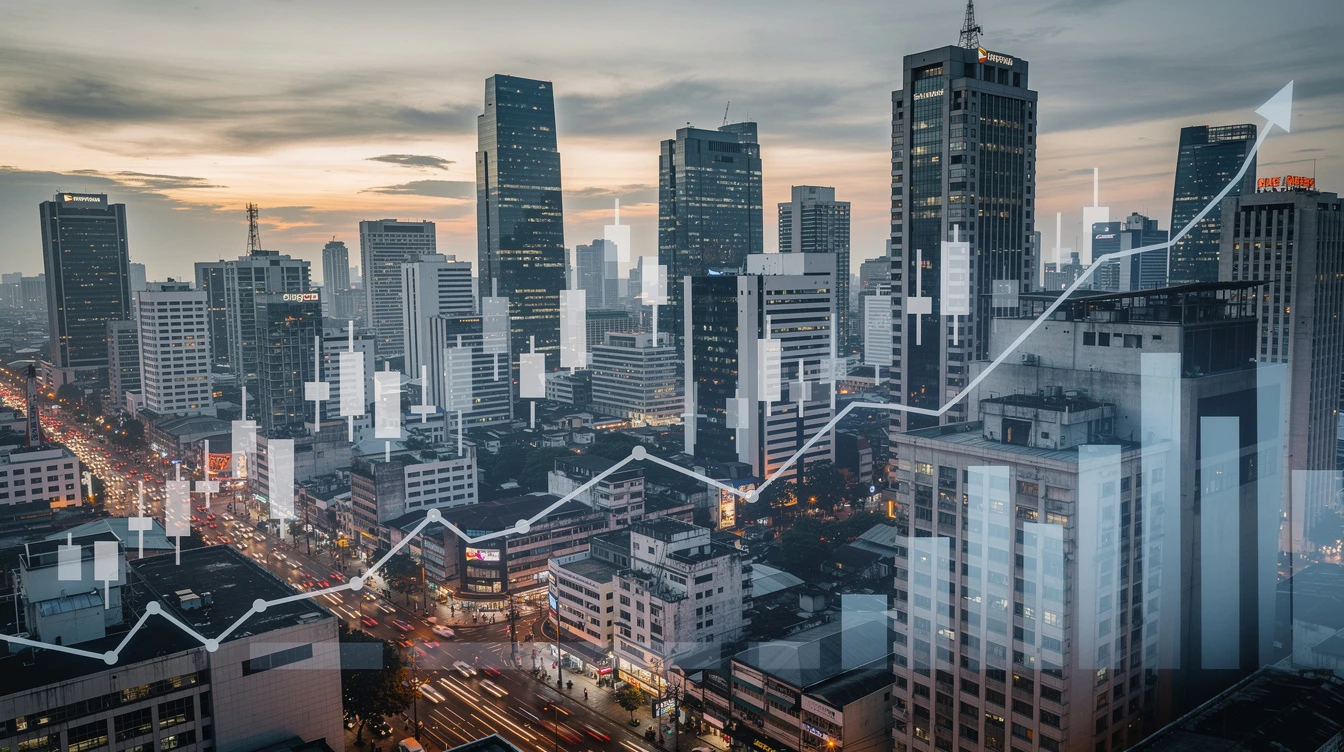
The Organization for Economic Cooperation and Development and Asian Development Bank have released conflicting 2026 growth forecasts for the Philippines. The divergence comes as 2025 posted its weakest GDP growth in nine years at 4.4%, raising concerns about the country's economic recovery amid global uncertainties.
Mixed Signals From International Institutions on Philippine Growth
OECD Maintains Cautious 5.1% Forecast
The OECD retained its 5.1% growth forecast for 2026, signaling confidence in the Philippines' economic fundamentals despite recent challenges. The projection appears more pessimistic due to the lower 2025 base. OECD economists note robust domestic consumption and infrastructure spending, but external uncertainties continue to temper expectations.
ADB Projects More Bullish 6.1% Expansion
The Asian Development Bank offers a more optimistic 6.1% growth projection for 2026. The outlook reflects expected recovery in exports, continued foreign direct investments, and sustained government spending under the 'Build Better More' initiative. This divergence highlights uncertainty surrounding the country's economic trajectory.
2025 Performance Marks Weakest Expansion in Nine Years
GDP Growth Slows to 4.4 Percent
The Philippine Statistics Authority confirmed GDP growth slowed to 4.4% in 2025, marking the weakest full-year expansion in nine years. This represents a significant deceleration from government targets. Multiple factors contributed, including inflationary pressures, elevated interest rates, and slower global demand affecting key export sectors.
Base Effect Concerns for Future Projections
The weak 2025 performance creates a technical base effect complicating 2026 projections. While a lower baseline might make percentage growth targets easier to achieve, economists warn this could mask underlying structural weaknesses. The OECD's reference to a 'more pessimistic' outlook directly addresses this statistical phenomenon.
Key Drivers and Challenges for Philippine Economic Recovery
Infrastructure Investment and Consumption
Government infrastructure spending remains a cornerstone of growth strategy, expected to stimulate activity in construction, manufacturing, and services. Remittance inflows from overseas Filipino workers continue to support household consumption, providing a stable foundation for economic resilience.
External Headwinds and Policy Responses
Global economic conditions, including monetary policy trajectories in major economies and geopolitical tensions, present risks to the Philippine outlook. The Bangko Sentral ng Pilipinas must carefully balance interest rate decisions to control inflation while supporting growth.