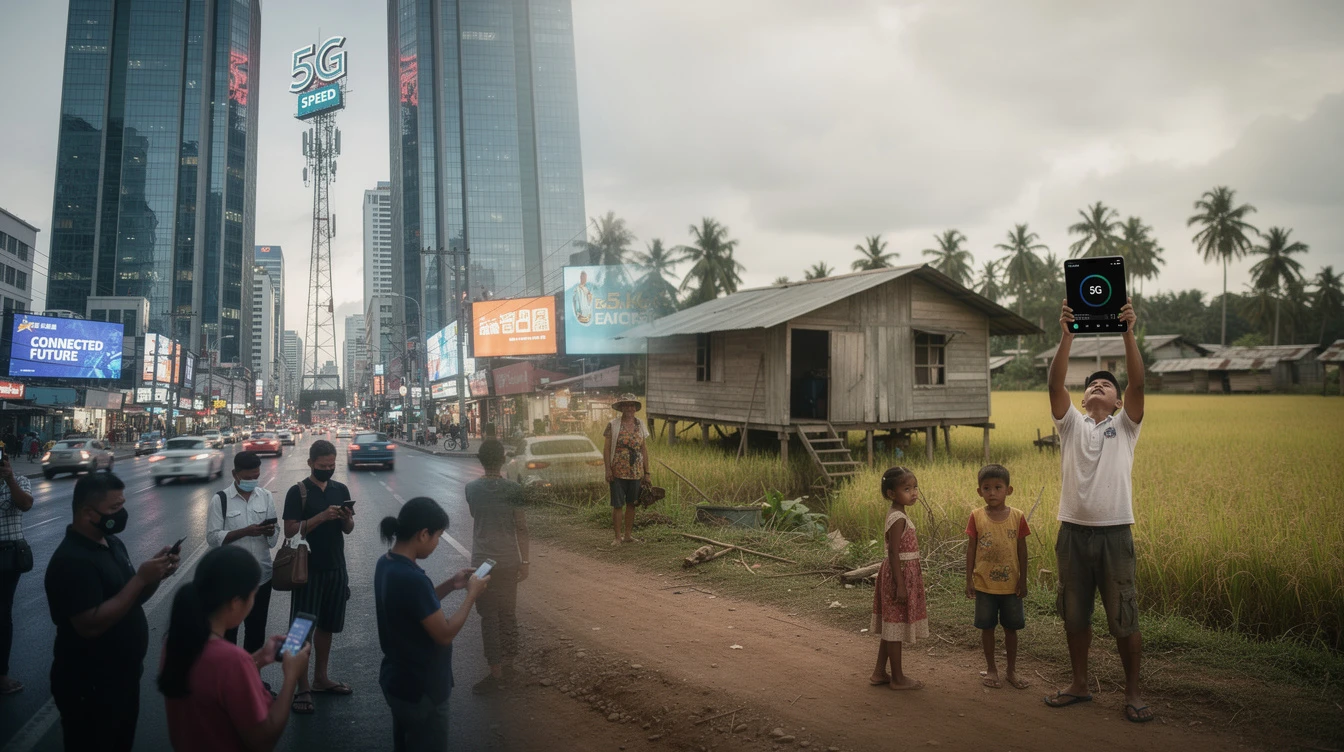
The Philippines is racing to bridge a widening digital divide as telecommunications giants expand fifth-generation wireless networks across the archipelago, yet millions of residents in rural provinces remain left behind in the connectivity gap. Major players Globe Telecom and PLDT's Smart Communications have accelerated 5G deployments in urban centers, installing thousands of new sites to meet surging demand for data services—but the gains have yet to reach vast stretches of Mindanao, Visayas, and rural Luzon.
Race to 5G Networks
Telecommunications companies have made significant strides in deploying next-generation wireless infrastructure. Globe Telecom announced it had installed over 1,400 5G sites nationwide by 2023, while PLDT's Smart Communications rolled out 5G coverage in key cities including Metro Manila, Cebu, and Davao. The rapid expansion marks a pivotal shift in the country's digital capabilities, positioning the Philippines alongside regional neighbors in the global 5G rollout.
Industry analysts note that the acceleration comes amid intensifying competition between the two dominant telecommunications players. Both companies have invested heavily in upgrading their networks to accommodate growing consumer appetite for streaming video, online gaming, and remote work applications—trends amplified by global events that forced millions to rely on digital connections for education and employment.
Broadband Gains and Persistent Gaps
Fixed broadband speeds in the Philippines have shown measurable improvement according to Ookla speed data, reflecting infrastructure investments and network optimization efforts. The country has climbed global rankings for connectivity in recent years, though it still lags behind regional counterparts in Southeast Asia.
The progress, however, remains unevenly distributed. Access to reliable high-speed internet continues to concentrate in metropolitan areas and provincial capitals, leaving smaller municipalities and remote communities with limited or no service. This disparity has fueled concerns about digital equity, particularly as the nation increasingly depends on connectivity for economic participation, government services, and healthcare delivery.
The Rural Connectivity Challenge
Connectivity gaps persist most acutely in Mindanao, the Visayas islands, and rural provinces across Luzon, where terrain and dispersed population settlements complicate infrastructure expansion. Telecommunications providers face higher per-customer costs to lay fiber optic cables or build cell towers in areas where investment returns remain uncertain.
Government initiatives aimed at extending connectivity to underserved regions have struggled to keep pace with private sector expansions focused on high-density markets. Advocates for digital inclusion argue that without coordinated public-private strategies, the connectivity divide will continue to widen, leaving rural communities at a disadvantage in an increasingly digital economy.
Looking Ahead
Stakeholders across government and industry acknowledge that closing the digital divide will require sustained investment, regulatory reform, and innovative solutions tailored to the Philippines' unique geographic challenges. The ongoing expansion of 5G networks represents a critical foundation, but experts stress that reaching remote populations will demand alternative technologies such as satellite internet and community-based broadband cooperatives.
As the nation navigates its digital transformation, the gap between connected and unconnected Filipinos remains one of the most pressing infrastructure challenges of the era. How policymakers and industry leaders address this disparity will shape the country's competitiveness and inclusive growth for decades to come.