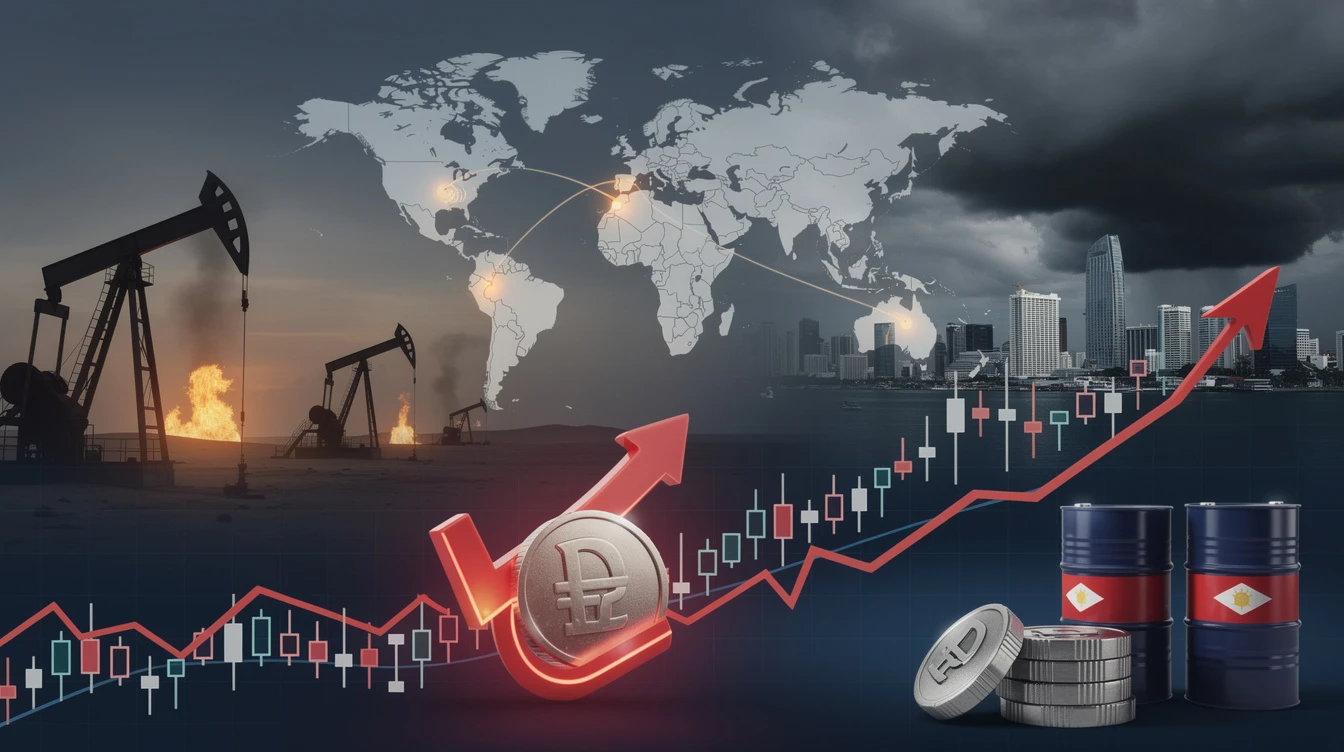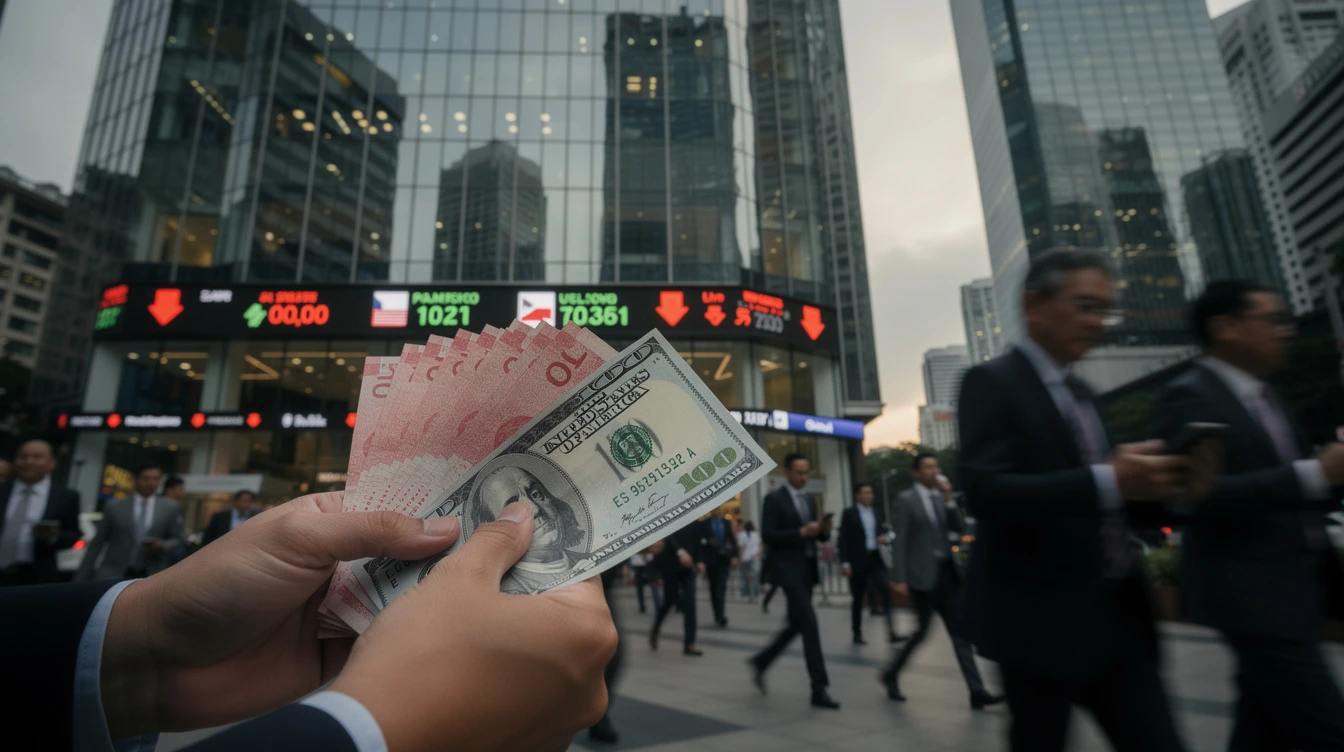
The Philippine peso declined to ₱59.80 against the US dollar in March 2026, with trading at ₱59.800 recorded on March 17, 2026. The currency has faced mounting depreciation pressure amid global economic uncertainty. The worst rate dropped to 0.0167 USD per peso on March 18, 2026, as market volatility intensified.
Philippine Peso Weakens Against Dollar in March 2026
Current Exchange Rate Landscape
The Philippine peso continued its downward trajectory in March 2026, trading at ₱59.800 against the US dollar as of March 17, 2026. This marks significant depreciation pressure on the local currency, with the worst rate recorded at 0.0167 USD per peso on March 18, 2026.
The average exchange rate for 2026 currently stands at 0.017 USD, reflecting persistent weakness against the American dollar. Currency traders and financial analysts have been closely monitoring these developments as the BSP navigates monetary policy decisions amid global economic uncertainty.
Impact on Remittances and Trade
For Overseas Filipino Workers (OFWs) and businesses engaged in international trade, the peso's decline presents both challenges and opportunities. Remittance flows, which serve as a crucial economic lifeline for the Philippines, may see improved dollar equivalents when converted back to pesos.
However, importers face mounting costs as the weaker peso makes foreign goods more expensive. The Bangko Sentral ng Pilipinas (BSP) has indicated it will continue monitoring currency movements closely, though officials stress that the current exchange rate remains within manageable levels for the domestic economy.
Stock Market Reacts to Currency Volatility
PSEi Decline Reflects Economic Concerns
The Philippine Stock Exchange Index (PSEi) mirrored investor concerns over the peso's weakness, closing at 6,320.41 on March 6, 2026, according to PinoyPulse.com market data. This represents a decline of 60.12 points or 0.94% from the previous trading session.
Market strategists attribute the downturn to foreign portfolio outflows, rising inflation expectations, and global trade uncertainties. Financial sector stocks led the declines, with banking and financial institutions experiencing the most significant sell-offs as investors repositioned portfolios in response to currency instability.
Investor Sentiment Shifts
Local retail investors have adopted a cautious stance, with trading volumes declining notably in recent sessions. Foreign investors have been net sellers in the Philippine equity market, contributing to sustained pressure on both the stock index and the peso.
Bond yields have risen in response, reflecting higher borrowing costs and inflation premiums. Analysts from major securities firms suggest that market participants should prepare for continued volatility in the near term as global monetary policies diverge and domestic inflation remains elevated.
Economic Outlook and What Lies Ahead
Factors Driving Peso Depreciation
Several interconnected factors have contributed to the peso's current vulnerability. The US Federal Reserve's continued stance on interest rates has strengthened the dollar globally, making emerging market currencies like the peso less attractive to carry trade participants.
Domestically, elevated inflation levels have limited the BSP's ability to cut interest rates, creating a differential that pressures the local currency. Trade imbalances and remittance-dependent consumption patterns also play significant roles in determining the peso's longer-term trajectory.
Oil prices and import costs remain key variables that could either exacerbate or alleviate pressure on the currency. Currency analysts remain divided on the peso's near-term direction.
Expert Projections for Coming Months
Bullish scenarios cite strong macroeconomic fundamentals, robust remittance inflows, and potential improvements in the current account balance. Bearish projections, however, warn of further peso weakness if global conditions deteriorate or domestic inflation accelerates beyond expectations.
The BSP is widely expected to maintain its measured approach, utilizing reserve requirements and occasional dollar interventions to smooth excessive volatility. For businesses and individuals alike, financial planning should account for exchange rate fluctuations as a persistent feature through mid-2026 and beyond.