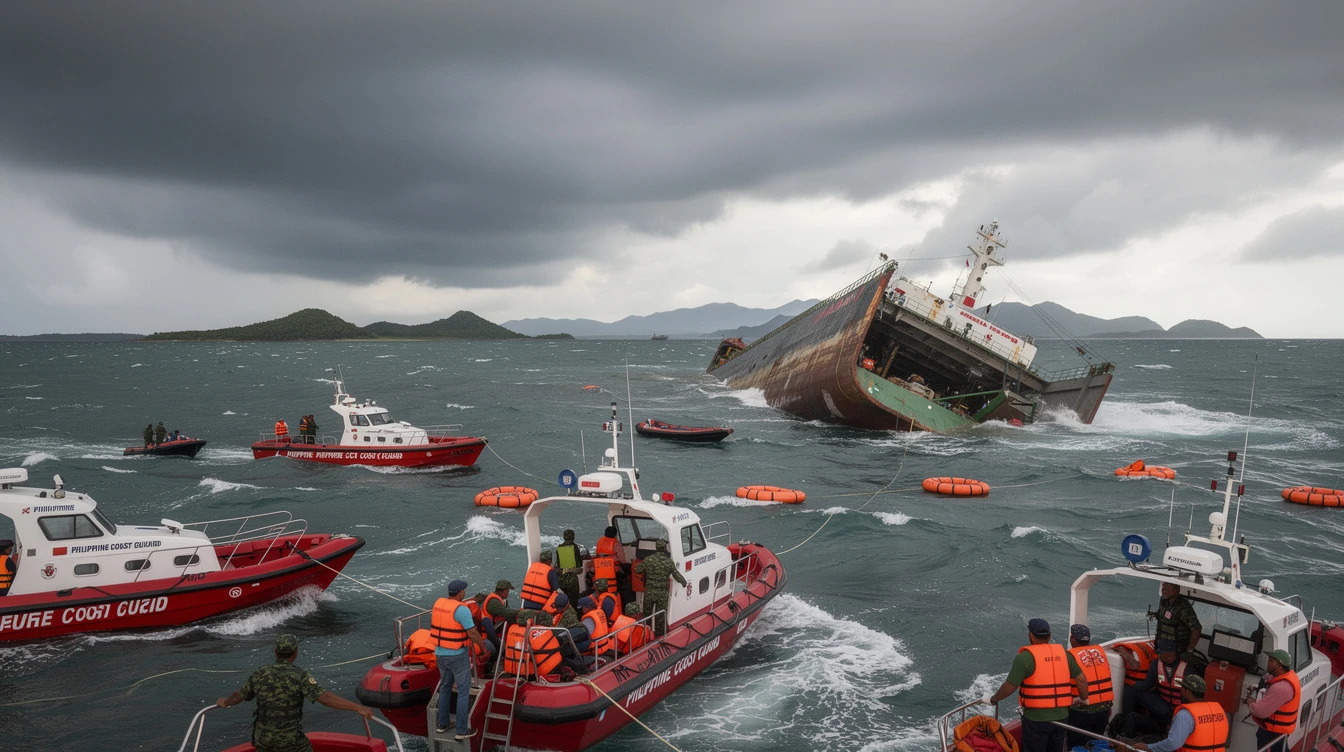
The Philippine Coast Guard (PCG) has rescued all 32 crew members of the passenger vessel LCT Pacifica 3 after it capsized off the coast of Barangay Corregidor in Dapa, Surigao del Norte. The incident occurred on Thursday, and the successful rescue operation has drawn praise from local authorities and netizens alike. But it also raises pressing safety questions for the maritime industry in the Philippines.
The Philippine Coast Guard confirmed that all 32 crew members were accounted for and brought to safety without any reported injuries. The PCG said the rescue was completed swiftly thanks to the coordination of nearby vessels and the quick deployment of rescue teams.
The Philippines, an archipelago with over 7,000 islands, relies heavily on sea transport. This incident serves as a stark reminder of the risks faced by seafarers and passengers daily. Surigao del Norte, a key maritime corridor, has seen similar incidents in the past, making the PCG's role critical for safety.
What Happened to LCT Pacifica 3?
LCT Pacifica 3, a passenger vessel, capsized near Barangay Corregidor, Dapa, Surigao del Norte. The exact cause of the capsize remains under investigation. However, initial reports suggest rough seas may have been a contributing factor.
The PCG did not specify the cargo or passenger manifest details, but the crew's survival shows the crew followed safety protocols. The rescue efforts involved other vessels in the area, demonstrating the value of community and coast guard cooperation.
This is not the first maritime mishap in the region. In 2023, the PCG rescued 23 crew members from a cargo vessel off Surigao del Norte. That incident, captured on video, showed the dangers of navigating Philippine waters during the monsoon season.
Why Surigao del Norte Waters Are Risky
Surigao del Norte is located in the Mindanao region, known for strong currents and unpredictable weather. The Surigao Strait and nearby seas are busy shipping lanes, often affected by southwest and northeast monsoons.
Barangay Corregidor, where the capsizing happened, is a coastal area with shallow reefs and narrow passages. This makes navigation tricky, especially for larger vessels like LCT Pacifica 3.
The National Disaster Risk Reduction and Management Council (NDRRMC) has flagged several maritime hazards in the area. Local fishermen also report sudden squalls that can overturn vessels without warning.
PCG Response: A Model of Efficiency?
The PCG deployed its rescue teams immediately after receiving the distress call. Within hours, all 32 crew were safe. This marks a 100% rescue success rate for the operation, a rare achievement in maritime disasters.
The PCG’s spokesperson lauded the crew for staying calm and using life jackets, noting their training paid off. The rescue also involved coordination with the Philippine Navy and local government units.
However, the PCG also called for an investigation to prevent future incidents. They reminded ship operators to ensure vessels are seaworthy before departure. The agency emphasized that safety equipment and drills save lives.
Safety Lessons for Every Filipino Traveler
This incident provides crucial takeaways for anyone traveling by sea in the Philippines. Always check the weather forecast before a voyage. The Philippine Atmospheric, Geophysical and Astronomical Services Administration (PAGASA) updates on sea conditions are essential.
Choose vessels that comply with safety standards. Look for life rafts, life jackets, and emergency exits. The Maritime Industry Authority (MARINA) maintains a list of accredited ships. Avoid overloading, as this can destabilize a vessel.
Know the nearest emergency numbers. The PCG has a 24/7 hotline for reporting incidents. In the event of a capsizing, stay calm, find flotation devices, and await rescue. Do not panic.
Future Outlook for Philippine Maritime Safety
The capsizing of LCT Pacifica 3 could prompt stricter regulations. Senator Grace Poe has already called for a Senate inquiry on maritime safety in a separate incident, and this event may renew the push. MARINA and PCG are likely to step up inspections.
Technology also plays a role. The PCG uses radar and vessel tracking systems to monitor ship movements. Expanding these systems could help prevent accidents. The government is investing in more rescue vessels and training.
For now, the safe rescue of 32 crew is a relief. But the root causes must be addressed. Every Filipino deserves safe passage at sea, and every seafarer deserves a workplace that prioritizes their life.
Key Takeaways
The LCT Pacifica 3 incident shows that quick action and disciplined crews save lives. However, the repeated maritime accidents in Surigao del Norte cannot be ignored. The PCG's success is commendable, but systemic improvements are needed.
Stay informed and stay safe. Read more about maritime safety onPinoyPulse News and learn about other rescue storieson our site.
Frequently Asked Questions
Was there any loss of life in the LCT Pacifica 3 capsizing?
No. All 32 crew members were rescued without injuries, according to the PCG.
What caused the vessel to capsize?
The exact cause is still under investigation. Rough seas in the Surigao del Norte area are suspected.
How can I stay safe when traveling by sea in the Philippines?
Check PAGASA weather updates, use accredited vessels, wear life jackets, and know emergency contacts like the PCG hotline.
Where can I report a maritime incident?
Call the Philippine Coast Guard's 24/7 hotline. You can also contact MARINA or the nearest PCG station.