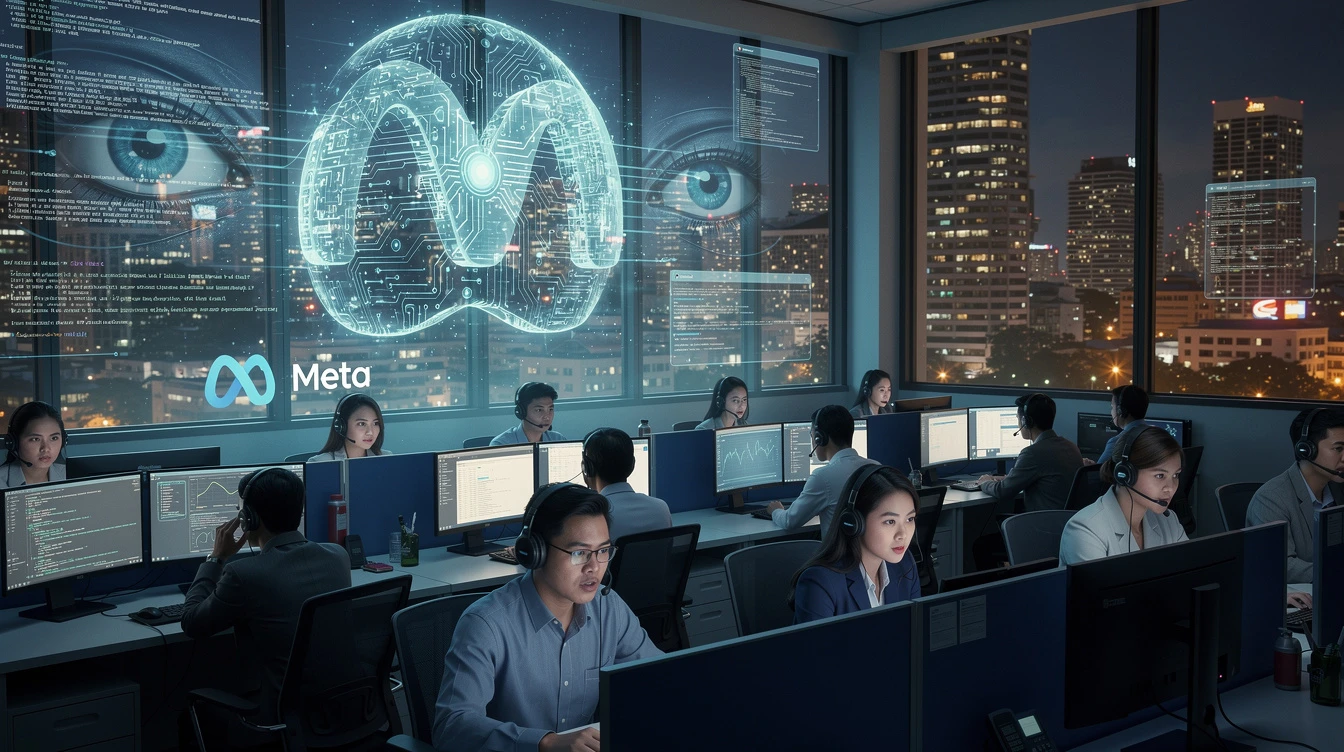
Meta is taking workplace surveillance to a new level. The company is rolling out tracking software on U.S.-based employees' computers to capture mouse movements, clicks, and keystrokes for AI training. This initiative, first reported by Reuters , aims to build AI agents that can perform work tasks autonomously.
For Filipino tech workers and BPO employees, this raises urgent questions. Could similar practices reach Philippine shores? How safe is your data in a world where every click trains an AI?
Mouse
Meta's internal memos, seen by Reuters, reveal the plan is part of its "AI for Work" program, now renamed the Agent Transformation Accelerator . The goal: create AI that learns from human workflows to automate complex tasks.
Meta is installing new tracking software on employee computers. The software captures mouse movements, clicks, and keystrokes . This data feeds Meta's AI models, teaching them how humans navigate digital tasks.
The company says the data helps build AI agents that can operate across multiple systems. These agents aim to work alongside employees, automating repetitive work. Meta even created a chatbot version of CEO Mark Zuckerberg for internal use.
Moving
Initially, the tracking applies only to U.S.-based employees. Meta informed staff via internal memos. The tracking software will be installed on company-issued computers.
Meta plans to increase internal data collection efforts. The program falls under its broader push to build autonomous AI. However, no mention has been made about expanding this to international offices, including the Philippines.
The Philippines is a global hub for BPO and tech talent . Many Filipino workers support U.S. companies like Meta. The country's data privacy landscape is governed by the Data Privacy Act of 2012.
If Meta expands tracking to its Philippine operations, it would need to comply with local laws. The National Privacy Commission (NPC) requires strict consent and transparency. Any breach could mean heavy fines.
Filipino workers in remote setups for U.S. firms also face risks. Even without physical offices, data collected from Philippine IPs could be used. The NPC has yet to issue a statement on Meta's plan.
Privacy advocates are alarmed. John Smith , a data privacy lawyer in Manila, told PinoyPulse: "Tracking keystrokes is a serious intrusion. In the Philippines, such collection requires explicit consent under the Data Privacy Act."
The tracking captures personal habits and work patterns. Critics argue this creates a chilling effect on employee behavior. Workers may fear being judged by AI on their every move.
Meta claims the data is anonymized and used only for training. But history shows data can be misused. The company has faced multiple privacy scandals, including the Cambridge Analytica incident.
For the 1.3 million Filipinos in the BPO sector, this news is unsettling. Many handle sensitive client data. If similar tracking is implemented, it could violate client confidentiality agreements.
Tech freelancers in the Philippines also worry. Platforms like Upwork and Fiverr already use time-tracking tools. Adding keystroke monitoring for AI training raises ethical questions.
One Filipino software engineer, who asked to remain anonymous, said: "It feels like Big Brother. I don't want my keystrokes used to train AI that could replace my job someday."
The Philippines' Data Privacy Act of 2012 (Republic Act 10173) protects personal information. Keystrokes and mouse movements can be considered personal data if they identify an individual.
Under the law, companies must:
- Obtain explicit consent
- Disclose the purpose of collection
- Ensure data security
- Allow users to access and delete data
If Meta expands to the Philippines, it would need a Data Privacy Impact Assessment . The NPC could impose fines of up to PHP 5 million for violations.
Other tech giants are watching closely. Amazon and Google have similar AI training programs but use aggregated data. Meta's approach is more direct, capturing raw employee interactions.
In Europe, the General Data Protection Regulation (GDPR) would likely restrict such tracking. Meta already faces GDPR fines. The Philippine law is modeled after GDPR, offering similar protections.
Internally, Meta employees have mixed reactions. Some see it as a necessary step for innovation. Others worry about privacy and job security. The tracking is mandatory for U.S. staff, with no opt-out option.
Meta plans to roll out the tracking to more departments. The company aims to have AI agents handling customer service , data entry , and scheduling within two years.
For the Philippines, the NPC should proactively issue guidelines. Filipino workers need to know their rights. Companies like Meta must be transparent about data use.
The global trend is clear: AI will be trained on human labor. The question is whether workers have a say in how that happens. PinoyPulse will continue monitoring this story.
Meta's keystroke tracking is a watershed moment for workplace privacy. It blends AI development with surveillance, creating new ethical challenges. For Filipino workers, it's a reminder to stay vigilant about data rights.
As AI agents become more autonomous, the line between human and machine work blurs. The Philippines must adapt its laws to protect its workforce. The future of work depends on balancing innovation with privacy.
Q: Will Meta track employees in the Philippines?
A: As of now, Meta's tracking is limited to U.S.-based employees. No official announcement has been made for international offices, including the Philippines.
Q: Is keystroke tracking legal in the Philippines?
A: It can be legal if the employer obtains explicit consent and discloses the purpose. The Data Privacy Act of 2012 requires transparency and security measures.
Meta?
Q: Can I refuse if my employer uses similar tracking?
A: Refusal may lead to disciplinary action, but you can file a complaint with the National Privacy Commission if your data is mishandled.
Q: How is this different from existing time-tracking tools?
A: Traditional time-tracking logs hours worked. Meta's software captures detailed interactions, including specific keystrokes and mouse clicks, which can be used to train AI models.