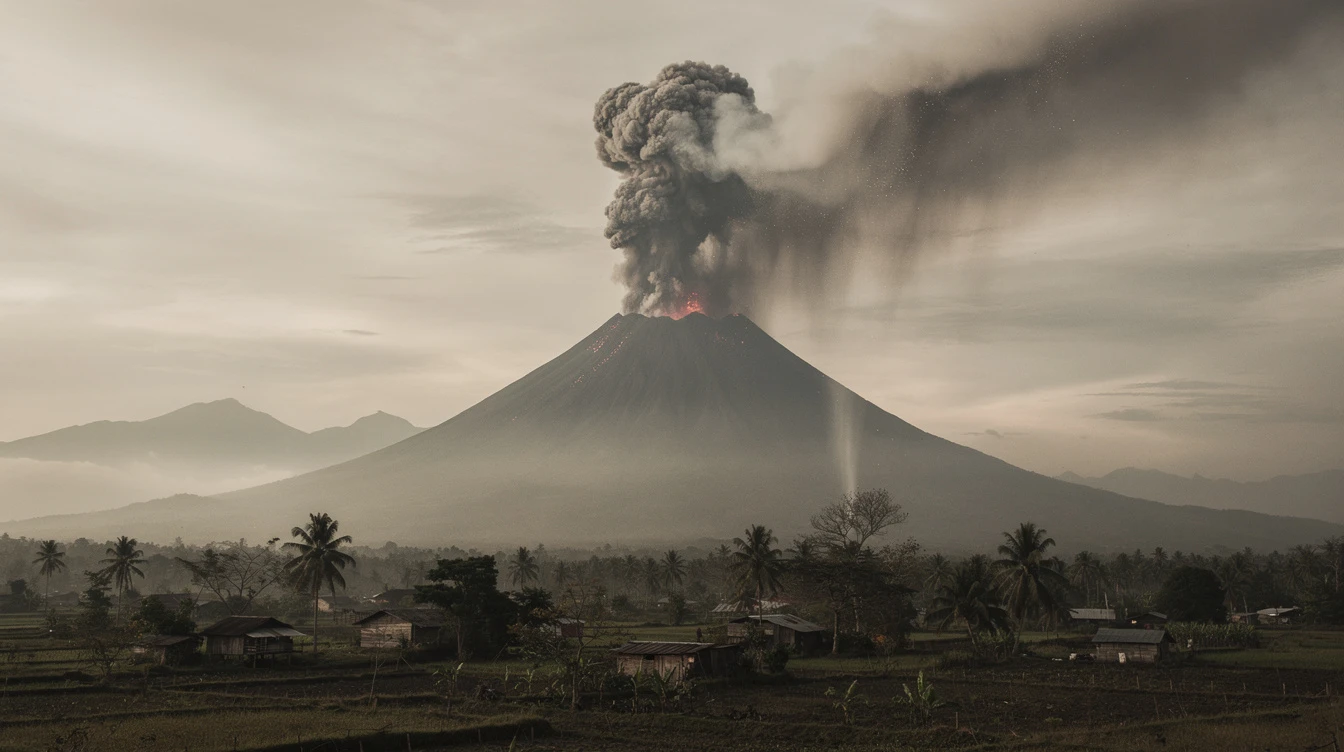
Mayon Volcano in Albay province reached its 91st consecutive day of eruption on Tuesday, with the Philippine Institute of Volcanology and Seismology releasing close-up footage showing the volcano spewing ash clouds.
The PHIVOLCS Quick Response Team captured the video while monitoring the restive volcano. Director Teresito Bacolcol confirmed the activity represents a sustained effusive eruption that continues to threaten surrounding communities.
The bulletin stated the effusive eruption of lava and degassing activity persist. PHIVOLCS recorded ongoing lava flow and sulfur dioxide emissions exceeding 1,900 tons per day. Minor rockfall events and pyroclastic density currents have been observed on the volcano's southern slopes in recent weeks.
The footage shows ash clouds resulting from the interaction of hot lava with cooler surface materials and groundwater, creating dramatic plumes visible across Albay province.
We are continuously monitoring the situation and coordinating with local government units. The effusive eruption of lava and degassing activity persist, Bacolcol said during a press briefing.
Authorities maintain a 6-kilometer permanent danger zone around the volcano. Over 20,000 residents from surrounding towns remain displaced due to the ongoing eruption.
The Alert Level 3 status indicates a relatively high level of unrest with potential for hazardous explosive activity. Officials warn sudden explosions could occur without notice. Residents must avoid the danger zone and comply with evacuation orders.
Mayon's eruption follows a pattern typical of stratovolcanoes where magma gradually rises to the surface. The ash clouds form when hot lava interacts with cooler surface materials and groundwater.
PHIVOLCS continues tracking the eruption using electronic tiltmeters and satellite observations. The agency warns that dome growth could trigger more dangerous explosive eruptions. Citizens should remain vigilant and strictly follow official safety protocols.