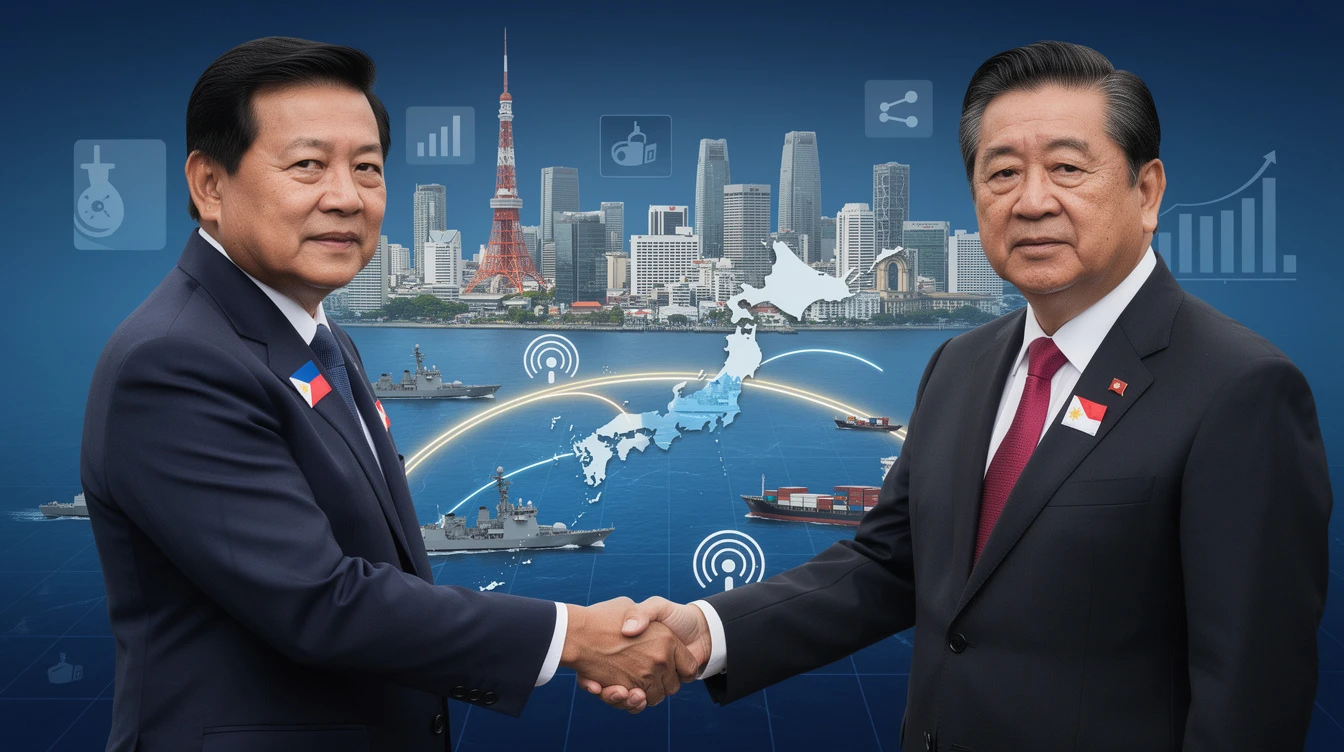
President Ferdinand Marcos Jr. is considering a formal state visit to Japan in May 2025, the Presidential Communications Office indicated recently, following an invitation from Tokyo. The high-level trip, first reported by Nikkei Asia, aims to "confirm cooperation toward realizing a free and open Indo-Pacific," a critical agenda for the Philippines given escalating maritime tensions. This potential visit underscores Manila's deepening strategic alignment with a key treaty ally as it navigates complex regional security challenges.
The planned summit with Japanese Prime Minister Sanae Takaichi would be a cornerstone of the visit, focusing on bolstering defense cooperation and securing major Japanese investments in Philippine infrastructure. For Filipino citizens and overseas workers, this partnership directly impacts national security, job creation, and the stability of vital supply chains. The talks are expected to build on the momentum from Marcos's recent working trip to Osaka for the World Expo 2025, which a Palace official described as a last-minute decision.
According to the Nikkei report, Japan is looking to invite President Marcos as a state guest, a designation reserved for visits of the highest diplomatic significance. This would mark a major upgrade from his prior working visit and signals Japan's intent to solidify the Philippines as a premier security and economic partner in Southeast Asia. The state guest protocol was last extended to a Philippine leader during President Benigno Aquino III's visit in 2013.
Per Palace statements, the core agenda will center on enhancing bilateral cooperation in maritime security, disaster response, and economic development. Japan has been a consistent provider of patrol vessels and defense equipment to the Philippine Coast Guard and military, assets deemed vital for safeguarding Philippine sovereignty in the West Philippine Sea. Further commitments in this area are anticipated to be a key outcome of the May meetings.
Economic discussions are poised to cover Japanese investments in flagship infrastructure projects under the Philippine government's "Build Better More" program. Japan is already a leading official development assistance partner, funding major railway, subway, and flood control projects across the archipelago. New agreements could accelerate job creation and improve connectivity for millions of Filipinos.
The visit's timing is strategically significant, occurring amid heightened geopolitical friction in the Indo-Pacific region. Strengthening the Japan-Philippines partnership serves as a counterbalance to assertive actions by other regional powers, directly affecting the security of Filipino fishermen and coastal communities. Analysts view the alliance as a stabilizing force for the entire ASEAN bloc.
For the over 300,000 Filipinos living and working in Japan, the state visit also highlights the importance of bilateral agreements on labor, welfare, and cultural exchange. It reinforces the framework protecting overseas Filipino workers (OFWs) and could lead to expanded job opportunities in skilled sectors within Japan's economy.
The Palace has yet to finalize the exact dates and full itinerary for the May visit, but preparations are reportedly underway. The Department of Foreign Affairs is coordinating closely with Japanese counterparts to ensure the summit yields concrete, actionable results that benefit Philippine national interests across multiple fronts.
This potential state visit follows a series of high-level engagements between the two nations, including the reciprocal visits of defense and foreign ministers. The deepening ties represent a bipartisan foreign policy continuity, building on foundations laid by the previous Duterte administration and earlier governments.
Ultimately, President Marcos's decision on the Japan state visit will signal the Philippines' foreign policy priorities for the remainder of his term. A confirmed trip would demonstrate a firm commitment to a rules-based international order and proactive economic diplomacy, shaping the country's strategic posture for years to come.