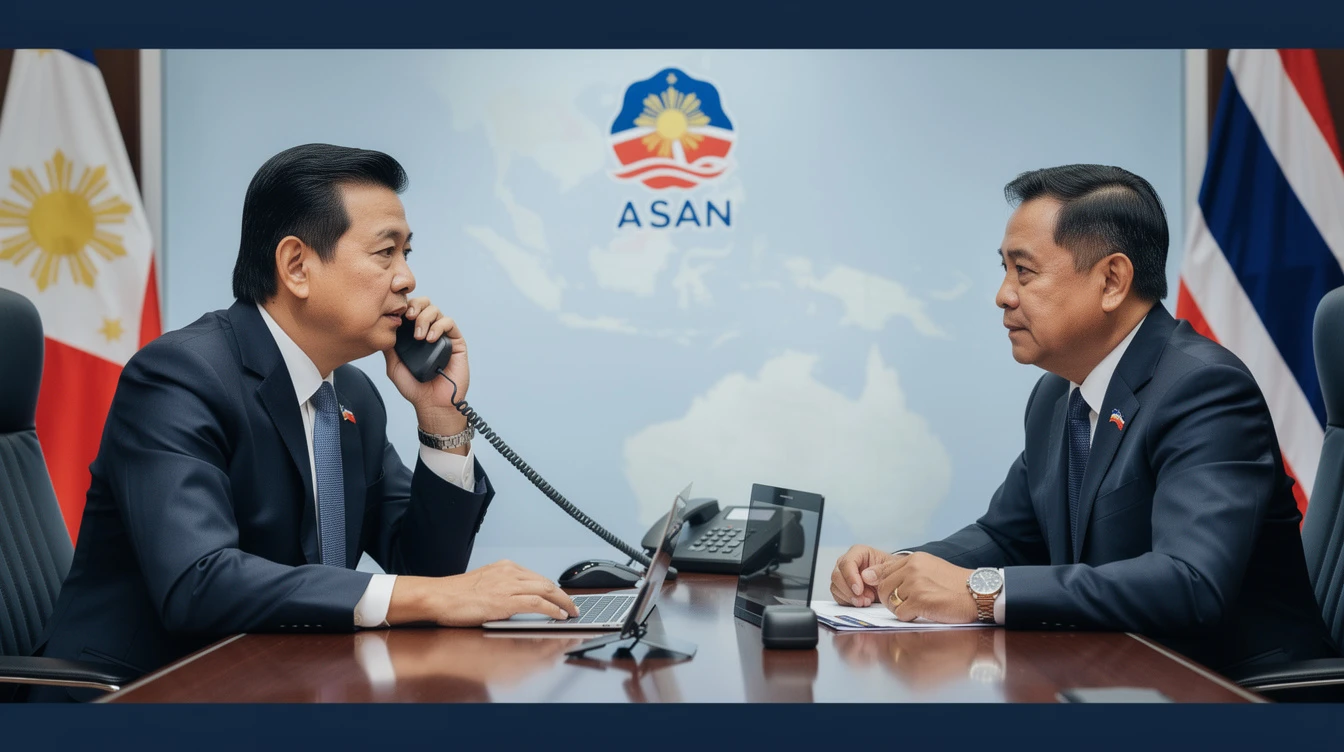
President Ferdinand Marcos Jr. on Tuesday personally congratulated Thai Prime Minister Anutin Charnvirakul on his reelection, according to a report from the Presidential Communications Office. The phone call underscores Manila's active diplomacy within the Association of Southeast Asian Nations (ASEAN), a bloc critical to Philippine economic and security interests. This outreach aims to solidify a key bilateral relationship with a major regional partner and neighbor.
The conversation, confirmed by the Philippine News Agency (PNA), focused on reinforcing the long-standing friendship between the two nations. President Marcos expressed optimism about enhancing collaboration, particularly in areas like trade, tourism, and agriculture. For the Philippines, a stronger partnership with Thailand can mean more opportunities for Filipino workers, investors, and businesses in the ASEAN market.
Prime Minister Anutin, leader of the Bhumjaithai Party, was recently reelected by Thailand's parliament to continue his tenure. His government plays a pivotal role in Southeast Asia's political and economic landscape. The Philippines' immediate congratulation signals Manila's commitment to maintaining cordial and proactive relations with all ASEAN members.
Per the official readout, both leaders acknowledged the importance of people-to-people exchanges. Thailand is a popular destination for Filipino tourists and a source of visitors to the Philippines. Strengthening this link is vital for the recovery and growth of the Philippine tourism sector post-pandemic.
Economic cooperation was a central theme, with discussions likely touching on trade facilitation and investment. Thailand is a major economy within ASEAN, and enhanced ties can benefit Philippine exports, including agricultural products. This aligns with the Marcos administration's goal of securing food security and expanding market access for local farmers.
The dialogue also occurs amid shared regional challenges, including maritime security in the South China Sea and transnational crime. As fellow ASEAN members, the Philippines and Thailand often coordinate on such issues within the bloc's frameworks. A strong bilateral channel complements these multilateral efforts.
President Marcos's direct engagement follows a consistent pattern of his foreign policy, which prioritizes neighborhood diplomacy. By fostering good relations with regional leaders, the Philippines bolsters its standing and influence within ASEAN. This is crucial for advancing the country's national interests on the regional stage.
For the hundreds of thousands of Overseas Filipinos working in Thailand, high-level diplomatic rapport provides an added layer of assurance. It facilitates better consular protection and promotes a more welcoming environment for our kababayan abroad.
The call exemplifies the Philippines' role as a reliable and engaged ASEAN partner. In a world of geopolitical shifts, maintaining strong ties with immediate neighbors like Thailand is a cornerstone of pragmatic foreign policy. It ensures the Philippines has a voice and support network within its own region.
This diplomatic move is seen as part of a broader strategy to attract more foreign direct investment into the Philippines. A stable and cooperative relationship with Thailand can encourage Thai businesses to explore opportunities in the Philippine market, potentially creating jobs.
Analysts view such exchanges as essential for navigating complex regional dynamics. The Philippines' ability to work closely with partners like Thailand strengthens the unity of ASEAN, which is in Manila's strategic interest, particularly regarding the South China Sea issue.
Ultimately, the congratulatory call is more than a diplomatic courtesy. It is a strategic investment in a partnership that delivers tangible benefits—from economic gains to regional stability—for the Filipino people. It reaffirms the Philippines' active and constructive role in Southeast Asia.