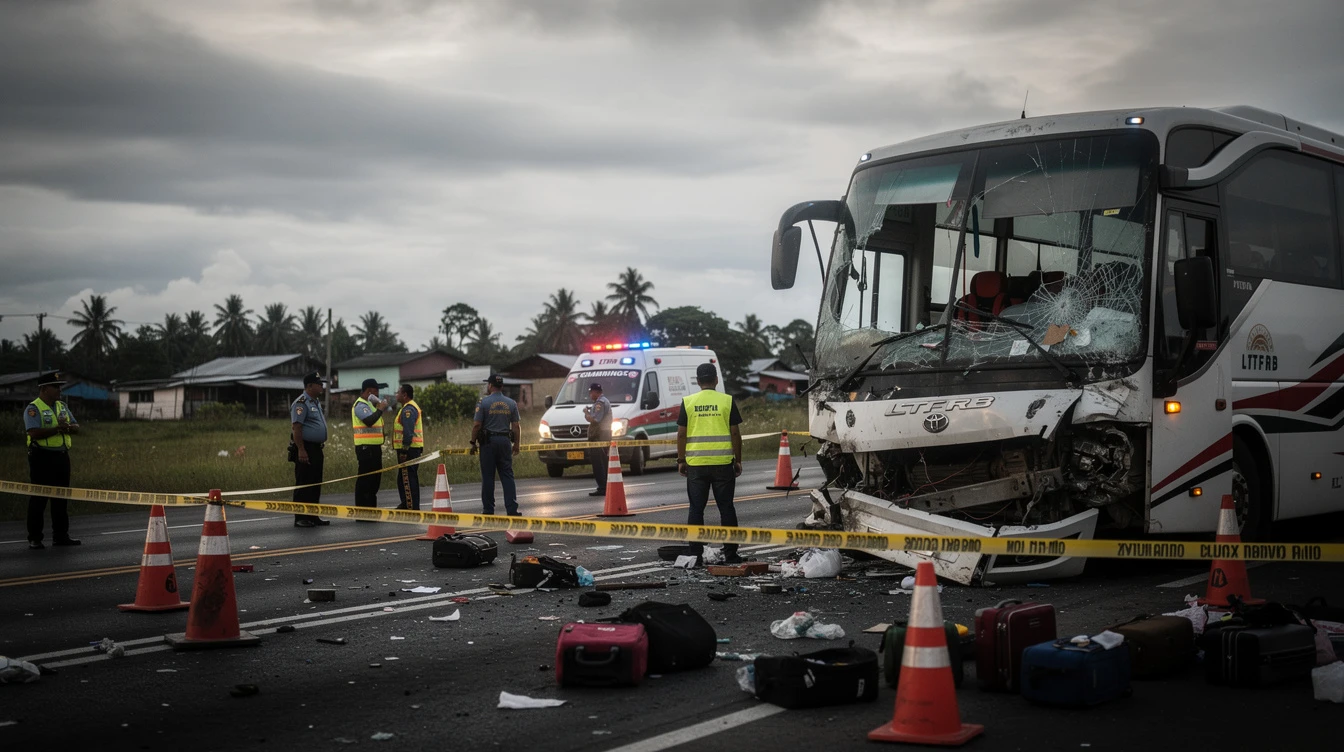
The tragic bus accident along a highway in Sipocot, Camarines Sur on April 9 has shaken commuters nationwide. The Land Transportation Franchising and Regulatory Board (LTFRB) swiftly responded by summoning the bus operator and placing it under preventive suspension.
The incident allegedly occurred at around 5 p.m. that fateful day, claiming lives and leaving several passengers injured. The LTFRB's immediate action signals a tough stance on road safety violations, especially for public utility buses (PUBs).
LTFRB Issues Show Cause Order
The LTFRB has issued a show cause order (SCO) against the operator,Mark-Eves Transit Corporation. The SCO demands the company explain why its franchise should not be revoked or suspended further. This is a standard yet powerful regulatory tool used when accidents involve fatalities or serious breaches.
According to the LTFRB, the operator must answer why it failed to ensure the safety of its passengers. The board is investigating if the company violated its franchise terms, including maintenance standards and driver conduct. Failure to provide a satisfactory response could lead to a permanent franchise cancellation.
Operator Under Preventive Suspension
Even before the formal hearing, the LTFRB ordered a preventive suspension of the bus operator. This means Mark-Eves Transit Corporation cannot operate any of its units until further notice. Such suspension is meant to prevent further accidents while the investigation is ongoing.
The LTFRB emphasized that this suspension is not a penalty but a precautionary measure. However, it highlights the gravity of the incident and the regulator's commitment to public safety. The operator is effectively grounded indefinitely.
What Happened in the Camarines Sur Crash
The accident took place along a winding road in Sipocot, a town known for its challenging terrain. The bus reportedly lost control, leading to a deadly collision. Eyewitness accounts suggest the vehicle was speeding, but this has yet to be confirmed by investigators.
The LTFRB also noted that the driver initially left the scene after the mishap. This act of fleeing raised serious concerns. The driver eventually returned, but the LTFRB has already summoned him for willful disregard of traffic laws. A separate case may be filed against the driver personally.
Previous Incidents and Pattern of Violations
This is not the first time Mark-Eves Transit Corporation has faced scrutiny. The company has a history of traffic violations, including previous accidents and complaints from passengers. The LTFRB is now examining whether a systemic failure exists within the company's safety management.
According to records, the same operator was previously involved in a collision in Quezon province. That incident also resulted in injuries. The recurrence indicates a possible culture of negligence that the LTFRB wants to dismantle. The current show cause order aims to force a reckoning.
Real-World Impact on Commuters and the Industry
For the millions of Filipinos who rely on provincial buses daily, this incident is a sobering reminder of the risks on the road. The suspension of Mark-Eves Transit Corporation affects dozens of routes, particularly in Bicol region. Passengers are left scrambling for alternative transportation, often paying higher fares.
Consumer advocacy groups have called for stricter enforcement of safety standards. They argue that the LTFRB must impose heavier penalties, including immediate franchise revocation for fatal accidents. The current suspension, while strong, is seen by some as merely a band-aid solution.
Legal and Financial Consequences
The operator now faces multiple liabilities. Beyond potential franchise loss, Mark-Eves Transit Corporation must compensate the families of victims. Civil cases for damages are likely, along with possible criminal charges under the Anti-Distracted Driving Act and other laws.
Insurance claims will also pile up. The LTFRB requires all PUBs to carry passenger personal accident insurance of at least PHP 200,000 per seat. But for fatalities, families often demand much more. The company's financial future hangs in the balance.
Expert Opinions on Bus Safety in the Philippines
Transportation safety experts point to systemic issues.Road safety advocate Atty. Arnel Ocampo told our team that "the regulatory framework is strong on paper, but enforcement on the ground is weak." He cited lack of random roadside inspections and lenient penalties for minor violations.
The LTFRB, however, has ramped up operations. It now requires all buses to install speed limiters and GPS trackers. But as the Camarines Sur crash shows, technology alone cannot prevent accidents if drivers are reckless. The human factor remains the biggest variable.
Future Outlook: Stricter Rules Ahead
The LTFRB has announced that it will fast-track the revision of its guidelines on preventive suspension. Under the new rules, any bus involved in a fatal accident will be automatically suspended for 30 days pending investigation. This move aims to speed up accountability.
Legislators are also pushing for higher franchise fees and stiffer penalties. House Bill 1234 proposes a minimum of 10 years imprisonment for operators whose negligence leads to deaths. If passed, this could revolutionize road safety in the Philippines.
For now, the LTFRB expects Mark-Eves Transit Corporation to submit its written explanation within 72 hours. The company must also present evidence of its safety compliance. Failure to comply may result in an immediate recommendation for franchise cancellation.
As the investigation unfolds, one thing is clear: the era of impunity for reckless bus operators is ending. The LTFRB, backed by public outrage, is sending a message that Philippine roads must be safe for all.
For more on Philippine transport regulations and safety news, visit our Transportation section. Know more about our editorial standards.