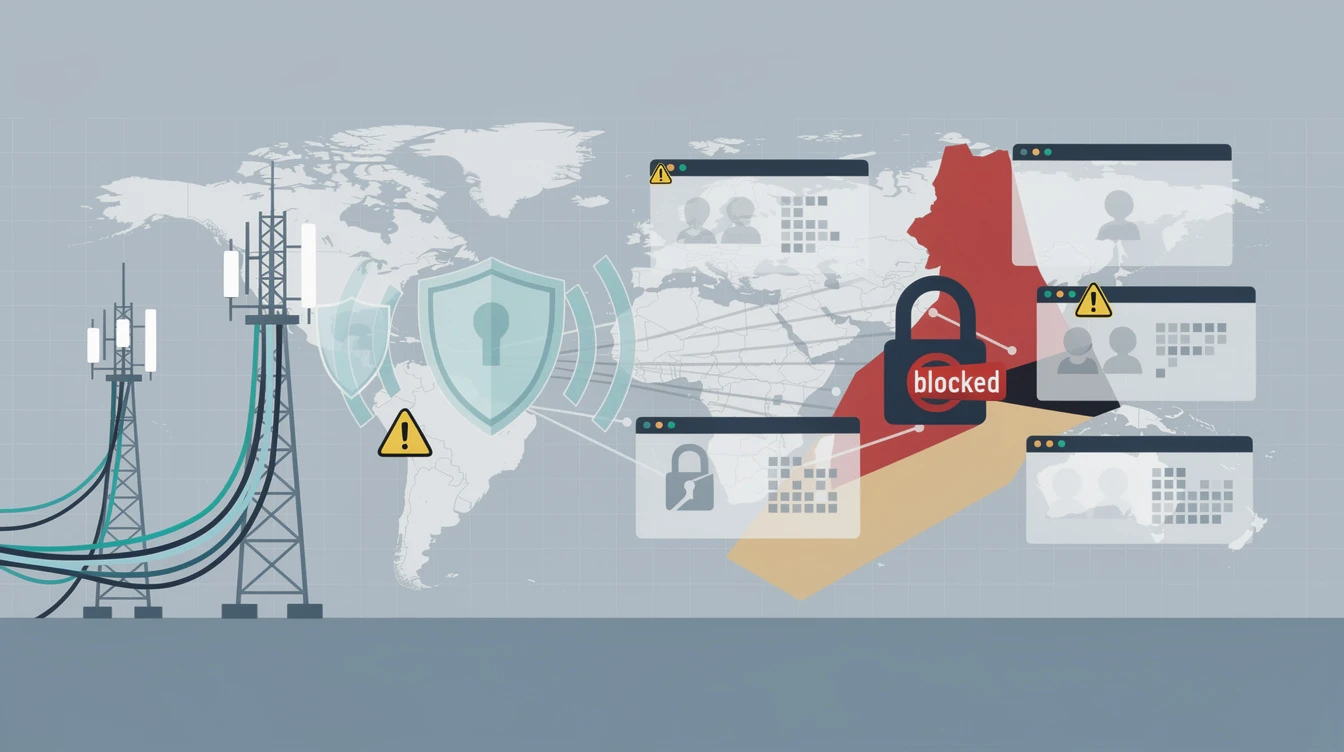
Jordan has blocked all pornographic websites across fixed and mobile networks under a new directive from the Telecommunications Regulatory Commission. The move, announced on April 1, 2026, cites fraud and exploitation risks, with lawmakers welcoming the restriction. The ban has sparked online debate.
Government Directive and Scope
The Telecommunications Regulatory Commission (TRC) of Jordan issued an order requiring all Internet service providers to block access to adult websites. Enforcement is already underway across the nation's fixed and mobile networks.
A TRC official told AFP that the move targeted all websites that are "harmful, pornographic or violate legislation." The directive aims to "confront the risks of fraud and exploitation" associated with such sites.
Lawmaker Response
Jordanian lawmakers have welcomed the telecom crackdown. The directive was issued on April 1, 2026 and applies to all internet service providers in the country.
According to Royanews, Jordan began blocking pornographic websites immediately following the order. The ban covers both fixed-line and mobile internet connections.
Rationale Behind the Ban
The TRC argued that pornographic websites pose risks beyond moral considerations. The commission specifically cited fraud and exploitation risks as key drivers for the directive.
Authorities said the measure is necessary to protect citizens from malicious content that could lead to financial scams or personal data theft. The ban targets all websites that violate Jordanian legislation.
Enforcement and Technical Details
Internet service providers in Jordan have been ordered to implement the block immediately. Technical enforcement includes domain filtering and IP address blocking for adult content sites.
The ban applies to all fixed and mobile networks operated by Jordanian telecom companies. The TRC has not specified which websites are being blocked but said the criteria include any content harmful or pornographic.
Public Reaction and Debate
The ban has sparked debate online. On social media platforms like Facebook, users expressed mixed reactions. Some praised the move as protecting families, while others criticized it as censorship.
One post on Facebook from The Sun Malaysia noted that "the ban has sparked debate online." The news spread quickly across Jordanian social media channels, with discussions about internet freedom versus protection.
For Philippine readers, this development raises questions about digital sovereignty. Should the Philippines consider similar measures? Learn more abouttechnology trends at PinoyPulse.
Potential Impact on Regional Policy
Jordan is the latest Middle Eastern country to impose a nationwide ban on adult content.Saudi Arabia, United Arab Emirates, and Iran have similar restrictions in place.
For the Philippines, where internet regulation is often debated, Jordan's move could influence future policy discussions. The Philippines currently has no nationwide ban on adult websites.
According to a GMA News report, the TRC's directive is comprehensive. It aims to confront exploitation risks that extend beyond pornography to include malware and phishing attacks often embedded in such sites.
Technical and Legal Framework
The TRC operates under Jordan's telecommunications law, which grants it authority to regulate internet content. ISPs that fail to comply could face penalties.
The directive targets websites that "violate legislation," meaning any content deemed illegal under Jordanian law is automatically blocked. This includes not only pornography but also gambling and hate speech.
Legal experts say the ban is enforceable because Jordan's internet infrastructure is centralized. The Philippines, with its fragmented internet market, would require a different approach.
Debate Over Effectiveness
Critics argue that technical blocks are easily bypassed using VPNs and encrypted DNS. Supporters say the ban reduces easy access to harmful content.
A Royanews report noted that Jordan began blocking websites immediately after the order. The speed of enforcement suggests the TRC had prepared for this move.
For a deeper look at how other countries regulate internet content, visit theAbout PinoyPulse page.
Broader Implications for Online Safety
Jordan's move highlights the tension between internet freedom and online safety. The TRC emphasized fraud and exploitation risks, which are growing concerns globally.
In the Philippines, similar debates arise around the SIM Card Registration Act and anti-cybercrime laws. The question remains whether blocking entire categories of websites is effective.
Read related articles oncybersecurity andpolicy at PinoyPulse.
Conclusion: What This Means for Filipinos
Jordan's nationwide ban on pornographic websites sets a precedent for Middle Eastern internet regulation. For Filipino readers, the development underscores the ongoing global debate between protection and censorship.
The Philippines may face pressure to adopt similar measures as lawmakers discuss online safety bills. However, cultural and legal differences will shape any potential local policy.
Understanding Jordan's rationale—fraud and exploitation—can inform Philippine internet governance discussions. The key takeaway is that blanket bans remain controversial but are increasingly considered by governments worldwide.