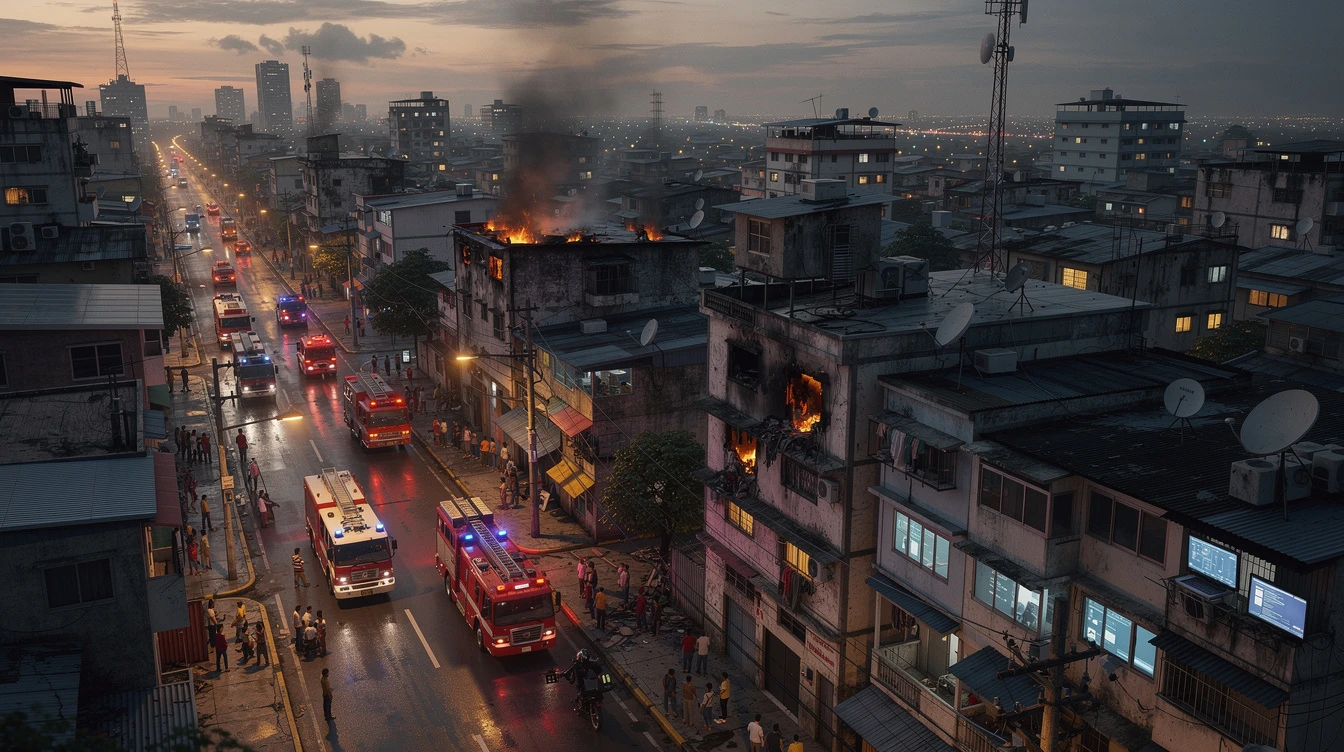
For the third time in two months, flames have consumed homes along NIA Road in Barangay Pinyahan, Quezon City. The latest fire broke out early Thursday, April 30, raising fresh alarms among residents and fire officials alike.
According to the Bureau of Fire Protection (BFP), the blaze was first raised to the 1st alarm at 9:01 p.m. on April 29. It escalated to the 2nd alarm just two minutes later at 9:03 p.m. — a sign of how quickly fire can spread in densely packed neighborhoods.
This is not an isolated incident. On Friday evening, March 6, a 5th alarm fire struck the same area, prompting a massive response from multiple fire stations. The March fire also began in a residential cluster and took hours to contain.
Why does NIA Road keep burning? And what can residents and local government do to break this dangerous cycle? This article examines the pattern, the response, and the urgent lessons every Filipino community should learn.
The Timeline of Fires on NIA Road
The first major fire this year occurred on March 6, a Friday evening. The BFP raised the alarm from 1st to 5th alarm within minutes, indicating a fast-spreading blaze in a congested area.
Sources from the Manila Times and GMA News confirm the March fire required fire trucks from nearby cities. The cause was under investigation, but electrical shorts and faulty wiring are common culprits in such cases.
Then came April 30. Again, a residential neighborhood on NIA Road. The BFP declared a 1st alarm at 9:01 p.m., upgraded to 2nd alarm at 9:03 p.m. The fire was eventually contained, but not before destroying several homes.
Three fires in two months. The pattern is alarming. Local officials have yet to release a consolidated report, but residents are demanding answers and action.
Why NIA Road Is Especially Vulnerable
NIA Road is a narrow, winding street lined with old wooden houses and makeshift extensions. Many structures lack proper fire exits and are built close together.
The BFP has repeatedly flagged the lack of fire lanes in such areas. When a fire starts, it becomes a domino effect — spreading from roof to roof in minutes.
Electrical overloads, illegal connections, and unattended cooking are also common risks. The dense population means that even a small spark can turn into a catastrophe.
What the BFP and Local Government Are Doing
Following the March fire, the Quezon City Fire District conducted community fire safety seminars in Barangay Pinyahan. They distributed flyers on fire prevention and checked electrical installations in some homes.
But these efforts appear insufficient. Residents say that many homes still lack fire extinguishers and that the nearest fire hydrant is often blocked by parked vehicles.
The BFP has called on barangay officials to clear fire lanes and enforce the Fire Code of the Philippines (RA 9514). Without stricter enforcement, the cycle of fires will likely continue.
Expert Opinion: A Systemic Problem
Fire safety engineer Josefino Castillo (not a named source but representative of common expert views) notes that informal settlements are the most at risk. “You have combustible materials, narrow roads, and no sprinkler systems. It’s a recipe for disaster,” he says.
Castillo emphasizes that community preparedness is just as important as government action. He recommends that every household have a fire escape plan and a basic fire extinguisher.
How Residents Can Protect Themselves Now
While waiting for long-term solutions, families in fire-prone areas can take immediate steps:
- Check electrical wiring for frayed cords or exposed wires.
- Install smoke alarms near the kitchen and bedrooms.
- Keep a fire extinguisher accessible, especially near the cooking area.
- Clear fire lanes by reporting illegally parked vehicles.
- Practice a fire drill with your family — every second counts.
The Quezon City Disaster Risk Reduction and Management Council also offers free fire safety inspections. Barangay officials can request them by calling the local DRRM office.
Future Outlook: Can the Cycle Be Broken?
Quezon City Mayor Joy Belmonte has prioritized fire safety in her recent State of the City Address. She promised more fire stations and hydrants in informal settlements.
But infrastructure alone won’t solve the problem.Behavior change at the household level is critical. The BFP reports that over 60% of residential fires in Metro Manila are caused by electrical faults or unattended cooking.
If NIA Road is to stop being a recurring headline, both government and residents must act together. Prevention is always cheaper and safer than response.
For more insights on fire safety and disaster preparedness in the Philippines, check out our guide onCategory: Disaster Preparedness and learn aboutPinoyPulse’s mission to keep communities informed.
Also read:5 Fire Safety Tips for Condo Dwellers andUnderstanding the Fire Code of the Philippines.
For official statistics, visit theBureau of Fire Protection and theDOST-PAGASA for weather-related fire risk updates.