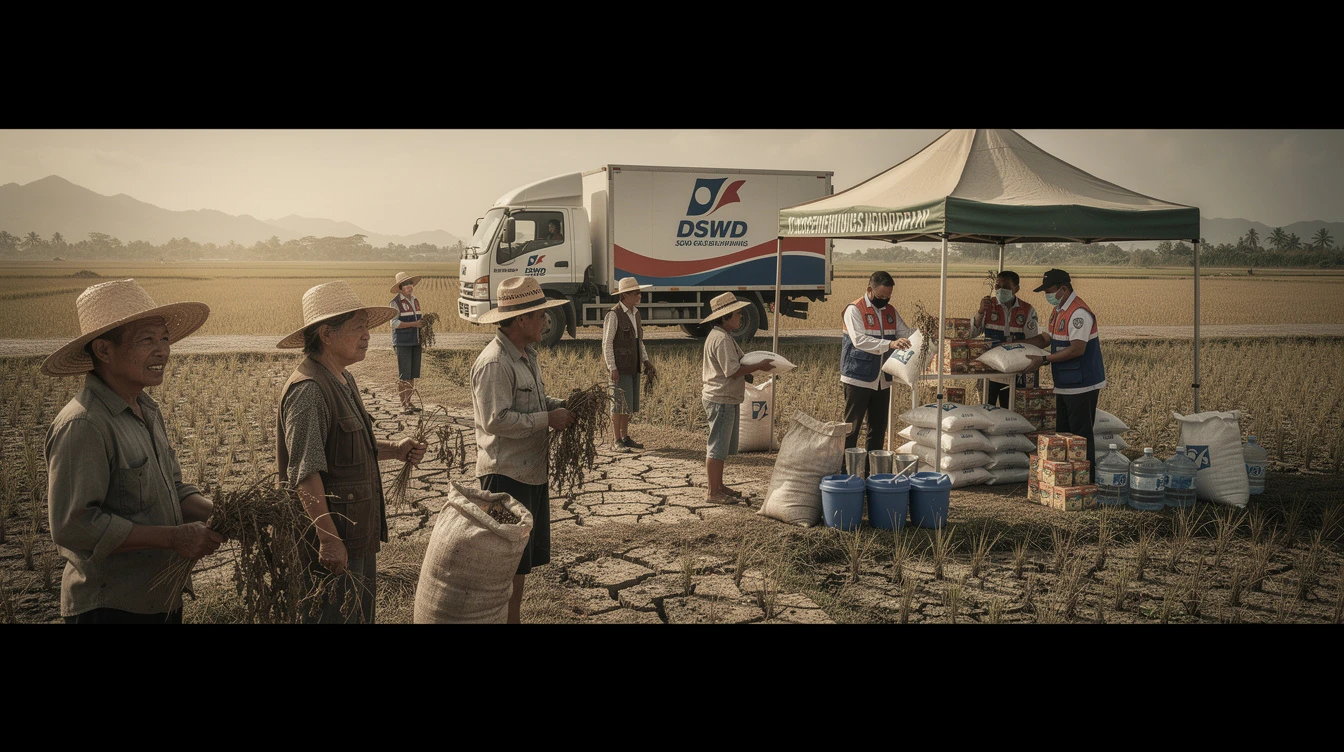
The Department of Social Welfare and Development (DSWD) is now preparing to immediately distribute financial assistance to farmers affected by the severe drought in Cagayan. This move comes as El Niño continues to parch farmlands, threatening the livelihoods of thousands.
DSWD spokesperson Assistant Secretary Irene Dumlao confirmed in a statement that the agency is ready to provide cash aid. The assistance aims to help farmers recover from crop losses caused by the prolonged dry spell.
Background: Why Cagayan Farmers Need Help Now
Cagayan Valley is a key agricultural region in the Philippines. It produces rice, corn, and high-value crops that feed millions. But the current El Niño phenomenon has caused prolonged dry conditions, severely reducing water supply for irrigation.
According to the Philippine Atmospheric, Geophysical and Astronomical Services Administration (PAGASA), El Niño is expected to persist until mid-2026. This means more dry days ahead for farmers already struggling with low yields.
Local officials report that thousands of hectares of farmland have been affected. Farmers face dwindling harvests, forcing some to borrow money just to survive.
Why DSWD's Response Is Critical
The DSWD is the lead agency for social protection. Its Emergency Cash Transfer (ECT) program is designed to provide immediate relief to families hit by disasters, including drought. This is not a loan — it is a grant that does not need to be repaid.
Assistant Secretary Dumlao emphasized that the DSWD is coordinating with the Cagayan provincial government to identify the most affected farmers. This ensures that aid reaches those who need it most, without delays.
Key Facts About the DSWD Aid Package
Here are five essential facts every Filipino should know about this assistance:
1. Cash Assistance Is the Main Form of Aid
The DSWD will distribute financial assistance directly to affected farmers. This cash aid can be used for immediate needs such as food, water, or farm inputs for the next planting season.
2. Coordination With Local Government Is Key
The DSWD is working closely with the Cagayan provincial government. Together, they will validate the list of farmer-beneficiaries to ensure accuracy and fairness.
3. Aid Targets the Most Vulnerable
Priority will be given to small-scale farmers who have no other source of income. Those with large landholdings or alternative livelihoods may not qualify.
4. No Fixed Amount Yet, but Fast Disbursement
The exact amount per farmer has not been announced. However, the DSWD has a track record of releasing funds within 72 hours after validation. This speed is crucial during a crisis.
5. Aid Is Part of a Larger Government Response
The Department of Agriculture (DA) and National Irrigation Administration (NIA) are also involved. They provide seeds, cloud seeding, and water management support to complement DSWD's cash aid.
Expert Opinion: What This Means for Farmers
Agricultural economist Dr. Maria Santos of the University of the Philippines Los Baños told PinoyPulse that cash aid is "a lifeline" for farmers. She said: "Cash allows farmers to decide what they need most — food for their families or inputs for replanting."
She cautioned, however, that aid alone is not enough. "We need long-term solutions like drought-resistant seeds and better irrigation," she added. The DSWD's emergency cash transfer is a stopgap measure, not a permanent fix.
Real-World Impact: A Farmer's Story
In Enrile, Cagayan, farmer Rogelio Castro lost half of his rice crop this dry season. He told local media: "We have no harvest to sell. The DSWD cash aid will help us buy rice and send our children to school."
Rogelio's story reflects the reality of many. The DSWD's quick action is bringing hope to rural communities where every centavo counts.
How to Apply for DSWD Aid
Farmers do not need to apply individually. The DSWD will work through the Municipal Social Welfare and Development Office (MSWDO) in each town. Farmers should coordinate with their barangay captain or local MSWDO officer.
Requirements typically include a valid ID and a certification from the Department of Agriculture confirming crop damage. The DSWD has set up a hotline for inquiries:(02) 8-931-8101.
Future Outlook: What to Expect
The DSWD plans to expand the aid program if El Niño intensifies. The agency is also preparing food packs for families in extreme cases.Assistant Secretary Dumlao assured the public that the agency "will not leave farmers behind."
Climate experts warn that El Niño may last until August 2026. This means more dry months ahead. The Philippine government is working on a national drought contingency plan to protect farmers in the long run.
For now, the DSWD cash aid is a welcome relief. It shows that the government is listening to the cries of the agricultural sector. Every peso counts, and every farmer matters.
Frequently Asked Questions
Who is eligible for the DSWD cash assistance?
Small-scale farmers in Cagayan whose crops were damaged by the drought. The local government will verify eligibility based on DA certifications.
How much cash aid will each farmer receive?
The exact amount has not been announced. It will depend on the severity of damage and available funds. Typical DSWD emergency cash transfers range from P3,000 to P5,000 per family.
When will the cash aid be distributed?
The DSWD aims to release aid within 72 hours after the final list of beneficiaries is validated. The agency is currently coordinating with provincial officials.
Can farmers outside Cagayan also receive aid?
The DSWD is focusing on Cagayan first because of severe drought reports. However, the agency may expand the program to other regions if El Niño affects more areas.
Stay updated with more news on Philippine agriculture and social welfare atPinoyPulse News. Learn more about our missionhere.