Daily Traffic Gridlock Drains PHP 3.5 Billion From Metro Manila Economy
Metro Manila's transportation network, a circulatory system carrying more than 15 million people daily across the Philippine capital, is buckling under the weight of its own success. The region, home to approximately 13 million residents spread across 16 cities and municipalities, generates an estimated PHP 3.5 billion in economic losses each day due to traffic congestion—a figure that underscores the severity of a crisis that has become as much a part of daily life in the National Capital Region as the tropical heat.
A Region Built for Movement, Stalled by Progress
The National Capital Region spans approximately 619 square kilometers, making it one of the most densely populated urban areas in Asia. Its road network comprises roughly 1,900 kilometers of thoroughfares, including major arteries like EDSA (Epifanio de los Santos Avenue), C-5 (Circle Road 5), and numerous radial roads connecting the capital to provincial destinations. Yet despite this infrastructure, vehicle registrations in NCR exceed 2.5 million, overwhelming capacity and transforming what should be pathways of opportunity into corridors of frustration.
The transportation challenges facing Metro Manila did not emerge overnight. They represent the accumulated consequences of decades of urbanization that has consistently outpaced infrastructure development. As rural populations migrated to the capital seeking economic opportunity, the city's transportation planning struggled to respond with equivalent speed. The result is a region that has grown into an economic powerhouse while simultaneously becoming synonymous with gridlock.
Coordinating Chaos: The MMDA and Fragmented Jurisdiction
Recognizing the need for coordinated transportation management, the national government established the Metro Manila Development Authority (MMDA) in 1990. The agency was tasked with overseeing transportation and traffic management across the region's diverse local government units, from the city halls of Quezon City and Manila to the municipal offices of Pateros. The creation of the MMDA represented an acknowledgment that Metro Manila's transportation challenges transcended individual city boundaries and required regional solutions.
However, the authority's mandate has faced persistent limitations. Jurisdictional fragmentation over roads, terminals, and public utility vehicles continues to present coordination challenges. Different agencies oversee different aspects of transportation—the Department of Transportation oversees national transport policy, local government units manage certain roads within their territories, and various regulatory bodies govern vehicle registration and driver licensing. This diffusion of authority has complicated efforts to implement cohesive, region-wide transportation strategies.
The Modernization Imperative
Among the policy responses to Metro Manila's transportation crisis, the Public Utility Vehicle (PUV) Modernization Program stands as a central initiative aimed at transforming the region's public transportation fleet. The program seeks to upgrade aging jeepneys and buses that have long served as the backbone of Manila's commuter network, replacing older vehicles with models meeting modern safety, emissions, and accessibility standards.
The modernization effort reflects a broader recognition that Metro Manila's public transportation system requires substantial investment and reform to meet the needs of its growing population. Beyond vehicle upgrades, the initiative includes improvements to routes, terminals, and the overall operational framework governing public transportation in the capital region.
Transportation analysts point to the interconnected nature of these challenges. Modernizing vehicles alone cannot resolve systemic issues related to road capacity, traffic management, and land use planning. Yet vehicle upgrades represent a tangible starting point—a visible transformation that can complement broader infrastructure and policy reforms.
The Human Cost of Congestion
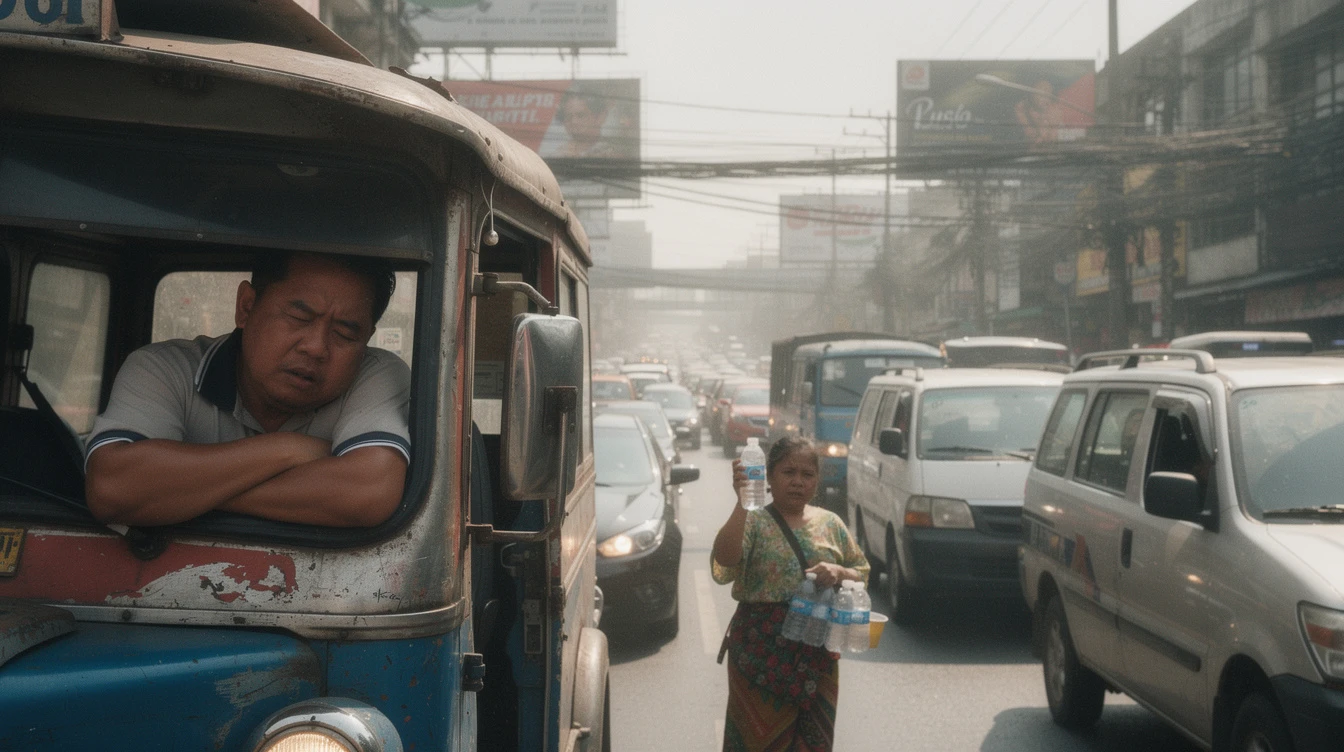
Behind the statistics and policy discussions lies a daily reality experienced by millions of Manila residents. The average commuter in Metro Manila spends hours each day navigating the region's transportation network, time that might otherwise be devoted to work, family, or rest. Students arrive at school exhausted before instruction begins. Workers reach their jobs already depleted by the journey. Small businesses struggle with delayed deliveries and unpredictable schedules.
The economic implications extend beyond the PHP 3.5 billion daily loss calculated by transportation economists. This figure captures productivity losses but does not fully account for the broader impacts on quality of life, environmental sustainability, and social equity. Those without private vehicles—the majority of Metro Manila's population—bear a disproportionate burden of the transportation system's failures.
Infrastructure and Innovation
Efforts to address Metro Manila's transportation challenges have included both traditional infrastructure projects and innovative approaches to traffic management. Road widening projects, new interchanges, and expanded public transit options have all featured in government plans. The expansion of the metro rail transit system and improvements to bus rapid transit routes represent attempts to provide alternatives to private vehicle use.
Traffic management technologies, including synchronized signal systems and real-time traffic monitoring, have been deployed across major thoroughfares. These tools aim to optimize traffic flow and reduce the friction that compounds congestion across the network. Yet technology alone cannot substitute for the fundamental capacity constraints inherent in a road network that was not designed for the volume it now carries.
Looking Ahead
Metro Manila stands at a crossroads. The transportation challenges accumulated over decades cannot be resolved through any single initiative or intervention. They require sustained commitment, coordinated governance, and realistic acknowledgment of both the progress that has been made and the distance that remains to be covered.
The PUV Modernization Program and other policy efforts represent steps in the right direction, though their ultimate success will depend on effective implementation, adequate funding, and meaningful engagement with the communities they are designed to serve. For the millions of commuters who navigate Metro Manila's roads each day, the hope is that future headlines about transportation in the capital will document progress rather than continuing crisis.
The region's transportation network carries the aspirations of a nation—the daily movement of workers, students, and families who contribute to the economic vitality that makes Metro Manila the engine of Philippine development. How that network evolves in the coming years will shape not only the capital's future but the trajectory of the country itself.