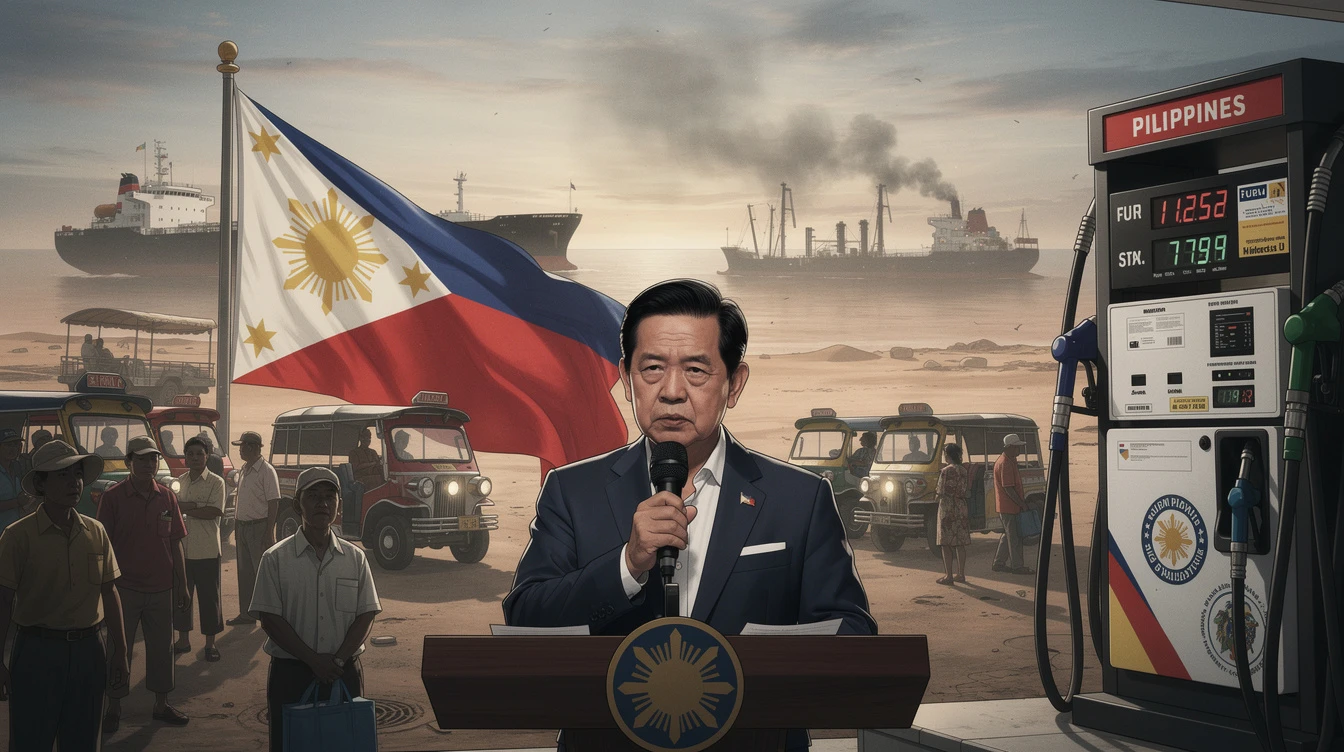
Marcos Signals Willingness for Bayanihan 3 Package
Facing relentless pressure from rising fuel costs driven by Middle East tensions, President Ferdinand Marcos Jr. has left the door open for a third Bayanihan law to help Filipinos cope with the economic strain. Malacañang confirmed the possibility on Sunday, citing the government's commitment to protecting ordinary citizens from the ripple effects of the global energy crisis.
First-Ever National Energy Emergency Declared
The Philippines has declared a state of national energy emergency—the first of its kind in the world amid the ongoing Middle East crisis. This extraordinary measure signals how seriously the government views the threat to the nation's energy supply. Officials say the declaration gives the administration the flexibility to deploy emergency powers and fast-track solutions to keep fuel prices from spiraling further out of control.
Energy Conservation Directive Issued
Last week, Marcos urged government agencies and the public to conserve energy resources as tensions in the Middle East continue to disrupt oil supplies. He directed all executive departments to implement austerity measures immediately. The President called on ordinary Filipinos to join the effort, framing energy conservation as a patriotic duty that every household can fulfill.
Targeted Fuel Subsidies for Critical Sectors
Marcos announced that targeted fuel subsidies will be extended to critical sectors if Dubai crude prices remain elevated. The transportation and agriculture industries are high on the priority list. These sectors bear the heaviest burden when diesel and gasoline prices climb, and their struggles eventually reach every Filipino kitchen table.
Transportation Sector to Receive Priority Support
Public utility drivers, including jeepney and bus operators, are expected to benefit from the proposed subsidy program. The government recognizes that fuel costs directly determine fare prices. Without intervention, commuters would shoulder the burden through higher jeepney and bus fares across the country.
Agriculture Sector Also in the Subsidy Plan
Farmers and fisherfolk will also receive targeted assistance under the plan. Rising fuel costs raise the cost of plowing fields, transporting produce, and running irrigation systems. The administration wants to prevent these additional costs from pushing food prices higher during an already difficult period for Filipino families.
Call for Bayanihan Spirit Amid Crisis
Marcos urged Filipinos to embrace the bayanihan spirit as the government rolls out measures to ease the burden of rising fuel prices. He asked every household to participate actively in conservation efforts and to trust that the administration is working to soften the economic impact. The President emphasized that overcoming this challenge requires unity between government and citizens.
Government Response Timeline
Palace officials said the specifics of the Bayanihan 3 package are still being finalized. Lawmakers in both chambers of Congress have expressed openness to supporting additional emergency measures. A joint session or special session may be convened if the fuel situation deteriorates further in the coming weeks.
Global Factors Driving the Energy Crisis
The ongoing Middle East conflict has pushed Dubai crude to record levels, affecting oil markets worldwide. The Philippines, as a net oil importer, has limited ability to control global prices. Officials say the government's strategy combines immediate subsidies with longer-term measures to reduce dependence on imported fuel.