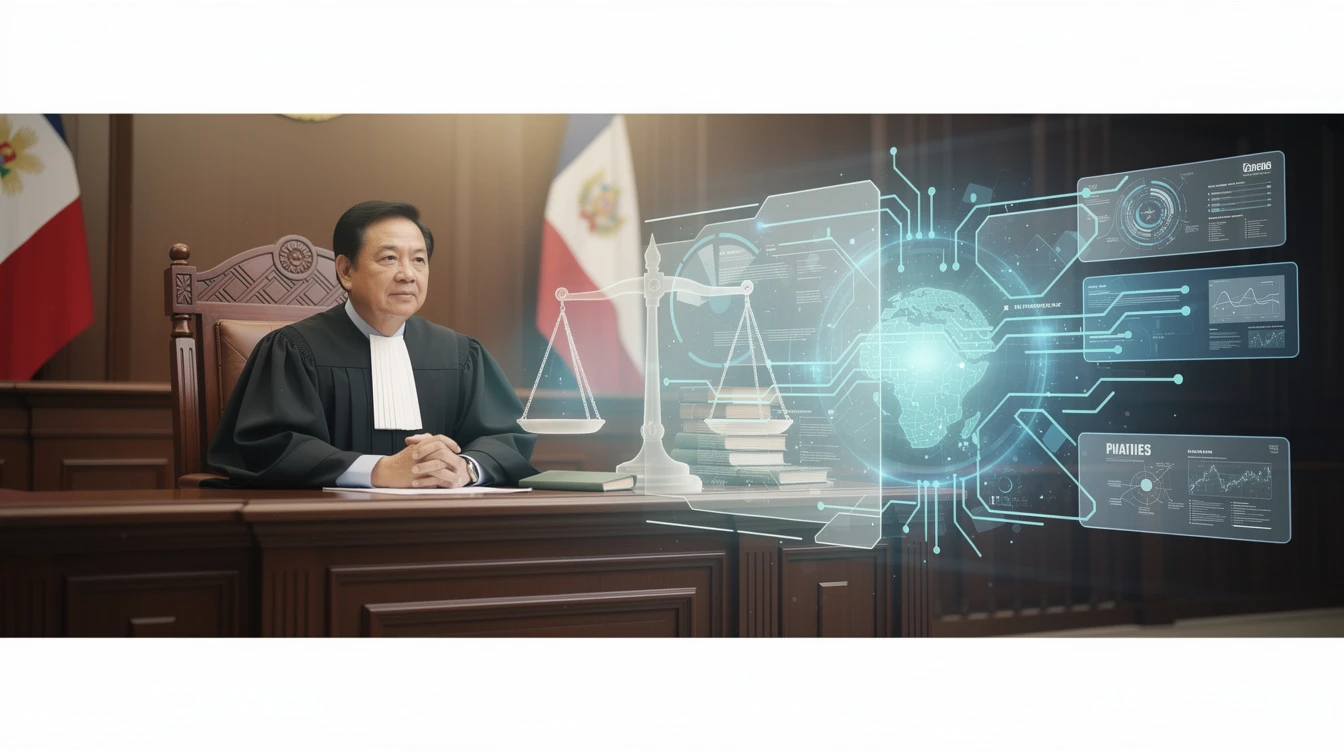
Chief Justice Alexander G. Gesmundo has reminded trial court judges that while they can harness technology like artificial intelligence (AI), it must never replace their independent judicial reasoning. The Supreme Court head delivered this message during a recent seminar for judges, emphasizing that AI serves as a tool to aid legal processes, not a substitute for human judgment in the bench.
Human Judgment Remains Central in Court Decisions
Gesmundo stated that although AI can be a valuable tool in the legal system, human judgment ultimately decides cases. Judges must maintain their role as the final arbiters of justice, using AI only to assist in research or administrative tasks. This approach aligns with the court's focus on efficiency without compromising legal reasoning.
"While AI can be a valuable tool in the legal system, human judgment ultimately decides cases," Gesmundo said in his address to the judges.
The Chief Justice stressed that technology should enhance the capacity of judges to dispense justice, not diminish their responsibility to apply facts and law in every ruling.
Strategic Plan for Judicial Innovations 2022-2027
Gesmundo also discussed the Strategic Plan for Judicial Innovations 2022-2027 (SPJI), which aims to modernize the Philippine judiciary through systematic technology adoption. Under this plan, AI integration in courts includes safeguards to ensure it enhances rather than erodes due process and fairness in the legal system.
The SPJI represents the Supreme Court's roadmap for incorporating technological advancements while preserving the core principles of judicial independence and impartial adjudication. The plan acknowledges the growing role of digital tools in legal practice while maintaining the human element essential to justice delivery.
AI Cannot Replace Nuanced Judicial Analysis
The Chief Justice emphasized that AI cannot replicate the nuanced context and empathy required in judicial rulings. Judges must critically evaluate AI-generated outputs and apply their own analysis before arriving at decisions. The judiciary's duty to dispense justice based on facts and law remains non-negotiable, with AI serving only as a supporting mechanism.
Legal experts note that AI systems, while capable of processing large volumes of data and identifying patterns, lack the ability to understand social context, cultural considerations, and the human elements that often influence legal disputes. These limitations underscore why judicial reasoning must remain fundamentally human-centered.
Proper Use of AI in Courts
According to the Supreme Court's guidance, AI can be appropriately used for tasks such as legal research, document review, case management, and administrative processes. However, judges retain full responsibility for all decisions rendered in their courtrooms. Technology assists but does not absolve judges of their constitutional duty to fairly adjudicate cases.
The integration of AI tools in Philippine courts reflects a global trend in legal modernization, where judiciaries explore efficiency gains through automation while maintaining the quality of justice delivery. Many trial courts have begun utilizing digital systems for case tracking, scheduling, and documentation.
Balancing Technology and Judicial Independence
The Supreme Court's position reflects a balanced approach to technology adoption in the judiciary. While embracing innovations that can improve court efficiency and access to justice, the highest court ensures that technological tools remain subordinate to human decision-making in matters of justice.
This framework protects the independence of judges in their fact-finding and decision-making processes. It also addresses concerns about algorithmic bias and the need for transparency in court procedures, ensuring that technology serves justice rather than dictating outcomes.
The judiciary continues to monitor developments in AI and digital tools as they apply to legal practice. Training programs for judges include components on understanding the capabilities and limitations of technological assistance in adjudication.
Courts across the country are gradually adopting digital solutions under the SPJI framework, with appropriate training and protocols to ensure proper implementation. The goal remains enhancing access to justice for all Filipinos while upholding the rule of law.