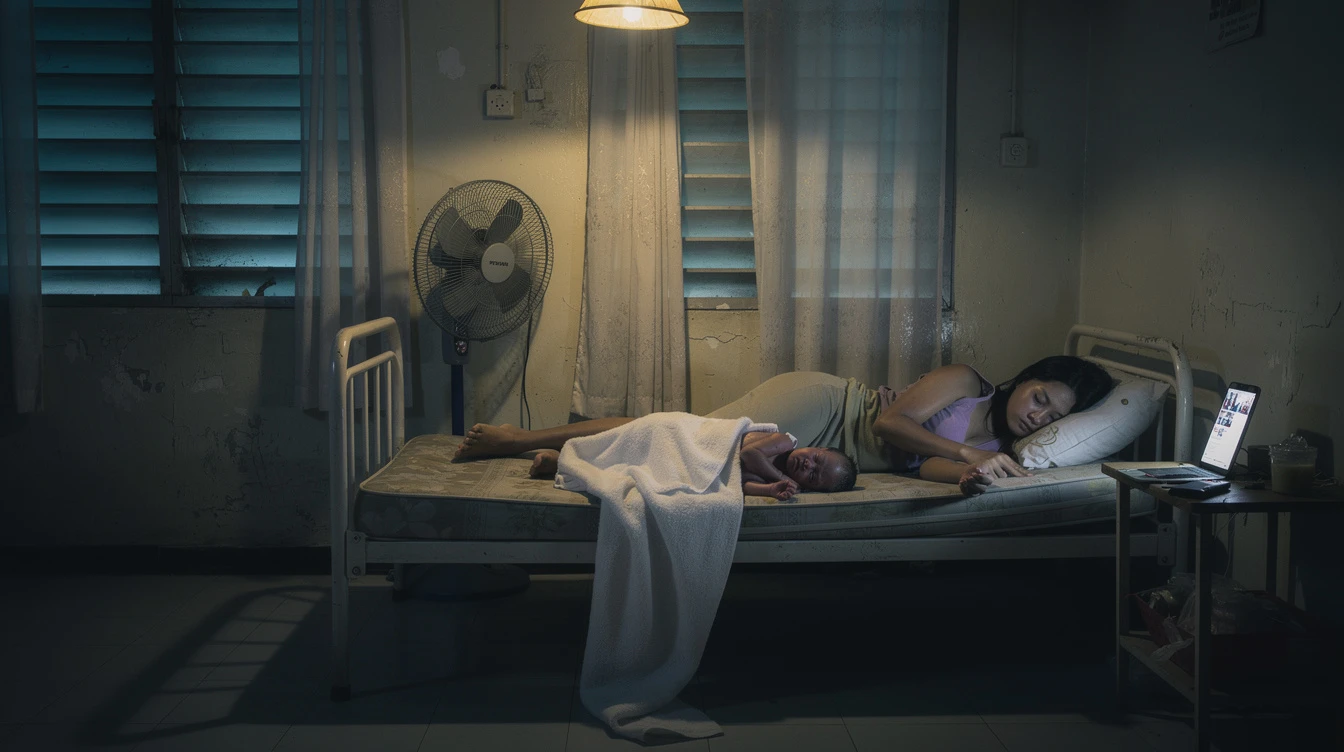
A 28-year-old woman died after giving birth alone in her rented boarding house in Cagayan de Oro City. Her newborn baby survived, authorities confirmed.
The incident occurred in Barangay Carmen on Tuesday evening. Neighbors heard cries but arrived too late to save the mother.
This tragedy spotlights a grim reality: many Filipino women still face childbirth without medical help.
What Happened in Cagayan de Oro
The victim, identified only as "Liza" (not her real name), lived alone in a small boarding unit. She was in her third trimester but had not told anyone she was pregnant.
According to GMA Regional TV One Mindanao, Liza went into labor alone. She managed to deliver the baby but suffered severe bleeding.
A neighbor named Maria said, "Nakarinig kami ng iyakan ng sanggol bandang 8 p.m. Kala namin pusa lang."
When Maria checked, she found Liza unconscious on the floor. The newborn was crying beside her.
Emergency responders rushed Liza to Northern Mindanao Medical Center, but doctors declared her dead on arrival due to massive hemorrhage.
The baby, a healthy boy weighing 2.8 kg, survived. He is now under the care of the Department of Social Welfare and Development (DSWD)-10.
Maternal Health in the Philippines: A Growing Concern
The Philippines has one of the highest maternal mortality ratios in Southeast Asia. Data from the Philippine Statistics Authority (PSA) showed 152 maternal deaths per 100,000 live births in 2020.
This figure rose to 162 per 100,000 in 2023, largely due to pandemic-related disruptions in health services.
For solo parents, the risks are even higher. Many avoid hospital visits due to financial constraints or fear of judgment.
Dr.Maria Santos, an obstetrician at the Philippine General Hospital, said, "We often see cases of women delivering alone at home. Some don't survive because of preventable complications."
The Department of Health (DOH) reported that 40% of maternal deaths in 2024 involved women who did not receive any prenatal care.
Why Women Give Birth Alone
Several factors drive this dangerous trend:
- Poverty: Many can't afford clinic fees or transportation to hospitals.
- Stigma: Unmarried mothers or those with unplanned pregnancies often hide their condition.
- Lack of information: Some women don't know the warning signs of complications.
- Poor access: Remote barangays lack birthing facilities.
Real-World Impact: The Case of Liza
Liza worked as a factory worker earning just PHP 450 daily. She had no savings and no health insurance.
Her landlord,Mr. Reyes, said she always kept to herself. "Hindi namin alam na buntis siya. Nakakahiya daw kasi."
The DSWD is now tracing Liza's family in Bukidnon. Her baby, whom neighbors have nicknamed "Jun-Jun," is currently in an orphanage waiting for relatives to claim him.
Government Programs That Could Help
The Philippine Health Insurance Corporation (PhilHealth) offers the Maternity Care Package, covering normal deliveries for PhilHealth members. But many informal workers aren't enrolled.
The Republic Act 11148, or the "First 1,000 Days Law," mandates free prenatal and postnatal care. However, implementation remains uneven across regions.
DOH has partnered with LGUs to establish "Ligtas Lusog" mobile clinics in far-flung areas, but only 30% of municipalities are covered.
Expert Opinion: What Needs to Change
Dr.Carlos Fernandez, a public health specialist at the University of the Philippines, stressed: "We need to normalize prenatal care for all women, regardless of marital status."
He also called for more community-based interventions where barangay health workers regularly check on pregnant women.
"Liza's death could have been prevented if she had someone to call for help," he added.
How You Can Help
If you know a pregnant woman who is isolated or in need, encourage her to visit the nearest rural health unit (RHU). Services there are often free or low-cost.
You can also donate to organizations like Save the Children Philippines or Munting Pangarap Foundation that support solo mothers.
FAQ: Common Questions About This Tragedy
Q: Did the baby survive completely unharmed?
A: Yes, the baby is healthy and under DSWD care. No complications have been reported.
Q: Could the mother have been saved if she had gone to a hospital?
A: Experts say yes. Early intervention for postpartum hemorrhage is highly effective with proper medical equipment.
Q: What should a pregnant woman do if she has no money for hospital birth?
A: She can go to any public hospital or RHU. PhilHealth covers normal deliveries even for those with zero payment.
Q: Are there laws protecting solo parents in the Philippines?
A: Yes, the Solo Parents' Welfare Act gives them benefits like additional leave and discounts, but many don't know about it.
This story is a stark reminder that maternal health is not just a medical issue—it's a societal one. We must reach out to lonely mothers and make help accessible.
For more in-depth analysis, read abouthealth stories on PinoyPulse.