In Johannesburg, a thick haze from coal-fired power plants often blankets the sky.
Residents now have a new digital shield: South Africa's first pollution warning app.
This innovation from the University of Witwatersrand offers a crucial question for the Philippines.
Could similar technology be the key to protecting millions of Filipinos from Metro Manila's own toxic air?
The South African Blueprint: A Digital Lifeline
Scientists launched the app in response to a dangerous spike in coal emissions.
It provides real-time air quality data and personalized health alerts.
The goal is to empower residents, especially the vulnerable, to make safer daily choices.
\"This is about giving people the information to protect themselves,\" a project lead stated.
Manila's Invisible Crisis: A Philippine Parallel
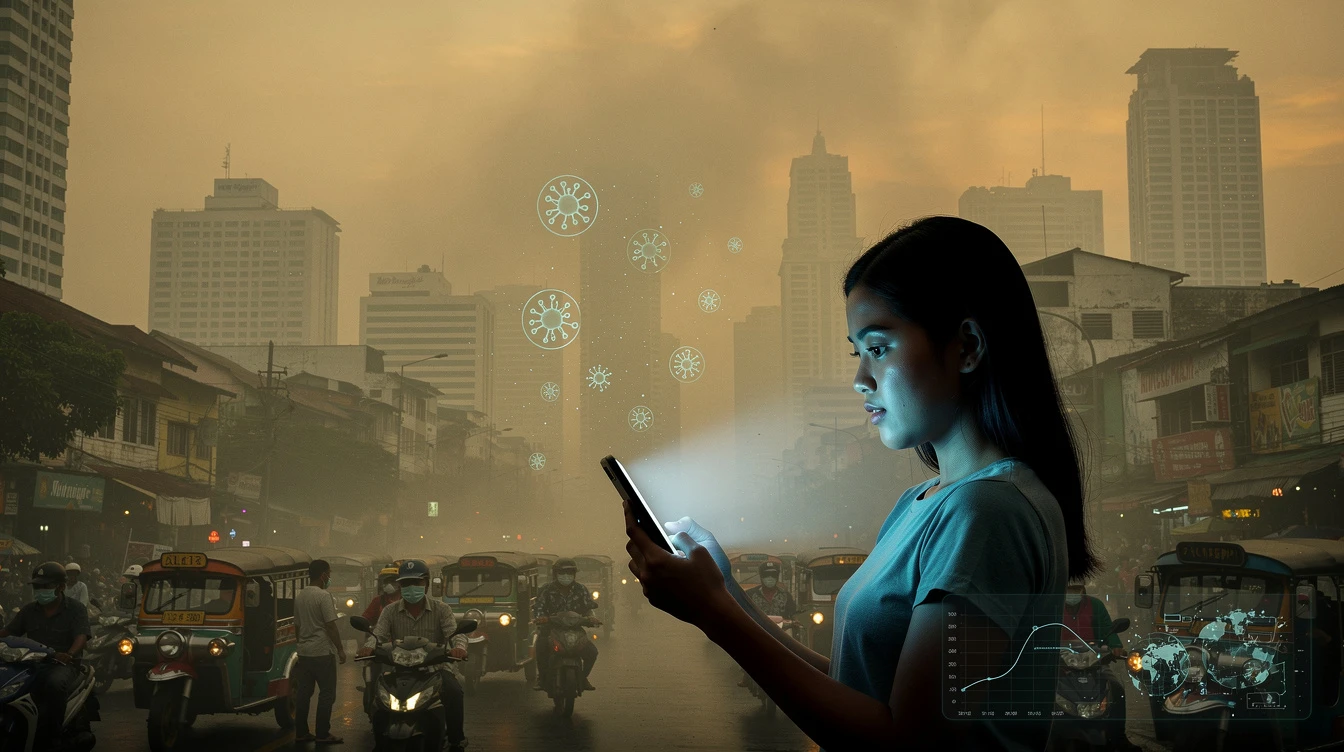
While Johannesburg grapples with coal, Metro Manila faces a complex pollution cocktail.
Vehicle emissions, industrial discharge, and even volcanic ash create a persistent haze.
The World Health Organization consistently flags Philippine urban air as a major health risk.
Respiratory illnesses linked to air pollution remain a leading cause of morbidity.
Current Philippine Monitoring: Gaps in the Data
The Philippines has monitoring stations run by the DENR's Environmental Management Bureau.
Data is published online, but public awareness and real-time accessibility are limited.
There is no centralized, user-friendly public alert system for sudden pollution spikes.
This gap leaves commuters, outdoor workers, and families unaware of daily risks.
Why a Philippine Pollution App Makes Sense
High smartphone penetration makes an app a viable public health tool.
It could integrate data from government sensors, crowd-sourced reports, and satellite imagery.
Features might include: real-time Air Quality Index (AQI) maps, health advice for sensitive groups, and pollution forecasts.
It could even suggest cleaner commute routes, transforming data into direct action.
The Expert View: A Tool for Empowerment
\"Technology like this democratizes environmental data,\" says Dr. Maria Salud Garcia, a Philippine public health researcher.
\"When people see the pollution level in their barangay, it moves from an abstract problem to a personal one.\"
This awareness can drive broader support for cleaner policies and sustainable transport.
It turns every citizen into an informed stakeholder in the fight for clean air.
Real-World Impact: Beyond Just Numbers
For an asthma patient in Quezon City, an alert could prevent a severe attack.
For a parent in Pasig, it could guide the decision to let children play outside.
For a jeepney driver in EDSA, it could inform the use of a protective mask.
The app translates complex science into simple, life-protecting actions.
Challenges on the Road to Clean Air Alerts
Developing and maintaining a robust app requires sustained funding and technical expertise.
Data must be accurate, reliable, and updated continuously to maintain public trust.
Overcoming \"alert fatigue\"—where users ignore frequent notifications—is a key design hurdle.
Ultimately, an app is a warning system, not a solution. It must accompany stronger emission controls.
Conclusion & Future Outlook
The South African app is a beacon, proving technology's role in environmental justice.
For the Philippines, the path is clear: enhance existing monitoring with public-facing tech.
Collaboration between DOST, DENR, tech startups, and universities could make a \"Pinoy Air Alert\" a reality.
This isn't just about copying an app; it's about adopting a mindset of proactive, informed protection.
The future of Philippine urban health may depend on the data we choose to share.
Key Takeaways
- South Africa's new pollution warning app sets a global precedent for using tech to combat air quality crises.
- Metro Manila's air pollution poses a severe, ongoing public health threat comparable to major cities worldwide.
- A Philippine-developed app could save lives by providing real-time, localized air quality alerts and health guidance.
- Success requires merging accurate government data with user-friendly design and sustained public engagement.
Frequently Asked Questions (FAQ)
Q: How bad is air pollution in the Philippines compared to South Africa?
A>While sources differ (coal in SA, vehicles/industry in PH), major cities in both countries frequently exceed WHO safe limits for pollutants like PM2.5, posing serious health risks.
Q: Are there any existing apps for air quality in the Philippines?
A>Global apps like AirVisual provide data for some Philippine cities, but there is no official, comprehensive government-led app with localized alerts and health advice for Filipinos.
Q: Who would be most helped by a pollution warning app?
A>Children, the elderly, pregnant women, and those with asthma, heart, or lung conditions are most vulnerable. Outdoor workers, commuters, and exercisers would also benefit greatly.