43% of Small Philippine Municipalities Struggled with Insufficient Revenues in 2024
Nearly Half of Small Philippine Municipalities Struggle with Insufficient Revenues, DOF Report Shows
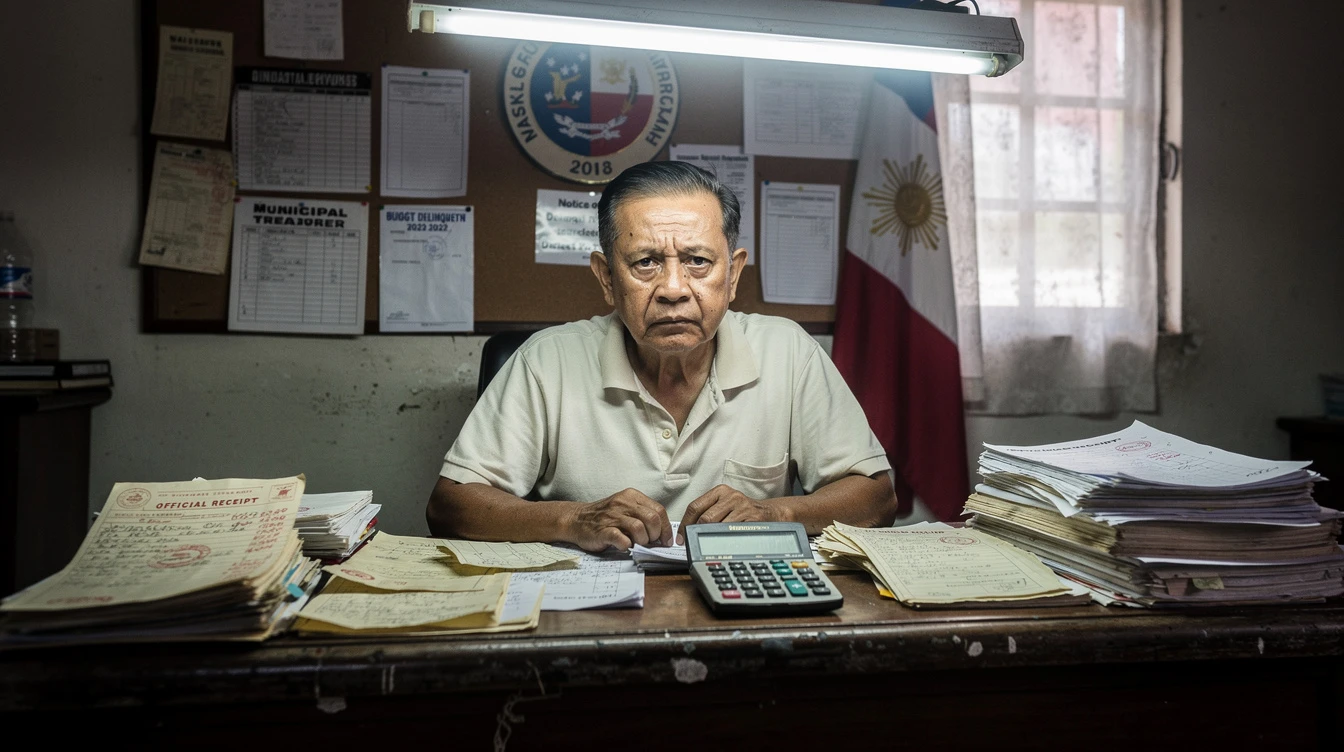
The Department of Finance disclosed Wednesday that 43 percent of fourth to sixth class municipalities across the Philippines operated in 2024 with locally-generated revenues insufficient to cover basic operational requirements, highlighting deepening fiscal sustainability concerns within the country's decentralized governance system.
The Bureau of Local Local Government Finance data further revealed that several local government units accumulated significant debts, forcing some to seek loan restructuring arrangements with national government agencies. Municipalities in predominantly agricultural provinces continued to depend heavily on Internal Revenue Allotment allocations, making them vulnerable to national budget reallocations, according to the DOF briefing document.
"Local treasurers report that municipalities in predominantly agricultural provinces continue to struggle with IRA dependence, making them vulnerable to national budget reallocations," the 2024 DOF briefing document stated.
The League of Provinces of the Philippines separately flagged administrative capacity gaps persisting across municipal and provincial offices. League President, speaking at a January 2024 press conference, noted that many member-provinces still relied on personnel hired decades ago, creating a critical gap in technical expertise especially as digitalization mandates took effect.
The capacity challenges extended to specialized areas including environmental compliance and management, financial management and audit compliance, planning and project development, and information technology systems, according to the League.
"Many of our member-provinces still rely on personnel who were hired decades ago. There's a gap in technical expertise, especially as we implement digitalization mandates," the League of Provinces President stated in January 2024.
The Philippines operates one of the most decentralized governance systems in Southeast Asia, with 81 provinces, 33 highly urbanized cities, 108 component cities, 1,488 municipalities, and 11,928 barangays under the Local Government Code of 1991. The law mandates devolution of powers, personnel, and resources to Local Government Units, placing significant authority in elected officials who exercise both executive and legislative powers within their jurisdictions.
National government officials acknowledged the challenges but emphasized ongoing capacity-building initiatives. The Department of the Interior and Local Government has implemented training programs for local personnel, while the Department of Information and Communications Technology continued rolling out digital infrastructure support to underserved municipalities.
Critics, however, argued that devolution efforts remained incomplete nearly three decades after the Local Government Code took effect. Fiscal experts warned that without addressing structural revenue weaknesses, smaller LGUs would continue facing operational crises that could hamper public service delivery.
Aldrin Darilag, public finance analyst at the University of the Philippines, said structural reforms remained necessary. "The IRA dependence model has structural limitations. LGUs need diversified revenue streams and stronger local tax administration to achieve genuine fiscal autonomy," Darilag explained.
Senator Sherwin Gatchalian, chairperson of the Senate Committee on Local Government, said congressional oversight hearings would examine the situation. "We need to ensure that local governments have the tools and capacities to serve their constituents effectively. Our committee will assess what additional support or reforms may be necessary," Gatchalian stated.
The fiscal and administrative challenges come as LGUs prepare for the upcoming barangay and Sangguniang Kabataan elections scheduled for October 2025. Election-watchers expressed concern that governance capacity gaps could affect the transition of newly-elected local officials.
Malacanang meanwhile maintained that the administration's regional development agenda included усиление support for local government units. Palace officials pointed to the Mandanas ruling, which increased IRA allocations to LGUs starting 2022, as proof of commitment to devolution principles.
Local chief executives in affected municipalities acknowledged the difficulties but cited external factors beyond their control. The Union of Local Authorities of the Philippines called for sustained national government support and called for comprehensive review of the revenue allocation formula to address inequities between LGUs.
Finance Secretary Ralph Recto told reporters that his department was studying mechanisms to assist financially-stressed LGUs without compromising fiscal discipline at the national level. "We're looking at ways to provide technical assistance and possibly debt restructuring options for LGUs that are genuinely struggling. But we also need to ensure accountability," Recto said.
Experts warned that unresolved fiscal sustainability issues could widen the gap between urban and rural LGUs, potentially affecting infrastructure development and essential services in underserved areas. Development economists emphasized that strong local governance remained crucial to the Philippines' inclusive growth ambitions under the Philippine Development Plan 2023 to 2028.
Further congressional hearings on the matter are expected to resume when the Senate resumes session in May, according to committee insiders.