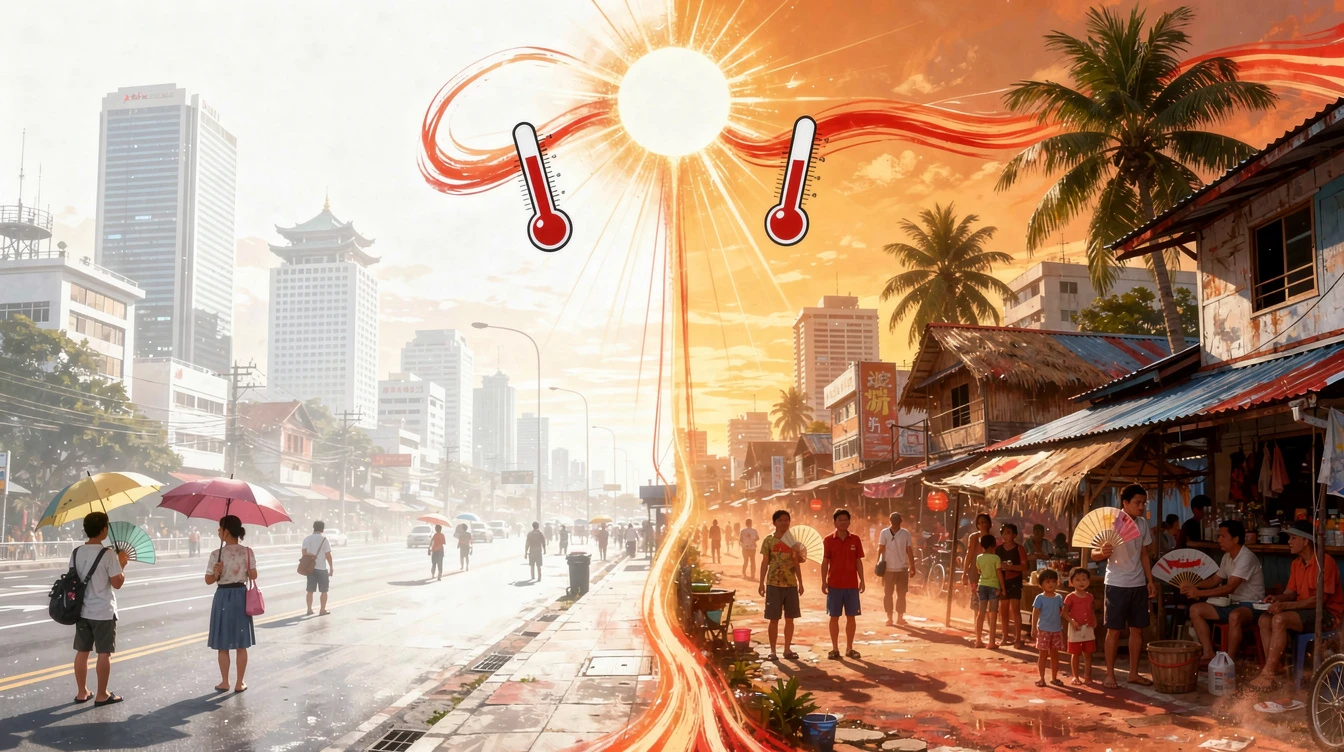
Japan's weather agency announced a new \"cruelly hot\" or kokushobi warning for days exceeding 40°C on Friday, a classification with direct implications for the Philippines where the heat index frequently surpasses this dangerous threshold. The move by the Japan Meteorological Agency (JMA) to formally recognize extreme heatwaves reflects a global climate pattern that has battered the Philippines with record-breaking temperatures and severe El Niño conditions this year.
This new Japanese category for blistering temperatures arrives as the Philippine Atmospheric, Geophysical and Astronomical Services Administration (PAGASA) continues to issue daily heat index warnings, with levels often reaching \"danger\" and \"extreme danger\" categories across the archipelago. Filipino meteorologists and disaster officials are closely monitoring such international adaptations to worsening heat, per a PAGASA climate monitoring specialist.
The JMA stated the designation will more effectively call for vigilance against extremely high temperatures, as heatwave days become increasingly frequent. The agency already uses terms for temperatures at 25°C+ (summer day), 30°C+ (midsummer day), and 35°C+ (extremely hot day). The addition of the 40°C+ tier signals a troubling new normal.
For the Philippines, the relevance is immediate. The country's heat index, which factors in humidity, has consistently hit 42°C to 45°C in numerous areas including Metro Manila, Central Luzon, and parts of Mindanao in recent weeks. This has forced class suspensions, strained the power grid, and increased heat-related hospital admissions.
The Department of Health (DOH) has repeatedly warned against heatstroke, advising the public to limit outdoor activity and stay hydrated. The economic impact is severe, affecting millions of outdoor workers in construction, agriculture, and transportation whose livelihoods depend on enduring the scorching sun.
Japan's formal recognition of a \"cruelly hot\" day underscores a shared regional climate challenge in Asia. While Japan's new term is for dry heat, the Philippine experience is compounded by high humidity, which impedes the body's ability to cool itself through sweat, making conditions feel even hotter.
Agricultural sectors in both nations face similar threats of crop damage and reduced yields. The Philippine Department of Agriculture has reported significant losses in rice and corn production due to the ongoing dry spell exacerbated by high temperatures, threatening food security and farmers' incomes.
Climate scientists link the increasing frequency and intensity of these heat events to global warming. The proactive step by Japan's meteorological service highlights the need for enhanced public communication and policy responses, a lesson Philippine agencies are taking to heart as they review their own heat warning systems.
The development serves as a stark reminder that climate change is not a distant threat but a present reality altering daily life and economic stability. It reinforces the urgency for robust heat action plans, investments in cooling centers, and workplace safety regulations tailored to protect the most vulnerable Filipinos.
For the Filipino diaspora in Japan, numbering over 300,000, the new warning is a direct safety alert. Many work in industries like manufacturing and healthcare where they may be exposed to these extreme conditions, necessitating greater awareness and employer compliance with heat safety measures.
The significance for Filipino readers is profound. Japan's terminology update is a canary in the coal mine, signaling that the extreme heat punishing the Philippines is part of a wider, intensifying global phenomenon. It underscores the critical need for adaptive measures, from personal safety to national policy, to build resilience against a hotter future.