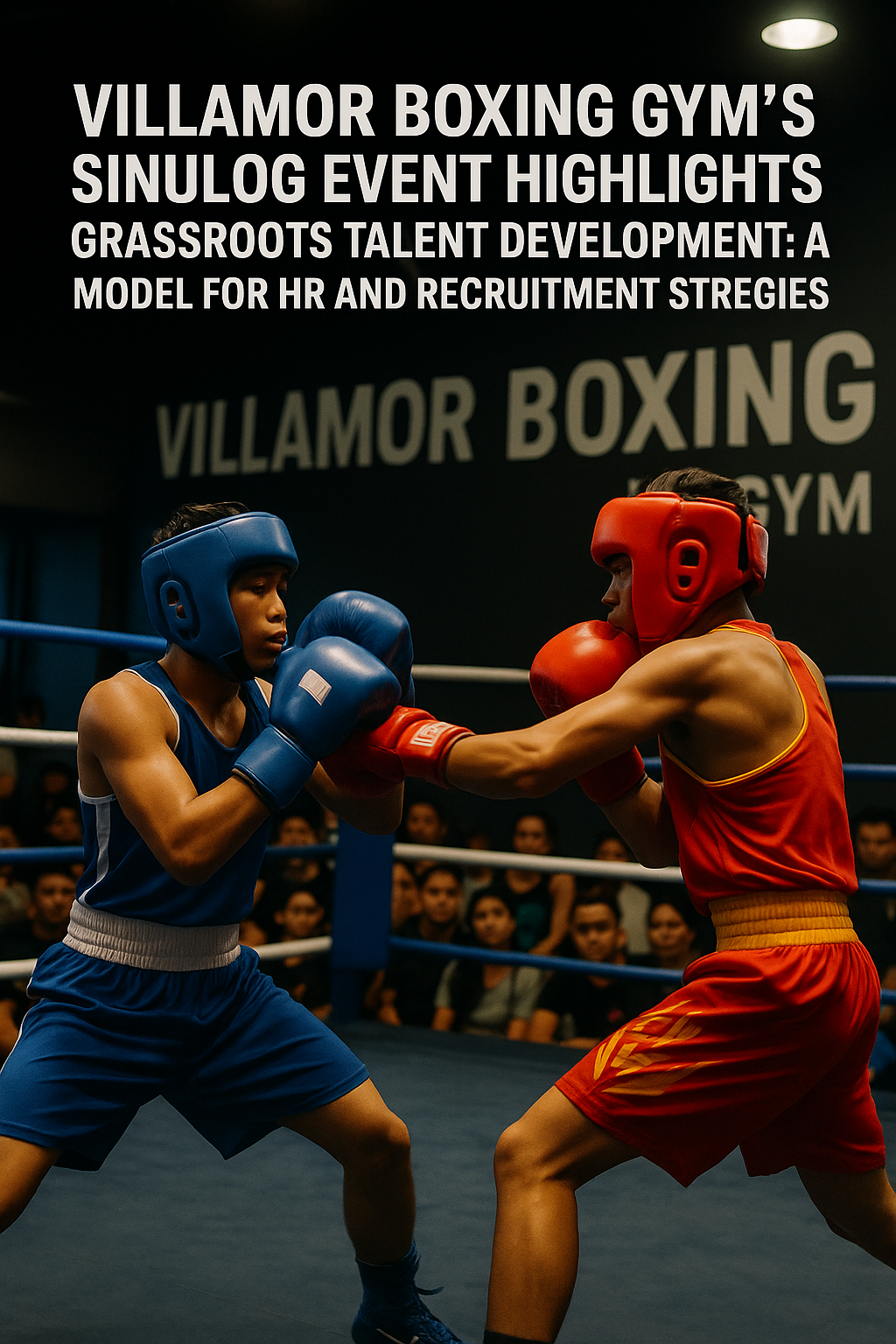
CEBU CITY, PHILIPPINES — The recent Sinulog Festival Boxing Exhibition hosted by Villamor Boxing Gym has placed a spotlight on how grassroots sports programs can serve as a powerful model for workforce development and talent cultivation. The event, which showcased young athletes from underserved communities, demonstrated how structured training, mentorship, and competitive exposure can nurture raw talent into professional success—a principle increasingly adopted by forward-thinking HR and recruitment strategies worldwide.
With over 200 participants and a live audience of 1,500, the exhibition wasn’t just a sporting event but a case study in grassroots talent development HR strategies. Industry experts now point to such programs as a blueprint for identifying and refining skills in non-traditional talent pools, particularly for international students and professionals seeking career pathways in competitive global markets.
Why Grassroots Sports Models Matter in HR and Recruitment
The connection between sports training and workforce development isn’t new, but its application in HR innovation is gaining traction. Villamor Boxing Gym’s program, which has produced three national champions in the past five years, operates on principles that align closely with modern talent acquisition:
- Early Identification of Potential: Like scouting young athletes, HR teams are now leveraging data and community partnerships to spot talent before it enters the formal job market.
- Structured Skill Development: Just as boxers undergo rigorous training regimens, companies are investing in upskilling programs to prepare candidates for high-demand roles.
- Mentorship and Networking: The gym’s mentorship model mirrors corporate sponsorship programs that pair junior employees with industry veterans.
“What we do in the ring is no different from what HR leaders should do in the boardroom,” said Coach Roberto Villamor, founder of the gym. “Talent is everywhere, but opportunity isn’t. Our job is to bridge that gap—whether it’s for a boxing title or a corporate career.”
This approach is particularly relevant for international students, who often face barriers in entering foreign job markets. By adopting grassroots-style talent pipelines, companies can tap into diverse, overlooked candidate pools while providing structured growth pathways.
Key Developments: How Companies Are Adopting the Model
Several multinational corporations and recruitment firms have begun integrating grassroots talent development HR strategies into their hiring frameworks. Notable examples include:
- Tech Giants and Coding Bootcamps: Companies like Google and Microsoft now partner with community-based coding schools to identify and train software developers from non-traditional backgrounds.
- Healthcare Apprenticeships: Hospitals in the U.S. and Canada are collaborating with local colleges to offer paid apprenticeships for international nursing students, reducing reliance on traditional degree pathways.
- Sports-to-Corporate Transition Programs: Organizations like the NBA’s Career Crossover initiative help retired athletes transition into business roles, leveraging their discipline and teamwork skills.
Data from a 2023 LinkedIn Workforce Report reveals that 42% of HR leaders now prioritize “skills over degrees” when evaluating candidates—a shift directly influenced by grassroots development models. For international students, this means greater emphasis on portfolios, certifications, and hands-on experience rather than conventional academic credentials alone.
Impact on International Students and Job Seekers
For international students, the rise of grassroots talent development HR strategies presents both opportunities and challenges:
- Opportunity: Alternative pathways (e.g., apprenticeships, micro-internships) reduce dependency on work permits tied to full-time employment.
- Challenge: Navigating non-traditional routes requires proactive networking and self-advocacy, as these programs are often less publicized than standard job postings.
“Students should treat their career search like an athlete treats training,” advised Maria Santos, a recruitment specialist at Global Talent Solutions. “Build a personal brand, seek mentors, and compete in ‘career exhibitions’—hackathons, case competitions, or industry pitch events—to get noticed.”
Experts recommend the following steps for students to align with this trend:
- Engage in Skill-Based Volunteering: Platforms like Catchafire connect professionals with nonprofits needing specialized skills, offering real-world experience.
- Leverage Alumni Networks: Many universities have grassroots-style mentorship programs linking current students with graduates in target industries.
- Participate in Industry Challenges: Competitions hosted by companies (e.g., Kaggle for data science) serve as talent scouting grounds.
Expert Insights: Practical Tips for HR and Job Seekers
To implement grassroots talent development HR strategies effectively, companies and candidates should focus on:
For Employers:
- Partner with Community Organizations: Collaborate with local schools, gyms, or cultural centers to identify emerging talent early.
- Design Low-Barrier Entry Programs: Offer paid internships or micro-credentials to reduce financial hurdles for candidates.
- Measure Soft Skills: Use behavioral assessments to evaluate adaptability, resilience, and teamwork—traits honed in grassroots environments.
For Job Seekers (Especially International Students):
- Document Your Journey: Maintain a digital portfolio (e.g., GitHub, LinkedIn, or a personal website) showcasing projects, competitions, and skill growth.
- Seek “Pre-Recruitment” Opportunities: Engage in company-sponsored webinars, open-house events, or online communities to build visibility.
- Target Companies with Grassroots Initiatives: Research firms known for alternative hiring pipelines (e.g., IBM’s SkillsBuild or Salesforce’s Trailblazer Program).
“The future of hiring lies in seeing potential where others see inexperience,” noted Dr. Elena Carter, a workforce development consultant. “Grassroots programs prove that with the right support, ‘diamonds in the rough’ can outperform traditional hires.”
Looking Ahead: The Future of Talent Cultivation
The success of Villamor Boxing Gym’s model signals a broader shift toward democratized talent development. As automation and AI reshape job requirements, HR strategies must evolve to prioritize agility, continuous learning, and inclusive access.
Key trends to watch include:
- AI-Powered Talent Scouting: Tools like HireVue and Pymetrics use gamification and AI to assess candidates from diverse backgrounds.
- Global Micro-Internship Platforms: Websites like Parker Dewey connect students with short-term, paid projects at multinational firms.
- Government-Backed Upskilling: Countries like Singapore and Germany are investing in national programs to retrain workers for high-growth sectors.
For international students, this landscape offers a chance to bypass traditional gatekeepers by proving their skills in real-world settings. Meanwhile, companies that adopt grassroots-inspired HR strategies will gain a competitive edge in securing loyal, high-potential talent.
Reach out to us for personalized consultation based on your specific requirements.