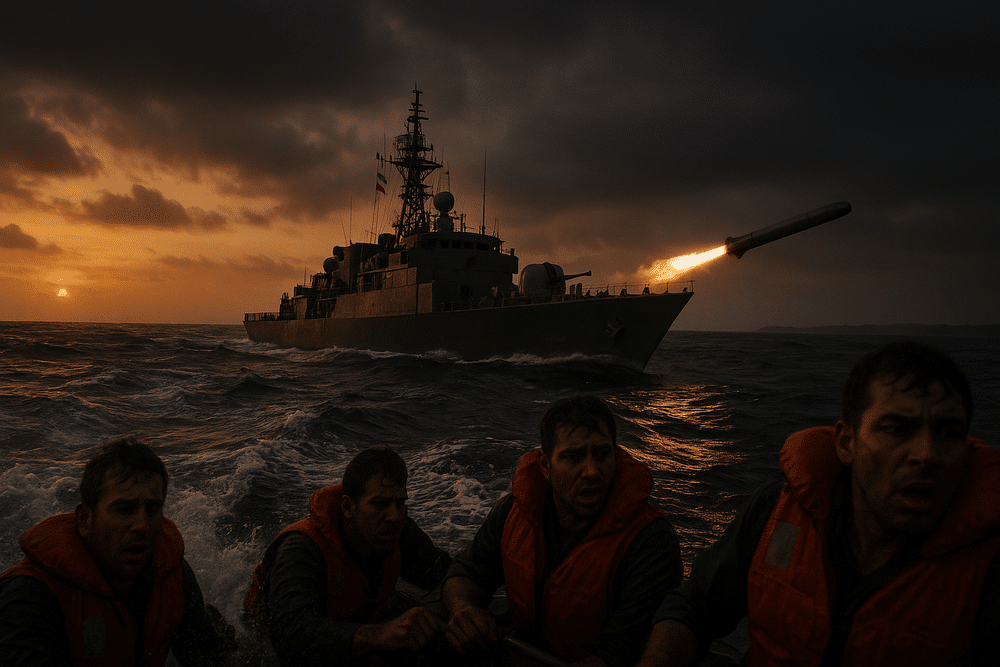
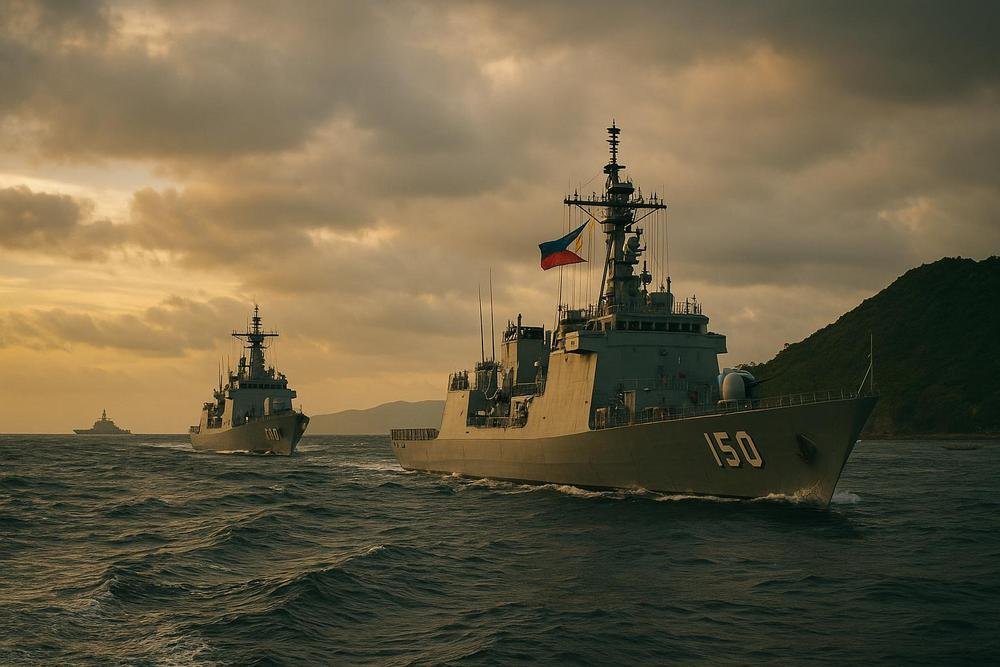
The United States has torpedoed and sunk an Iranian warship in the Indian Ocean, killing at least 87 sailors and dramatically widening a fast-escalating regional conflict that now stretches from the Middle East to waters just 40 kilometers off Sri Lanka’s southern coast.
The strike, carried out at dawn on March 4 by an American submarine, targeted the Iranian frigate IRIS Dena while it was sailing in international waters. US Defense Secretary Pete Hegseth confirmed the attack hours later, describing it as a decisive wartime action.
“An American submarine sunk an Iranian warship that thought it was safe in international waters. Instead, it was sunk by a torpedo… Quiet death. The first sinking of an enemy ship by a torpedo since World War II. Like in that war, we are fighting to win,” Hegseth said.
The incident marks the first time since the Second World War that a US submarine has sunk an enemy vessel in combat — a milestone that underscores how quickly the confrontation between the United States, Israel and Iran has intensified.
A Sudden Strike in “Safe” Waters
The IRIS Dena, a heavily armed Iranian frigate carrying a crew of about 180 sailors, issued a distress call shortly after dawn. Sri Lanka’s navy dispatched two vessels and one aircraft to the scene, responding under international maritime search-and-rescue obligations.
“We responded to the distress call under our international obligations, as this is within our search and rescue area in the Indian Ocean,” Sri Lanka Navy spokesman Buddhika Sampath said.
By nightfall, Sri Lankan authorities had rescued 32 critically wounded sailors, who were transported to a hospital in Galle, about 115 kilometers south of Colombo. Officials reported recovering at least 87 bodies, while other tallies cited as many as 101 missing.
The attack took place in international waters but within Sri Lanka’s search-and-rescue zone — a technical distinction that has shielded Colombo from direct involvement while placing it uncomfortably close to a widening war zone.
A Frigate Armed for Battle
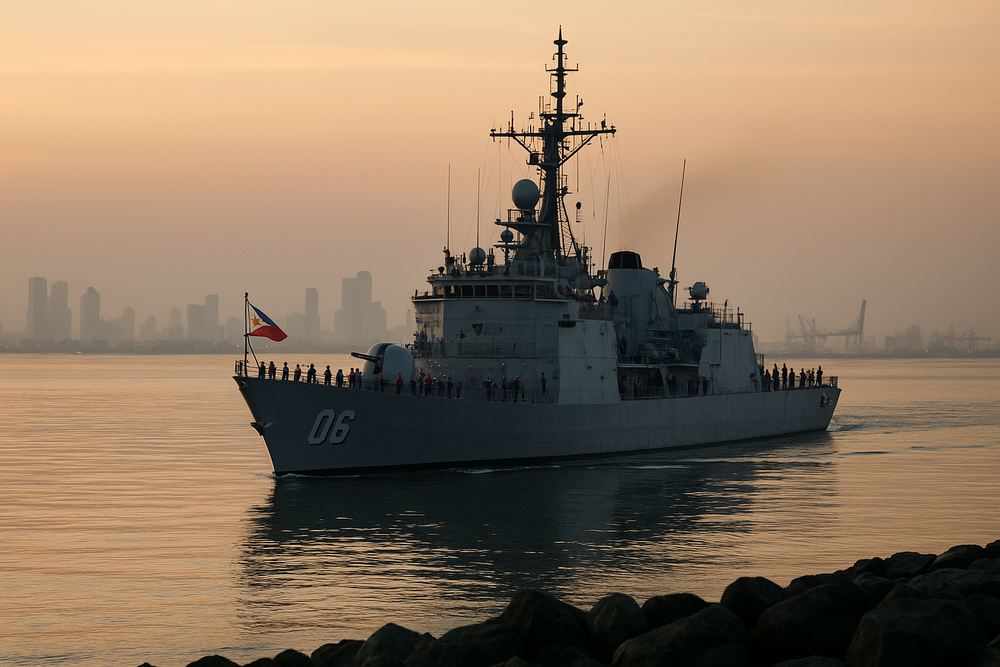
The Dena was not a civilian vessel caught in the crossfire. The frigate was equipped with heavy guns, surface-to-air missiles, anti-ship missiles, torpedoes, and could carry a military helicopter. In late February, it had departed an Indian port following a ceremonial fleet review attended by senior Indian officials.
Its sinking now forms part of a far larger military campaign. US and Israeli forces have reportedly struck 2,000 Iranian targets and sunk 20 vessels since hostilities intensified. US officials say Iran has lost the bulk of its ballistic missile capability. Tehran has retaliated, launching strikes in parts of the Gulf region and beyond.
The Indian Ocean, long regarded as a strategic but relatively stable trade artery, is rapidly morphing into an extended theatre of conflict.
Regional Tensions and Questions
Sri Lanka’s government has stressed that the incident occurred outside its territorial waters. Foreign Minister Vijitha Herath confirmed the rescue of the wounded and signaled a cautious stance, seeking to prevent Sri Lanka from being seen as aligned with any side.
Still, questions have surfaced within the region about advance notice. Sushant Singh, a former Indian military officer and lecturer at Yale University, said: “My fear is that there is no such evidence so far that they informed either the Indians or the Sri Lankans.”
If accurate, that would suggest the strike unfolded without prior warning to neighboring states — a reality that could ripple through regional diplomacy.
Global Trade Routes Under Strain
Though the attack occurred thousands of kilometers from Malta, maritime security experts warn that the consequences may radiate outward. The Indian Ocean carries a substantial share of global energy and freight shipments. Any sustained military presence or retaliatory action near these corridors could tighten supply chains and push up insurance costs for shipping firms.
The Strait of Hormuz — a vital chokepoint for oil — remains under particular scrutiny as Iran signals its capacity to influence traffic there. Even modest disruptions could lift global oil prices, adding inflationary pressure to fuel-dependent economies.
Shipping in wartime resembles a highway shrouded by fog: vessels continue moving, but risk multiplies and costs climb.
A War Expanding by Sea
The Pentagon has framed the sinking as a defensive wartime act. Hegseth portrayed the attack as evidence that US forces are willing to project power far from shore.
Iran, for its part, has condemned what it considers aggression, as it absorbs heavy material losses across multiple fronts. Reports indicate six US service members have been killed since the broader conflict began.
What began as an Israeli-Iranian confrontation is now unmistakably multinational — stretching from Gulf airspace to Mediterranean flashpoints and into the depths of the Indian Ocean.
An Uncertain Horizon
Naval warfare often unfolds far from civilian view, beneath the ocean’s surface. Yet its consequences rarely remain submerged. The torpedoing of the IRIS Dena signals that the conflict has crossed a threshold: submarine warfare, once confined to history books and memorials, is again shaping world events.
For countries dependent on open sea lanes — including small island states and maritime economies — the expansion of hostilities into one of the world’s busiest shipping corridors raises urgent questions about security, neutrality and economic resilience.
For now, the waters off Sri Lanka have fallen quiet again. But beneath that calm lies an unmistakable message: the war has found a new frontier at sea.