Four years after Russian troops crossed into Ukraine, the United Nations on Tuesday delivered a clear message: the country’s borders are not negotiable.
On 24 February 2026, the UN General Assembly adopted a resolution reaffirming Ukraine’s sovereignty, independence and territorial integrity, rejecting any attempt to divide the country along lines drawn by force. The measure passed with 107 votes in favour, 12 against, and 51 abstentions, underscoring both sustained global support for Ukraine and the deep geopolitical divisions that continue to paralyse the UN Security Council.
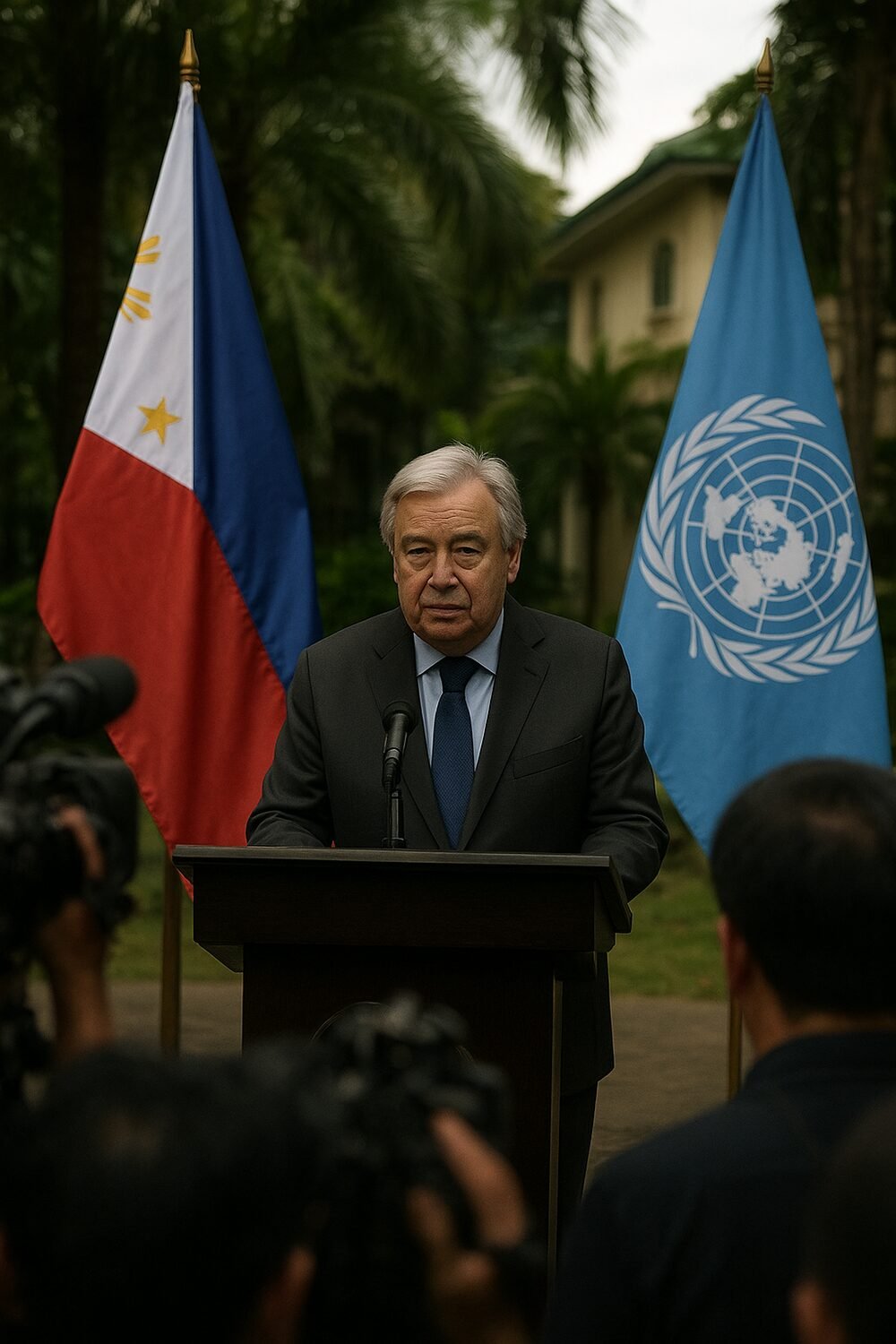
Marking the fourth anniversary of Russia’s full-scale invasion, UN Secretary-General António Guterres described the war as “a stain on our collective consciousness” and renewed his call for an immediate halt to the fighting.
General Assembly Reaffirms Ukraine’s Borders
The resolution, though non-binding, carries considerable political weight. It reasserts that Ukraine’s internationally recognised borders cannot be altered by force and calls for a peace process grounded in the principles of the UN Charter.
The vote breakdown reflects the fractured state of global diplomacy. Russia, Belarus and Sudan were among the 12 countries that voted against the measure. China and the United States were among 51 nations that abstained, highlighting a complex diplomatic landscape even among major powers.
While General Assembly resolutions do not compel action, they serve as a barometer of international opinion. In this case, a majority of member states signalled that any settlement to the conflict must respect Ukraine’s territorial integrity.
“A Stain on Our Collective Consciousness”
In a statement marking the anniversary, Guterres said: “Tuesday, 24 February marks four years since the Russian Federation launched its full-scale invasion of Ukraine, in violation of the United Nations Charter and international law. This devastating war is a stain on our collective consciousness.”
He added: “I reiterate my call for an immediate, full and unconditional ceasefire as a first step towards a just, lasting and comprehensive peace.”
The secretary-general’s remarks came amid continued reports of Russian attacks on Ukrainian civilians and infrastructure. According to UN data referenced in debates, 2025 recorded the highest number of civilian deaths since the invasion began.
Security Council Deadlock Persists
Despite repeated General Assembly votes over the past four years, the UN Security Council remains unable to take binding action. As a permanent member of the council, Russia holds veto power, effectively blocking resolutions aimed at compelling compliance or imposing UN-backed measures.
That stalemate has turned the General Assembly into the primary मंच for diplomatic signaling, even though its resolutions lack enforcement mechanisms. The result is a familiar paradox: overwhelming rhetoric against the war, but limited ability to change its course.
Four Years of War
Russia launched its full-scale invasion on 24 February 2022, an act widely described at the UN as a violation of the Charter’s prohibition on the use of force against the territorial integrity or political independence of any state.
On previous anniversaries, UN officials and independent experts have warned of mounting human rights violations and widening humanitarian fallout. In 2024, UN Special Rapporteur Mariana Katzarova said the invasion “has not only killed thousands and devastated the lives of millions in Ukraine, but has also intensified repression… within Russia itself.”
Successive General Assembly resolutions in 2024, 2025 and now 2026 have consistently reaffirmed the same principle: that peace cannot be built on the fragmentation of Ukraine.
Global Divisions on Display
Tuesday’s vote also illustrated the shifting alliances and strategic caution shaping international diplomacy. While 107 countries backed the resolution, the 51 abstentions reveal unease among some states about escalating tensions or being drawn deeper into a protracted geopolitical confrontation.
At the Human Rights Council sidelines, diplomats from several countries echoed the defence of core UN principles. Norway’s Foreign Minister Espen Barth Eide stated: “What Russia has done and is doing in Ukraine right now is violating every principle in the book… Everything the U.N. stands for is being violated… Glory to Ukraine!”
For Ukraine and its supporters, the resolution reinforces a simple but uncompromising position: territorial integrity is not a bargaining chip. For Russia and the small group of opposing states, the vote changes little on the ground.
A War With No Clear End
As the conflict enters its fifth year, the war remains both a battlefield struggle and a test of the post-World War II international order. The UN Charter was designed to prevent exactly this kind of territorial conquest. Four years on, member states are still grappling with how to uphold that promise.
The General Assembly’s message on the anniversary was unequivocal: Ukraine cannot be divided. Whether that declaration can help bring the fighting to an end remains uncertain.