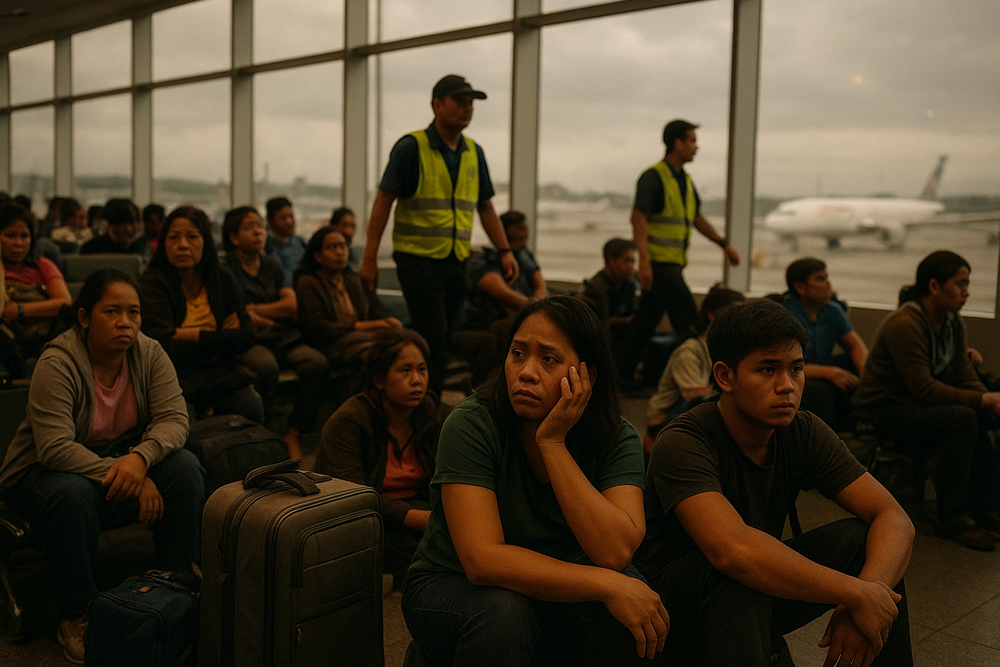
Escalating U.S.-Iran hostilities have plunged global aviation into turmoil, forcing the cancellation of more than 3,400 flights and shutting down key airports across the Middle East, a region that serves as a crucial bridge between Asia, Europe and Africa. As airspace closed and airlines suspended routes, tens of thousands of travelers—including Maltese passengers connecting through Gulf hubs—found themselves stranded with little clarity on when operations will resume.
Airspace Locked Down Across the Gulf
Joint American and Israeli strikes on Iran over the weekend, followed by Iranian retaliatory attacks, triggered sweeping airspace closures beginning February 28 and intensifying into March 1. Major aviation hubs—including Dubai International, Hamad International in Doha, Zayed International in Abu Dhabi, Kuwait International, and Bahrain International—either halted operations or operated under severe restrictions.
By Sunday, flight-tracking data showed more than 3,400 cancellations across seven major Middle Eastern airports alone. As of Monday, March 2, airports in Bahrain, Iran, Iraq, Israel, Jordan, Kuwait, Qatar, Saudi Arabia, Syria and the United Arab Emirates remained closed or partially closed.
The closures effectively severed one of the world’s busiest aviation crossroads. Gulf hubs function much like giant roundabouts in the sky, redistributing long-haul flights between continents. When they shut down, ripple effects spread within hours from Europe to Southeast Asia.
Airlines Suspend Routes Over “Imminent Safety Concerns”
Major international carriers swiftly suspended services, citing security risks. Among them:
United Airlines halted its U.S.–Dubai route until at least March 4.
Delta Air Lines suspended flights to Tel Aviv through March 8.
Air France paused services to Tel Aviv, Beirut, Dubai and Riyadh until March 3.
KLM suspended regional operations until March 5.
Finnair halted flights to Dubai and Doha until March 6.
Norwegian suspended Dubai flights until March 4.
Other major carriers, including Emirates, Lufthansa, Singapore Airlines, Qatar Airways, Turkish Airlines and Cathay Pacific, were also affected by the sweeping restrictions.
“Airlines are citing imminent safety concerns for the cancellations, asking would-be passengers to keep across the latest updates for information,” according to developments outlined in the research dossier.
Aviation analyst Henry Harteveldt of Atmosphere Research Group described the disruption in stark terms: “For travellers, there’s no way to sugarcoat this… You should prepare for delays or cancellations for the next few days as these attacks evolve and hopefully end.”
Casualties Reported Near Airports
The aviation crisis unfolded alongside direct security incidents. On February 28, debris from an intercepted drone killed one person and injured seven others in Abu Dhabi. Kuwait airport sustained damage during strikes the same day, with injuries reported. Dubai airport experienced concourse damage, injuring four employees.
These incidents underscored airlines’ decisions to halt operations, as civilian aviation corridors overlapped with missile and drone activity.
Global Advisory Issued
The U.S. State Department released a worldwide security alert urging heightened vigilance, particularly in the Middle East.
“In light of the commencement of U.S. military actions in Iran, Americans globally—particularly those in the Middle East—should adhere to the guidance provided in the most recent security alerts from their nearest U.S. embassy or consulate,” the advisory stated.
While the warning specifically addressed U.S. citizens, its implications extended to the broader international travelling public navigating an increasingly volatile region.
Implications for Malta’s Travellers
Though Malta lies far from the conflict zone, the island is not insulated from its consequences. Gulf airports such as Dubai and Doha serve as critical transit hubs for Maltese passengers travelling to Asia and Australia. Disruptions at these choke points can delay onward journeys or force costly rerouting through European capitals.
Tour operators and aviation sources note that extended closures could drive up fares as airlines grapple with longer flight paths that avoid restricted airspace. Aircraft diverted around conflict zones burn more fuel and require additional crew scheduling adjustments, compounding operational strain.
For Maltese families awaiting relatives from long-haul destinations, uncertainty now shadows arrival boards. Even flights that do not directly enter Middle Eastern airspace may face knock-on delays due to aircraft displacement across global networks.
Aviation Under Geopolitical Strain
The current upheaval highlights how quickly geopolitical shocks can paralyze modern air travel. The Middle East’s air corridors rank among the busiest in the world, linking major financial and tourism centres. When those routes close, global connectivity contracts almost instantly.
As of Monday evening, no comprehensive timeline had emerged for reopening the affected airports. Airlines continue to advise passengers to check bookings frequently and prepare for further changes.
For now, the skies above one of aviation’s most critical crossroads remain uncertain—a reminder that in an interconnected world, conflict in one region can ground travellers thousands of kilometres away.