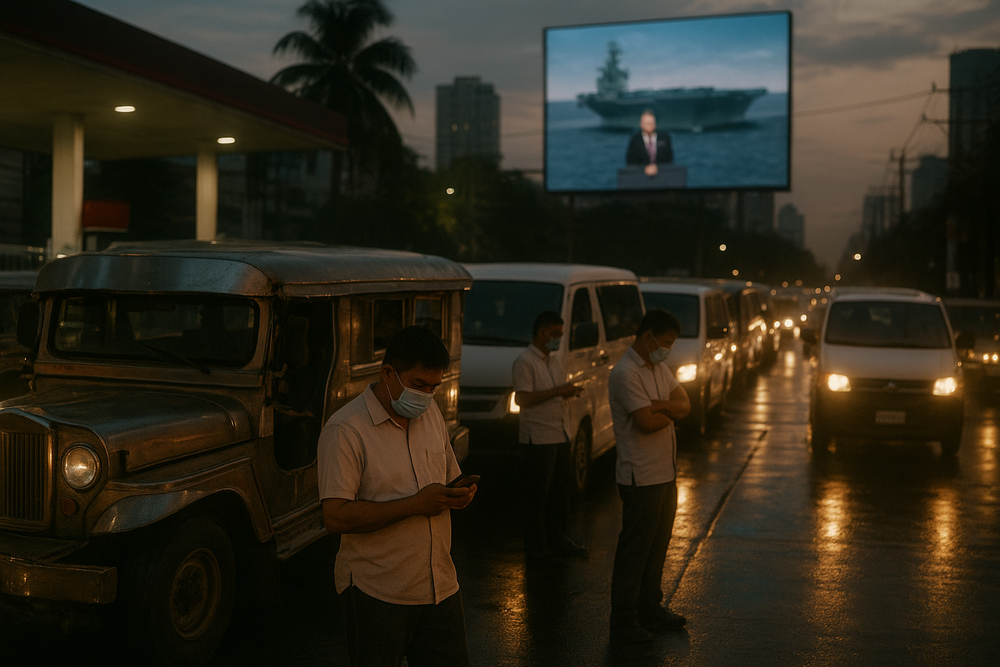
US President Donald Trump said Friday that regime change in Iran “seems like the best thing that could happen,” escalating rhetoric as the Pentagon prepares to deploy a second aircraft carrier to the Middle East ahead of high-stakes nuclear talks next week.
Speaking after a visit to Fort Bragg on February 14, 2026, Mr. Trump signaled impatience with Tehran and hardened his demand that Iran abandon uranium enrichment altogether. His remarks came as the USS Gerald R. Ford carrier strike group heads toward the region, joining another US carrier already deployed there.
The developments sharpen uncertainty in an already volatile corridor that supplies a significant share of the world’s oil — and from which the Philippines sources an estimated 20 percent of its petroleum imports.
Trump Signals Regime Change as “Best Thing”
Mr. Trump framed his position as the culmination of decades of failed diplomacy.
“Well, it seems like that would be the best thing that could happen. For 47 years, they’ve been talking and talking and talking. In the meantime, we’ve lost a lot of lives while they talk and legs blown off, arms blown off, faces blown off,” he said.
He reiterated a non-negotiable demand for Iran to halt uranium enrichment. “I don’t [accept] we don’t want any enrichment,” he said, underscoring a position that Iranian officials have consistently rejected as a red line.
At the same time, Mr. Trump left open the possibility of avoiding further military action if Tehran makes concessions. “If they give us the right deal, we won’t do that [attack]. But, you know, historically, they haven’t done that,” he added.
Second Carrier Deployment Raises Stakes
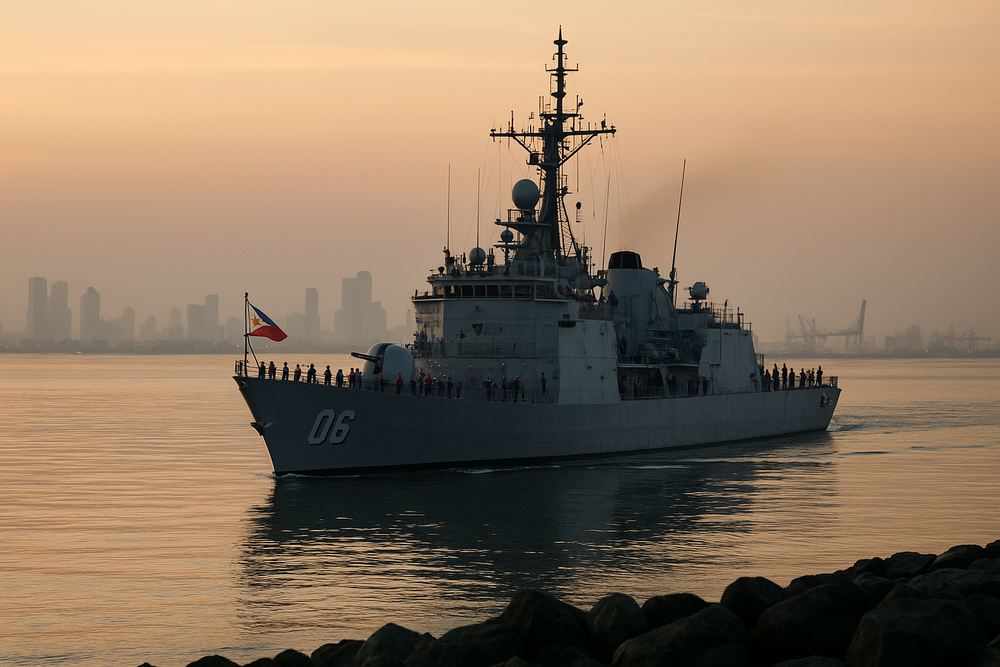
The Pentagon confirmed that the USS Gerald R. Ford carrier strike group is en route to the Middle East, where it will join an existing US naval presence. The United States operates 11 aircraft carriers, making such dual deployments significant signals of strategic priority and deterrence.
Officials have indicated the Ford will take at least one week to reach the region.
The carrier movement follows months of heightened tension. In June 2025, the United States conducted Operation Midnight Hammer, an air campaign that US officials said obliterated Iranian nuclear facilities after negotiations collapsed. Earlier this month, on February 6, Mr. Trump signed an Executive Order reaffirming a national emergency on Iran and authorizing tariffs on countries that acquire Iranian goods. The order also directs US agencies to intensify measures against Tehran’s nuclear ambitions, ballistic missile program, and support for militant groups.
A White House fact sheet said the administration was “building on his strong record from his first term, when he withdrew from the flawed Iran nuclear deal, imposed maximum pressure.”
Talks Set in Geneva, but Gaps Remain Wide
The next round of US-Iran talks is scheduled for February 18 in Geneva, with Oman serving as mediator. US representatives Steve Witkoff and Jared Kushner are expected to meet Iranian officials.
While Washington insists on “zero enrichment,” Tehran has maintained that its right to enrich uranium is non-negotiable. Iranian officials have signaled willingness to limit aspects of their nuclear program in exchange for sanctions relief but reject linking those limits to their missile capabilities.
The standoff resembles a tightening vise: diplomacy on one side, military readiness on the other. Each statement raises the temperature ahead of negotiations meant to lower it.
Oil Markets and the Philippine Exposure
Though Manila is not directly involved, the ripple effects could reach local shores swiftly through global oil markets.
The Philippines relies heavily on imported fuel, with roughly one-fifth of its oil supply traced to Middle Eastern producers. Any disruption in shipping lanes or escalation in hostilities could push up global crude prices, filtering down to pump prices nationwide.
Economists warn that even modest increases in crude can have outsized local effects. A spike in global prices could drive gasoline beyond its recent baseline of around ₱60 per liter, potentially triggering 20 to 30 percent fare hikes for jeepneys and UV Express units and raising logistics costs for goods across the archipelago.
Inflationary pressure tied to energy costs would strain households already coping with elevated food and transport expenses. The Philippines’ business process outsourcing sector may remain operationally stable, but broader consumer spending could weaken if fuel prices surge.
Concerns for Filipino Workers in the Region
Beyond oil, the Middle East is home to more than 1.7 million overseas Filipino workers, whose remittances total roughly ₱1 trillion annually, according to central bank data.
An escalation — especially if it widens beyond Iran and US forces — could place Filipino communities in host countries on heightened alert. While no Philippine-specific advisories have been issued in connection with Mr. Trump’s latest comments, regional instability often triggers precautionary measures from embassies and labor offices.
For families reliant on remittances, conflict risks carry both personal and economic consequences.
A Region at a Crossroads
Mr. Trump’s remarks have injected fresh uncertainty into a dispute already marked by airstrikes, sanctions and hardened positions. The arrival of a second US carrier suggests Washington is prepared to back its demands with visible force even as it prepares for talks.
Whether the Geneva meetings usher in compromise or confrontation remains unclear. What is evident is that the stakes extend far beyond the negotiating table — reaching energy markets, migrant workers and economies thousands of kilometers away.
For countries like the Philippines, the unfolding tension is a reminder that events in distant waters can quickly shape realities at home.