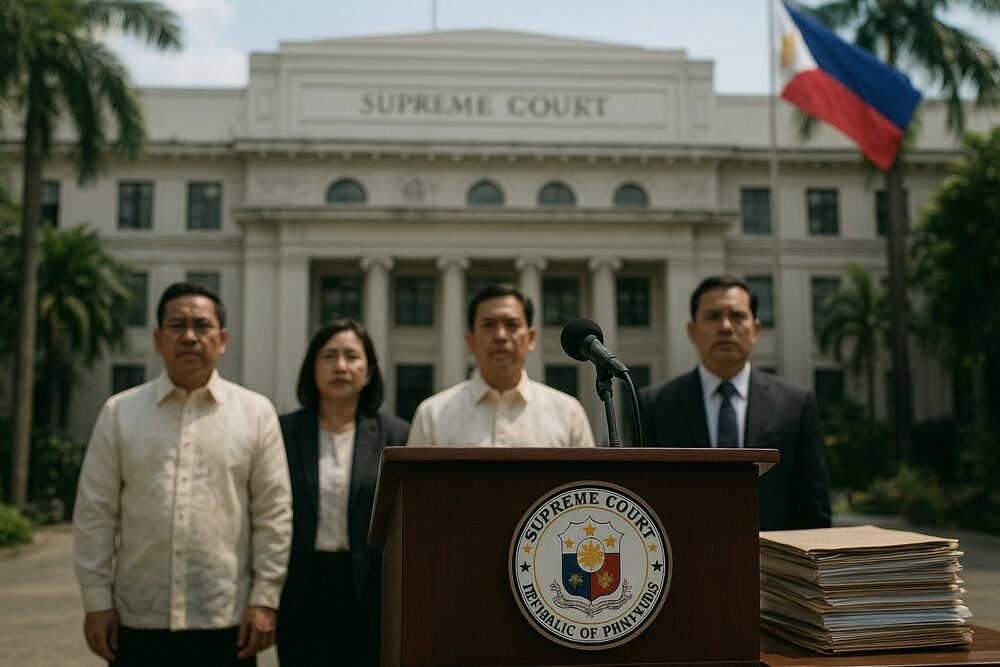
The Supreme Court of the Philippines has ruled that items seized during a lawful warrantless arrest may be admitted as evidence even if they were not in plain view, a decision that strengthens law enforcement powers in anti-drug operations and clarifies longstanding questions surrounding search-and-seizure rules.
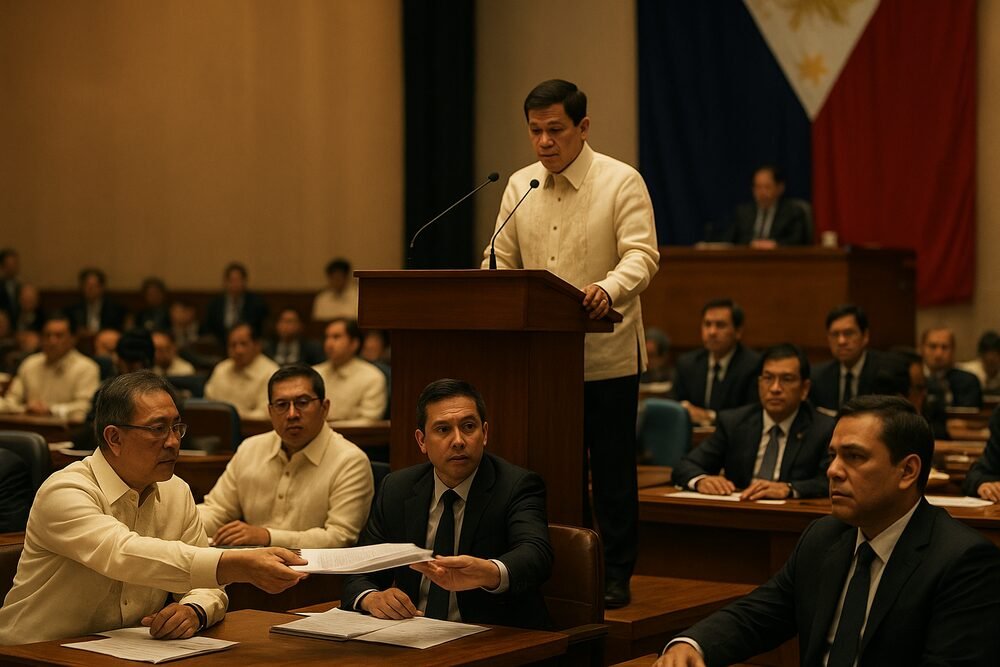
In a 16-page decision promulgated in October 2025 and made public in February 2026, the Court’s First Division upheld the conviction of Jeryl Bautista, who was arrested during a 2017 buy-bust operation in San Carlos City, Pangasinan. Writing for the court, Associate Justice Ricardo Rosario said that while the plain view doctrine remains a recognized rule, it is not always required when police conduct a search incident to a lawful arrest — especially when the search is limited to the person of the accused.
Body Searches Beyond Plain View
At the heart of the ruling is a simple but consequential distinction: when officers lawfully arrest a suspect, they may search that person’s body for weapons or contraband, even if the items are concealed.
“For these reasons, compliance with the plain view doctrine is not always required to justify a warrantless search and seizure. This is especially true if the search is limited to the person of the accused, where the seized items are usually hidden,” the Court said.
The plain view doctrine traditionally allows police to seize evidence without a warrant if three conditions are met: they are lawfully present, the discovery is accidental, and the incriminating nature of the item is immediately apparent. As the Court noted, “The plain view doctrine permits law enforcement to seize evidence without a warrant if they are legally positioned to observe it, the discovery occurs accidentally, and the illegal nature of the items is clear.”
But the justices drew a clear line between objects inadvertently spotted in open sight and evidence uncovered during a deliberate body search following a valid arrest. “Furthermore, seizure of evidence in plain view does not apply if law enforcement officers are intentionally searching the person of the accused for evidence, as most objects that can be recovered are not in plain view,” the ruling stated.
From Buy-Bust to Conviction
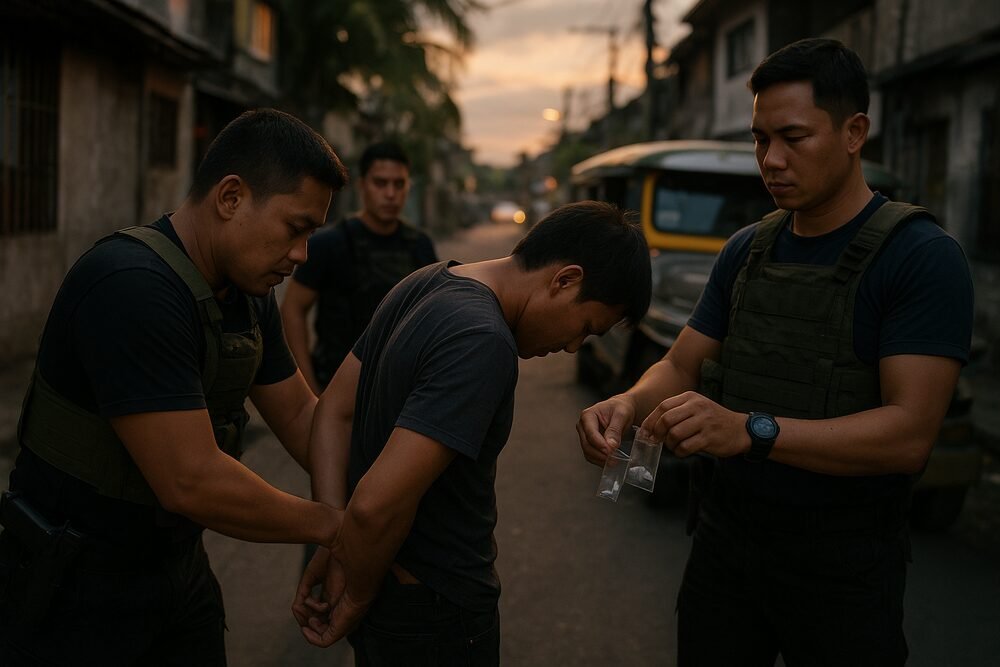
The case stemmed from a 2017 buy-bust operation conducted by police in Pangasinan. Officers arrested Bautista after he allegedly sold shabu to an undercover operative. Authorities initially recovered four sachets of methamphetamine hydrochloride. A subsequent body search led to the discovery of three additional sachets hidden inside a cellphone charger.
Bautista was charged and later convicted of illegal possession of dangerous drugs under Republic Act No. 9165, or the Comprehensive Dangerous Drugs Act of 2002. He received a sentence of up to 16 years’ imprisonment and was ordered to pay a fine of PHP 300,000.
Both the Regional Trial Court and the Court of Appeals upheld the conviction. Before the Supreme Court, Bautista challenged the admissibility of the additional sachets, arguing that they were not in plain view and therefore should have been excluded.
The High Court disagreed, affirming that the arrest was lawful under Rule 113, Section 5 of the Rules of Court, which allows warrantless arrests when a crime is committed in the presence of law enforcement officers — a standard framework for buy-bust operations.
Constitutional Safeguards and Limits
The ruling sits at the intersection of two legal guardrails: the Constitution’s protection against unreasonable searches and seizures, and the State’s authority to enforce criminal laws.
Article III, Section 2 of the 1987 Constitution prohibits unreasonable searches and declares evidence obtained in violation of this right inadmissible. But long-standing jurisprudence recognizes exceptions, including searches incidental to lawful arrests.
In effect, the Court likened a lawful arrest to a key that unlocks limited search authority. Once the arrest passes constitutional muster, officers may search the suspect’s person to prevent the destruction of evidence or the concealment of contraband — even if such evidence is tucked away in pockets, bags, or containers carried by the accused.
Implications for Anti-Drug Operations
The decision reinforces the legal backbone of buy-bust operations, a cornerstone of anti-drug enforcement nationwide. By clarifying that hidden items discovered during a lawful body search need not satisfy plain view requirements, the Court reduced a common ground for challenging drug prosecutions.
For law enforcement agencies, the ruling provides stronger assurance that evidence recovered from suspects during valid arrests will withstand judicial scrutiny. For defendants and defense lawyers, it narrows one potential avenue for suppressing evidence.
At the same time, the Court’s reasoning hinges on the legality of the initial arrest. If the arrest itself is invalid, any evidence seized — whether in plain view or concealed — remains vulnerable to exclusion.
A Balance of Power
The decision underscores a familiar tension in criminal law: how to balance individual rights with the demands of public safety. Buy-bust operations, by their nature, unfold quickly and often without warrants. The Court’s latest pronouncement signals continued judicial support for such tactics, provided officers operate within constitutional bounds.
As the country continues to grapple with illegal drugs, the ruling draws a clearer map for courts and police alike. Evidence hidden from sight, the Court has now confirmed, does not automatically fall outside the reach of the law — so long as the hand that uncovers it does so under a lawful arrest.