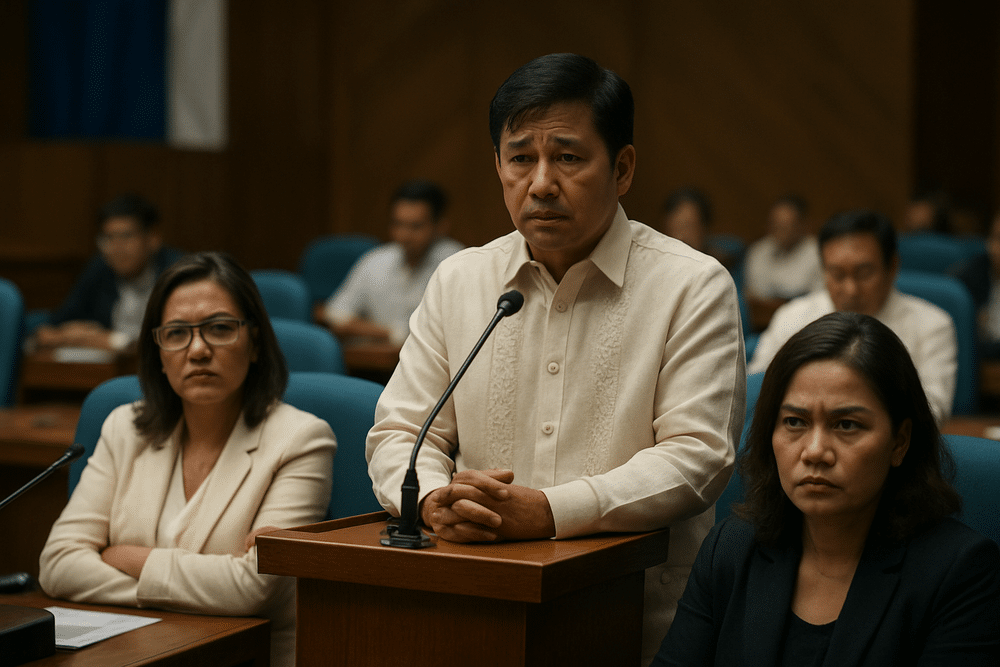
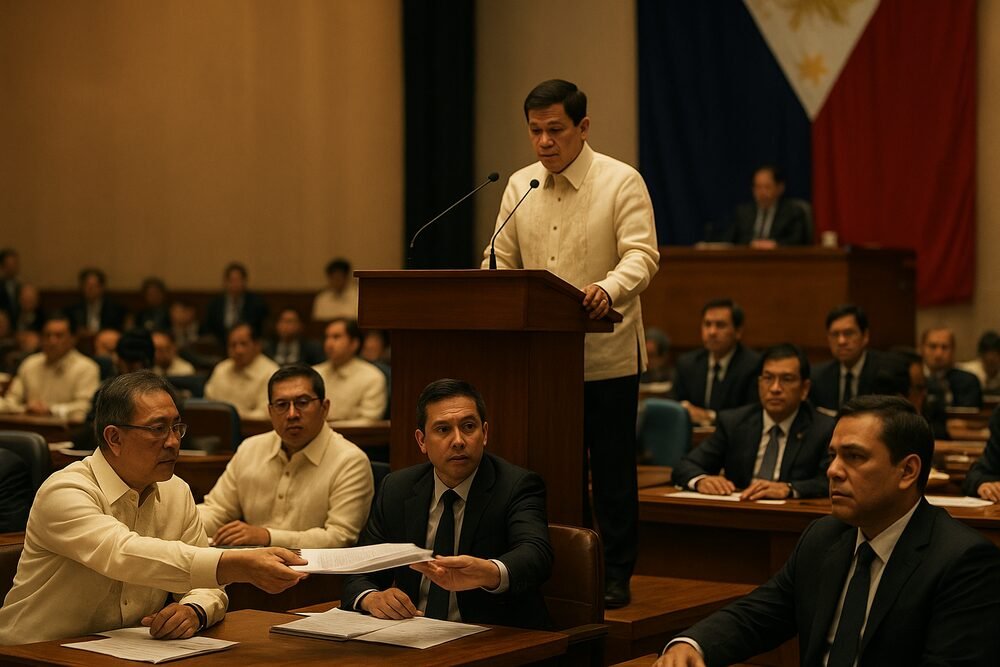
Quezon City 4th District Rep. Bong Suntay appeared poised this week to defend not a policy position but his own words, after the House of Representatives unanimously referred him to the Committee on Ethics over remarks that colleagues described as sexualizing actress Anne Curtis during a hearing on the impeachment complaints against Vice President Sara Duterte.
The controversy, which erupted during a House justice committee session on March 3, 2026, has since widened into a broader debate about gender sensitivity, political loyalty and the standards of conduct expected inside the halls of Congress—particularly during Women’s Month.
Remarks During Impeachment Hearing Trigger Backlash
The incident began when Suntay, speaking in defense of Vice President Duterte during impeachment proceedings, made a hypothetical comparison involving actress Anne Curtis. He referred to imagined feelings of desire, drawing an analogy meant to distinguish between private thoughts and public action.
Several lawmakers immediately objected. The statements were later stricken from the official record. But the reaction did not end there.
On March 5, 2026, Laguna 1st District Rep. Ann Matibag delivered a privilege speech condemning the remarks. That same day, San Juan Rep. Belle Zamora moved to refer Suntay to the ethics panel. The plenary approved the motions unanimously, formally directing the Committee on Ethics to investigate his conduct.
An Apology — With Qualifications
Facing mounting criticism, Suntay apologized on the House floor but maintained that he had no intent to demean women.
“There was no malice intended. And if malice is inferred from my statement, I wish to apologize to those hurt or offended,” he said.
Suntay argued that his remarks were hypothetical and formed part of a broader point defending Duterte. He pointed to his record in supporting measures related to women’s rights, including local Gender and Development policies, as evidence of his commitment.
The ethics committee will now determine whether his statements constitute unbecoming conduct under House rules and whether sanctions are warranted. The panel is expected to review transcripts, hear testimony, and submit findings to the plenary.
Female Lawmakers and Rights Groups Push Back
Critics say the issue goes beyond intent. They argue it cuts to the culture of respect within a chamber that crafts laws affecting more than half the country’s population.
“This issue transcends legal matters. It pertains to the culture of respect that we aspire to establish within our society… women are not a joke, nor are they mere fantasies,” Matibag said in her privilege speech.
Gabriela Party-list Rep. Sarah Elago warned that rhetoric from elected officials can ripple beyond congressional walls. “When a congressional member objectifies women, the damage goes well beyond words. There are real-life consequences for women facing various forms of abuse and discrimination daily,” she said.
The Commission on Human Rights (CHR) issued a statement echoing those concerns. “Regardless of intent, remarks that sexualize or demean women undermine the country’s hard-earned progress toward gender equality and reinforce attitudes that trivialize harassment and discrimination,” the commission said.
Legal and Ethical Standards at Issue
The House Committee on Ethics has authority to investigate and recommend penalties for members found to have engaged in improper conduct. Possible sanctions range from reprimand to suspension, depending on the gravity of the offense.
Some lawmakers and advocates have also pointed to the Safe Spaces Act (Republic Act No. 11313), which prohibits gender-based sexual harassment, including sexist or sexually suggestive remarks that create a hostile environment. While enforcement within Congress follows its own internal rules, the law has heightened public sensitivity to language that may be construed as objectifying.
The episode underscores the dual standards lawmakers navigate: adherence to formal legislative rules and to broader societal expectations shaped by national laws on gender equality.
A Broader Moment for Congress
The controversy arrives at a politically charged time. The justice panel hearing where the remarks were made concerns impeachment complaints against a sitting vice president—proceedings that already test party alliances and institutional decorum.
Yet the backlash suggests that for many lawmakers, the tone of debate is not a secondary matter. Words spoken in plenary, broadcast nationwide, carry symbolic weight. Critics argue that when dismissive or sexualized comments enter official discourse, they risk normalizing the everyday objectification many Filipinas report experiencing in workplaces and public spaces.
While the case involves no budget allocations, audit findings or monetary implications, its cultural impact may prove more enduring. The House, after all, functions not only as a lawmaking body but as a national stage. What is said there can resonate far beyond the chamber.
As the ethics committee begins its inquiry, the question before Congress is not merely whether a line was crossed, but where that line should stand in a legislature that aspires to model respect while navigating fierce political conflict.
The panel’s findings, once submitted, will determine whether Suntay’s apology closes the matter—or whether the House decides that stronger action is needed to reaffirm its standards.