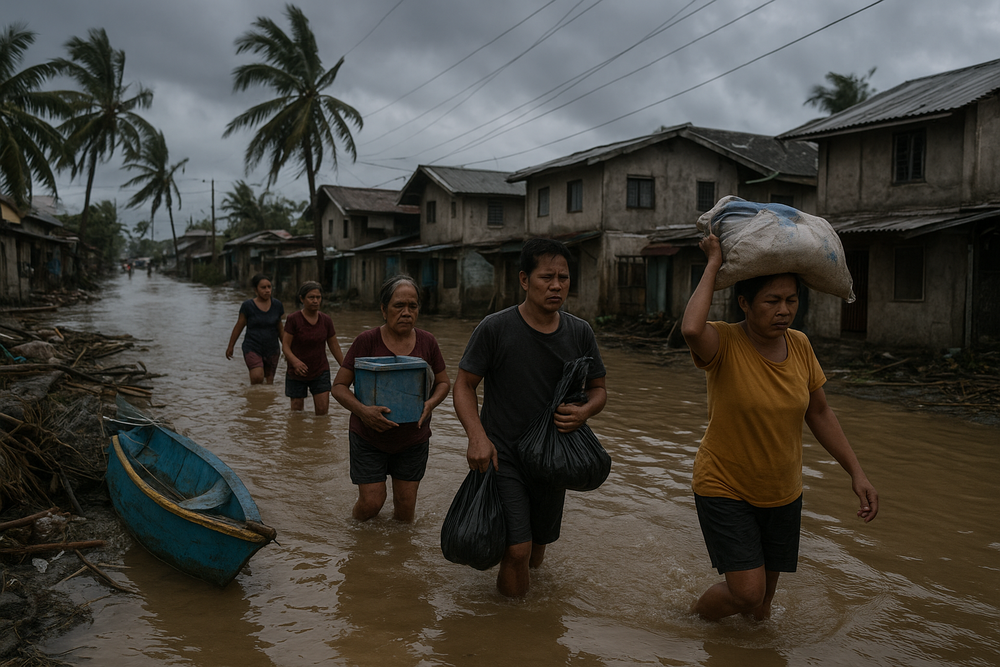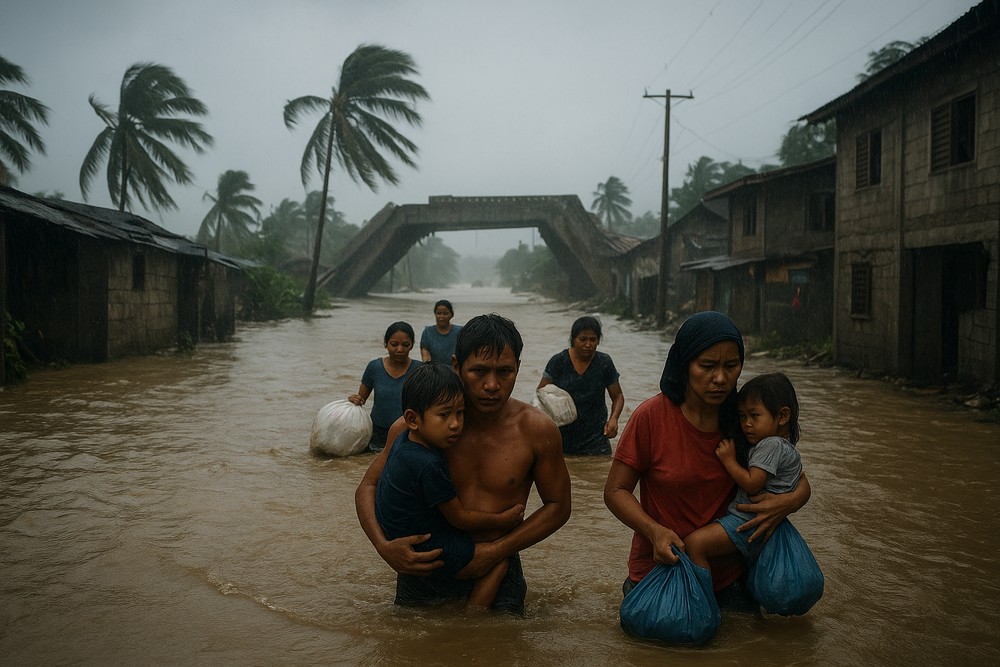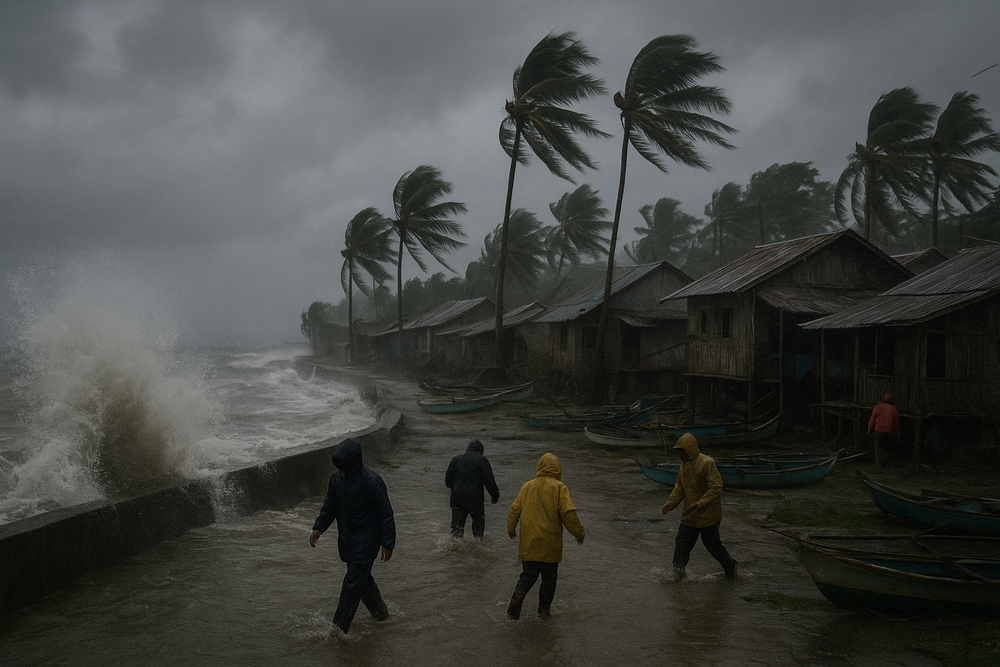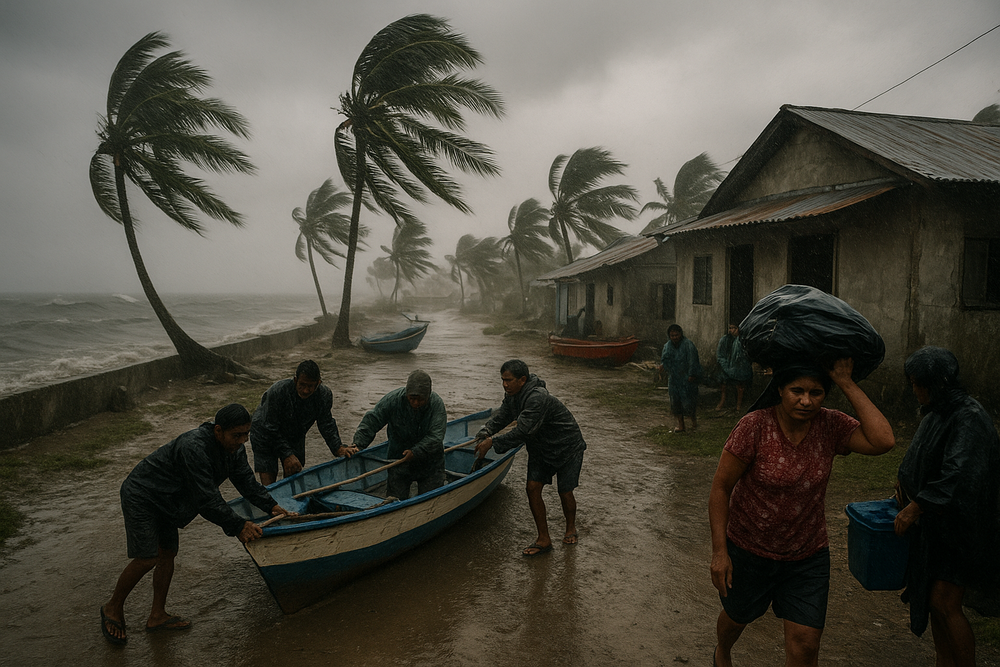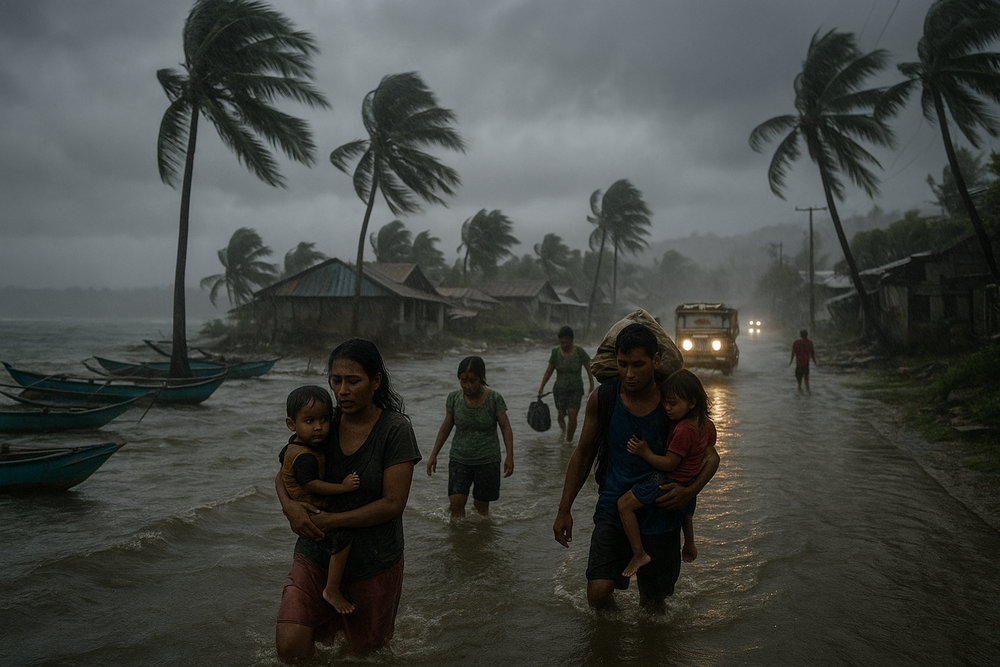
Tropical Storm Basyang slightly intensified on Friday as meteorologists raised Tropical Cyclone Wind Signal No. 2 in 13 to 15 areas across the central and southern Philippines, warning of strong winds, heavy rain, and the growing risk of flash floods and landslides even as the system began to weaken later in the day.
The storm, known internationally as Penha, swept across the Bohol Sea and made a rapid series of landfalls in Palawan, Bohol, Cebu, and Negros Oriental, prompting evacuations, transport disruptions, and class suspensions in vulnerable communities. With sustained winds of 65 kilometers per hour and gusts reaching 90 kph, Basyang became the Philippines’ second tropical cyclone of 2026.
A fast-moving storm across the Visayas
In its early Friday morning bulletin, the Philippine Atmospheric, Geophysical and Astronomical Services Administration (PAGASA) reported that Basyang was moving west-northwest at up to 25 kph, a speed that allowed the system to cross multiple islands in less than 24 hours.
Between the early hours and late evening of February 6, the storm made five recorded landfalls: first in Taytay, Palawan, followed by Coron, then Dawas in Bohol, Alcoy in Cebu, and finally Ayungon in Negros Oriental. Each passage brought bursts of heavy rain and short spells of gale-force winds, rattling coastal towns and low-lying barangays.
PAGASA warned that “heavy to intense rainfall, occasionally torrential” would affect Central Visayas, Caraga, and nearby regions, with rainfall totals in some provinces expected to exceed 200 millimetres over two days—enough to overwhelm river systems and unstable slopes.
Signal No. 2 hoisted in vulnerable provinces
Tropical Cyclone Wind Signal No. 2 was raised over parts of the Visayas and Mindanao, where winds of 60 to 100 kph posed a minor to moderate risk to life and property. Under Signal No. 2, small structures, banana plantations, and electrical lines are particularly susceptible to damage.
The alert placed local governments and disaster-response agencies on a heightened footing, triggering pre-emptive evacuations in flood-prone and landslide-risk communities. Ports in affected provinces temporarily suspended operations, stranding passengers and slowing the movement of essential goods.
For fishing communities, the warning effectively shut down livelihoods across wide swathes of coastal Visayas. The seas, churned by strong winds, became temporarily unsafe for small vessels, compounding income losses during what is already a lean season.
Heavy rain, not wind, drives the danger
While Basyang’s winds attracted attention, forecasters stressed that rainfall posed the greater threat. PAGASA cautioned residents to remain alert for flash floods and landslides, especially in upland and deforested areas of Bohol, Cebu, Negros Oriental, and Caraga.
In previous storms of similar strength, short but intense downpours have caused rivers to rise within hours, often at night when visibility is low and evacuation more difficult. Emergency officials urged residents near waterways to move early rather than wait for water levels to climb.
Downgrade offers relief, but risks remain
By late Friday night, PAGASA confirmed that Basyang had weakened into a tropical depression, with maximum sustained winds dropping to 55 kph as land interaction disrupted its circulation.
Forecasters said the system was expected to continue weakening as it crossed the Sulu Sea and approached northern Palawan, before dissipating into a low-pressure area by Sunday. Still, residual rains were forecast to persist for several days, particularly in western sections of the country.
“There has been a significant effect from its interaction with land, which is why the storm has weakened,” PAGASA said in a late-evening briefing, adding that rains could continue even after the wind threat subsides.
Communities brace for economic aftershocks
Beyond the immediate safety concerns, the storm’s impact is expected to ripple through daily life in affected regions. Flooded farmland and stalled transport networks may disrupt food supply chains, raising the risk of short-term price increases for vegetables, fish, and other staples in urban markets.
Lower-income families living in makeshift homes remain the most exposed, particularly in informal settlements near rivers and coastal areas. Evacuation centres managed by local governments and the Department of Social Welfare and Development were activated, though civil-society groups warn that capacity remains stretched in remote barangays.
As the weather gradually improves, attention is shifting from evacuation to recovery—clearing roads, restoring power, and assessing damage to homes and crops. For many communities, the storm has been brief but disruptive, a reminder that even moderate systems can leave lasting scars.
A familiar test of preparedness
Basyang’s passage has again tested the Philippines’ disaster-readiness framework, shaped by lessons from past storms and codified under the National Disaster Risk Reduction and Management Act. Officials point to early warnings and timely signal upgrades as evidence that the system worked.
Yet on the ground, especially in rural and coastal communities, the storm underscored an enduring reality: when a fast-moving cyclone crosses a densely populated archipelago, even a weakening one can strain livelihoods and expose gaps in resilience.
As Basyang fades, the challenge now lies in preventing temporary disruption from becoming long-term hardship—an increasingly delicate task in a region facing stronger and more frequent weather extremes.