Signal No. 1 was hoisted over 14 areas across the Philippines this week as Tropical Storm Ada — internationally named Nokaen — skirted the eastern seaboard, unleashing heavy rain, flooding and storm surges before weakening into a tropical depression on Sunday morning. While weather authorities have since lifted all wind signals, officials continue to warn of lingering dangers from floods and landslides, particularly in the Bicol Region.
Ada, the first tropical cyclone of 2026, never made a full landfall over Luzon but packed a destructive punch as it looped near Catanduanes and eastern Luzon. At least two deaths were reported in a landslide in Sorsogon, with thousands of families forced into evacuation centres as swollen rivers and battered coastlines disrupted daily life.
Ada weakens, but not before widespread disruption
According to the Philippine Atmospheric, Geophysical and Astronomical Services Administration (PAGASA), Ada’s centre was located at 385 kilometres east of Casiguran, Aurora, as of 5 a.m. on January 19, with maximum sustained winds of 55 km/h and gusts reaching 70 km/h. The system was moving north-northeast at about 10 km/h.
“Ada’s center was estimated at 385 km east of Casiguran, Aurora… All tropical cyclone wind signals have been lifted,” PAGASA said in its latest bulletin, confirming the downgrade to a tropical depression as satellite images showed a disorganised cloud mass over the Philippine Sea.
Just 24 hours earlier, however, the storm had displayed far more strength. Winds peaked at 85 km/h with gusts of up to 105 km/h, prompting PAGASA to raise Signal No. 2 over the entire province of Catanduanes before reducing it to Signal No. 1 and eventually lifting all alerts.
Catanduanes bears the brunt
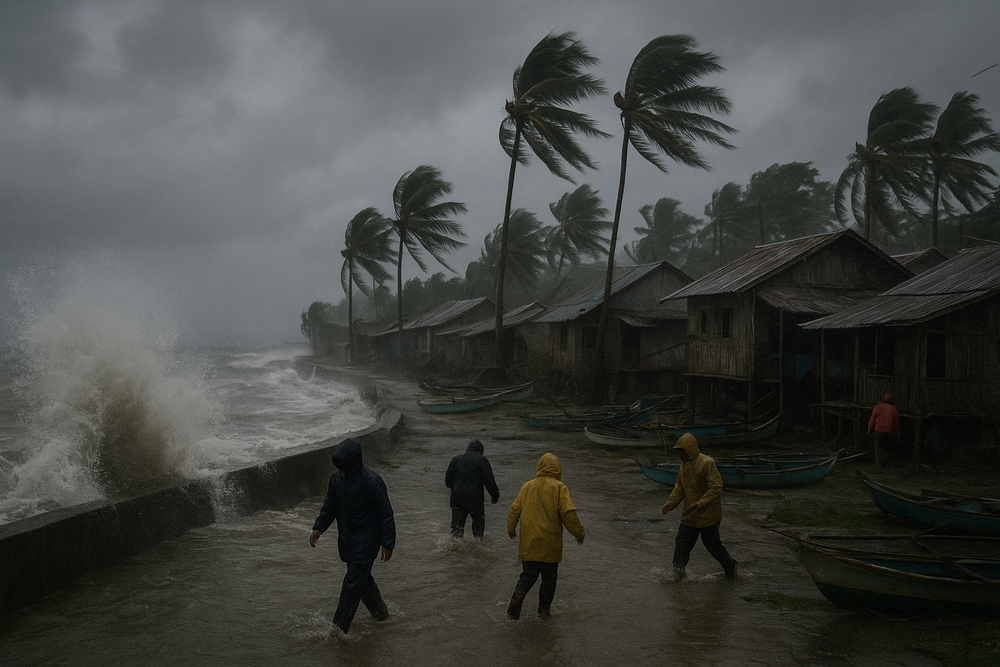
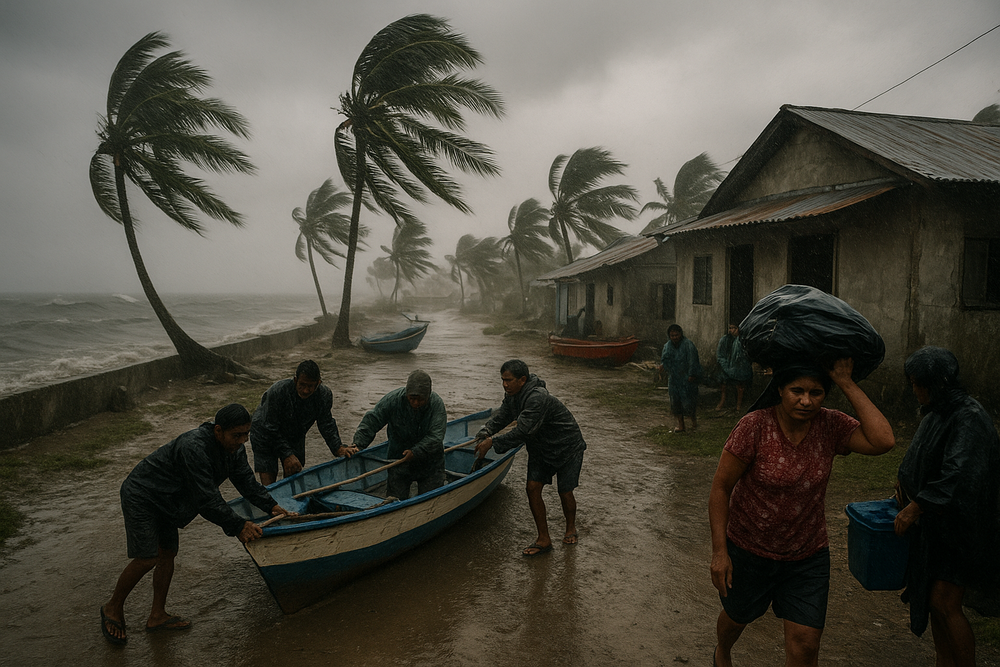
The eastern island province of Catanduanes suffered the most severe impacts as Ada passed close by in the early hours of January 18. Storm surges of 1.5 to 2 metres battered coastal communities, while torrential rain left several roads impassable, notably in the municipalities of Gigmoto and Baras.
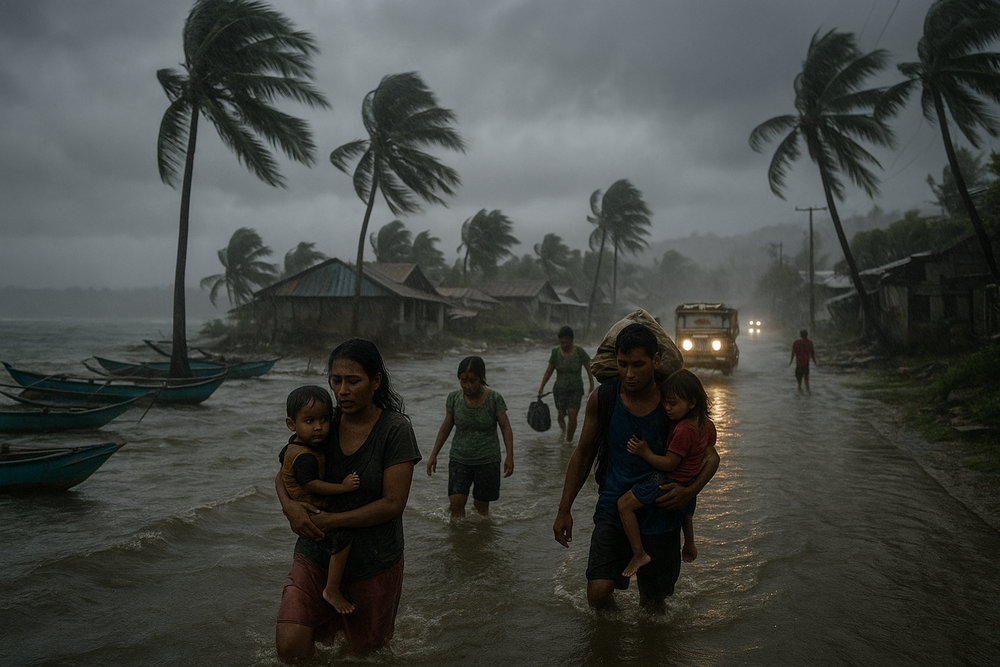
The provincial government ordered large-scale evacuations as a precautionary measure. “More than 12,000 families (approximately 45,000 individuals) have been successfully moved to 185 evacuation centers,” the Catanduanes Governor’s Office confirmed.
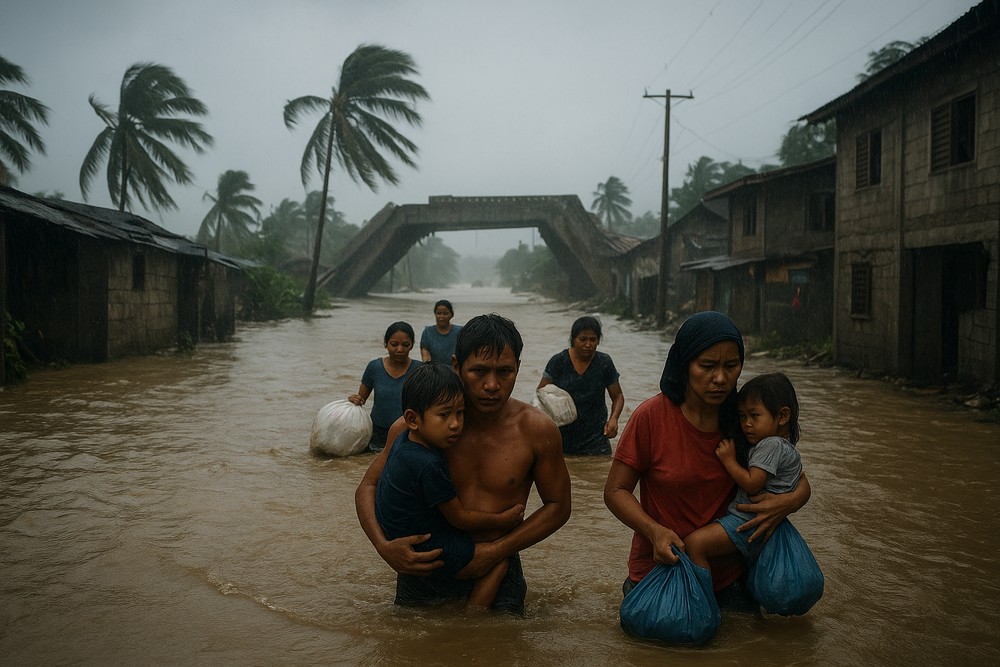
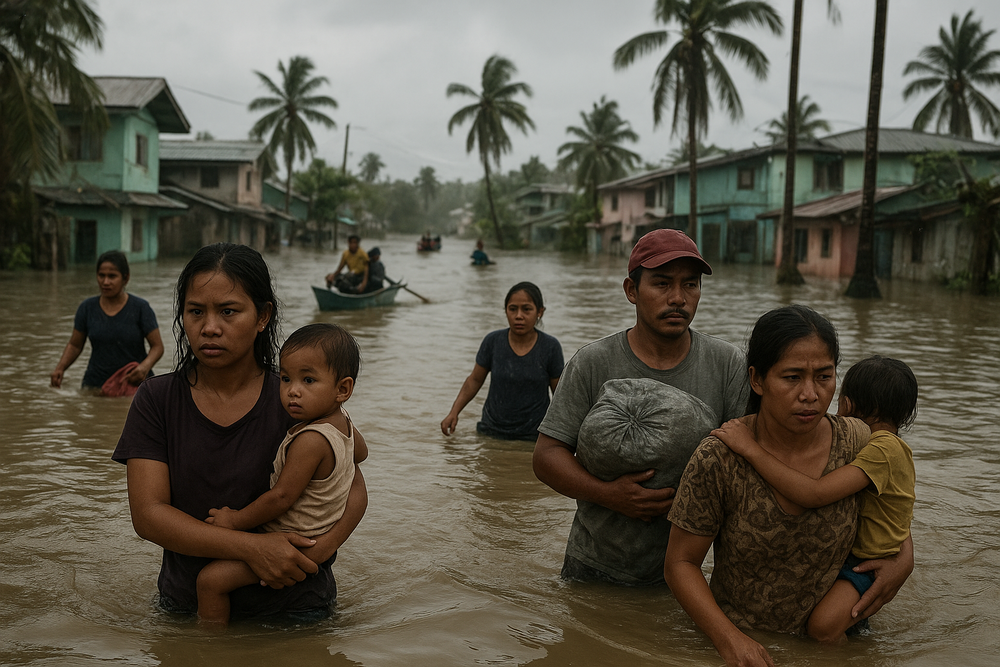
In low-lying areas such as San Andres, floodwaters rose to waist level, forcing residents to wade through streets or rely on small boats. Power outages and disrupted water supplies added to the strain inside crowded evacuation centres, where many families remain uncertain about when they can safely return home.
Deaths, floods and mounting losses in Bicol
Beyond Catanduanes, Ada’s rainbands triggered widespread flooding across the Bicol Region, where disaster officials documented at least 71 flood incidents. The National Disaster Risk Reduction and Management Council (NDRRMC) reported that two individuals lost their lives in a rain-induced landslide in Sorsogon, a figure still under verification.
“Two individuals have lost their lives due to the impacts of Tropical Storm Ada… in the Bicol Region,” the NDRRMC said in its situational report.
Across Bicol and parts of Caraga, 7,170 families, or about 10,249 people, were affected, many of them farmers and fisherfolk whose livelihoods depend on calm seas and passable farm-to-market roads. Eroded dikes, damaged fishing gear and rising food prices are now emerging concerns as assessments continue.
Flight disruptions and emergency aid
The storm also had knock-on effects beyond flood-prone communities. Several domestic flights were cancelled between January 17 and 19 as a precaution, stranding passengers and affecting commerce in the region.
Government agencies responded by distributing ₱547,765 worth of food and non-food items to affected families. Relief operations were carried out under the framework of Republic Act No. 10121, which governs disaster response and empowers local governments to declare states of calamity when needed.
Lingering risks despite lifted signals
Although PAGASA has withdrawn all tropical cyclone wind signals, it warned that Ada’s trough, combined with the northeast monsoon, could continue to bring cloudy skies, scattered rains and thunderstorms over parts of Bicol, Aurora, Quezon and Northern Samar.
“Cloudy skies with scattered rains and thunderstorms are expected… potentially causing flash floods or landslides,” PAGASA said, urging local authorities and residents to remain alert.
Forecast models suggest Ada may follow a slow, looping path over the Philippine Sea east of Luzon before dissipating into a low-pressure area early this week — a reminder that weakened storms can still behave like a lingering tide, retreating slowly and leaving hazards in their wake.
First storm of the year, familiar vulnerabilities
As the first named cyclone of 2026, Ada has once again exposed the vulnerability of eastern Philippine provinces to early-season storms. For communities in Bicol, where many households rely on fishing, farming and remittances, the storm’s impact is measured not just in flooded streets or toppled power lines, but in missed workdays, damaged harvests and uncertain income.
For now, authorities say the worst has passed. Yet in evacuation centres and mud-streaked barangays, the clean-up is only beginning — and the memory of Signal No. 1 flashing across weather bulletins serves as an early warning of what the rest of the typhoon season may bring.