VATICAN CITY — St. Peter’s Basilica, one of the most visited religious sites in the world, will introduce enhanced security measures following a series of disruptive incidents, but Vatican officials insist the landmark will not become a fortress.
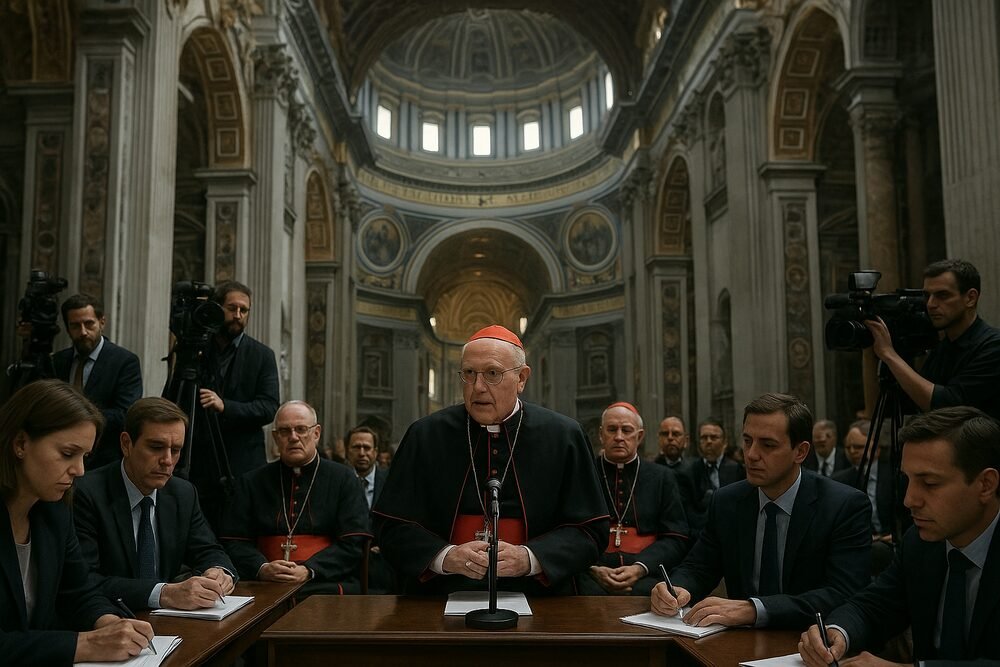
Cardinal Mauro Gambetti, archpriest of the basilica, announced the move on Monday during a press conference marking the 400th anniversary of the basilica’s dedication. While acknowledging recent acts of vandalism, he said the Church is determined to strike a careful balance between safeguarding the sacred space and preserving its spiritual openness.
“We are thinking, and now we will do something, for further protection of some spaces,” Cardinal Gambetti said. But he cautioned against excessive force or surveillance. “We asked ourselves about the limit which we should go in protection, or in militarisation … to manage everything, control everything. We think it should remain a place that leaves people who enter the Basilica with a taste of freedom, so you can’t go beyond certain limits.”
Measured Response to Isolated Incidents
The basilica welcomed more than 20 million visitors in the past year, making it one of the world’s busiest pilgrimage destinations. Despite the high footfall, officials describe security breaches as rare.
Visitors already pass through screening checkpoints at entry. Inside, between 40 and 60 security personnel operate discreetly, blending into the flow of tourists and worshippers.
Still, a handful of high-profile incidents have tested the current safeguards:
June 2023: A Polish-born man stripped naked and climbed onto the main altar in protest against the war in Ukraine.
February 2025: A man mounted the altar and knocked over candelabras, causing damage.
October 2025: An unidentified man was arrested after climbing the altar and urinating on it.
Cardinal Gambetti acknowledged what he called growing social fragilities. “There are fragilities today that are beyond what we would have imagined even just 20 years ago,” he said.
Yet he stressed that, measured against the sheer volume of pilgrims and tourists, such episodes remain “very limited.”
Protecting the Sacred Without “Militarisation”
The Vatican’s approach appears guided less by force and more by subtle reinforcement. While details of the upgraded measures have not been publicly disclosed, officials indicated they would concentrate on sensitive areas within the basilica — particularly the main altar — without installing overtly aggressive controls.
The basilica occupies a dual role: it is both a major tourist magnet and the spiritual heart of the Roman Catholic Church. Turning it into a visibly fortified space risks altering its character. Church leaders seem intent on avoiding metal barricades or a surge of uniformed patrols that could overshadow the architecture and liturgical life.
The challenge mirrors that faced by museums and landmarks across Europe: how to blend vigilance with welcome. In St. Peter’s, that balance carries theological weight as well as practical significance.
Modernisation Alongside Security
The security review coincides with broader efforts to modernise and preserve the basilica.
The Vatican has partnered with the tech company Translated to provide artificial intelligence-driven translations, expanding accessibility for international pilgrims. Meanwhile, Italian multinational Eni is supporting conservation and structural monitoring initiatives aimed at safeguarding the basilica’s artistic and architectural heritage.
“Greater knowledge will allow us to prevent any future phenomena,” said Annalisa Muccioli of Eni, referring to efforts to monitor and protect the structure.
These upgrades suggest a strategy that blends technology and conservation with measured vigilance — relying on data and design to anticipate risk rather than simply reacting to it.
Implications for Pilgrims, Including Maltese Visitors
For pilgrims from Malta and elsewhere, access to the basilica remains free of charge, with optional online reservations starting from €7. Vatican officials have given no indication that new security measures will restrict entry or alter visiting hours.
Instead, the aim appears to be continuity: preserving the basilica as a living church while quietly tightening safeguards behind the scenes.
As St. Peter’s marks four centuries since its dedication, its leadership faces a distinctly 21st-century dilemma — how to defend a global symbol of faith without encasing it in barriers. For now, the Vatican’s message is clear: protection will increase, but the sense of freedom within its marble walls must endure.