MANILA — Wide swathes of Luzon and the Visayas are under persistent cloud cover and intermittent downpours as an active shear line, reinforced by the northeast monsoon or Amihan, continues to draw bands of moisture across the country, according to the Philippine Atmospheric, Geophysical and Astronomical Services Administration (PAGASA).
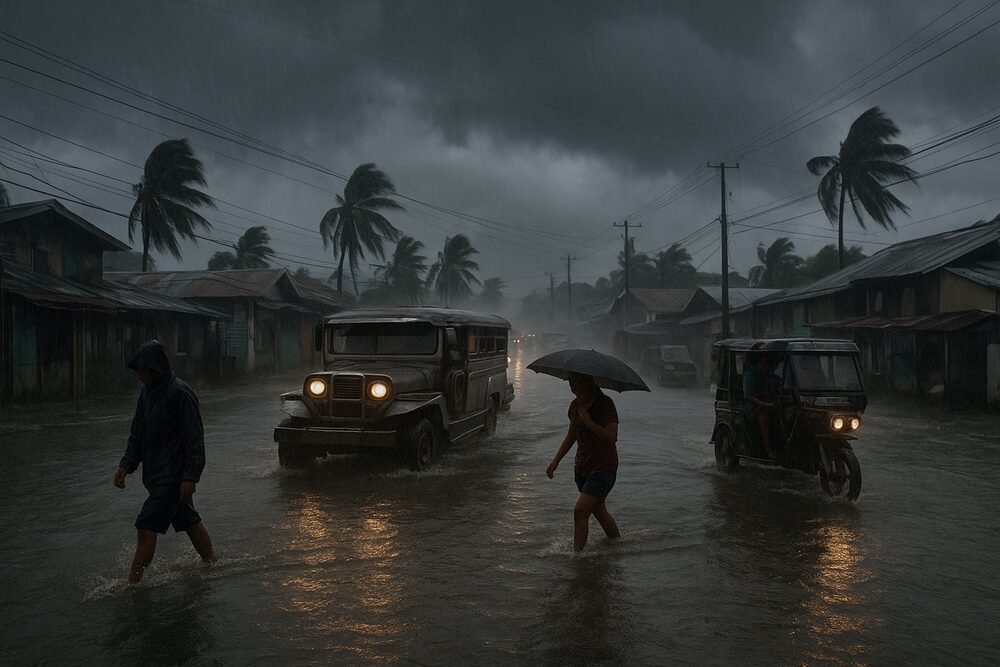
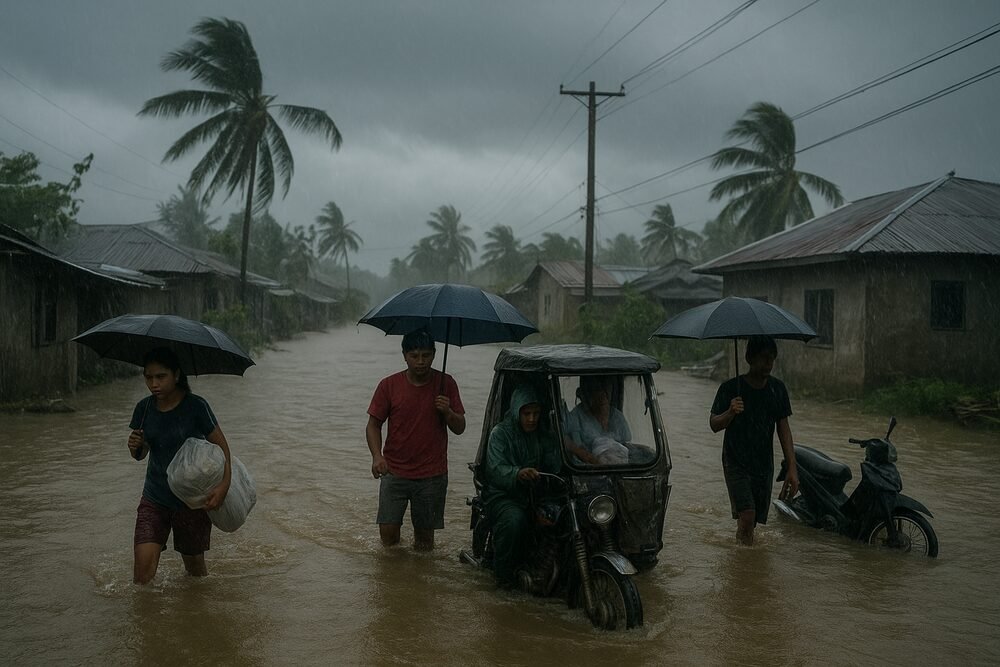
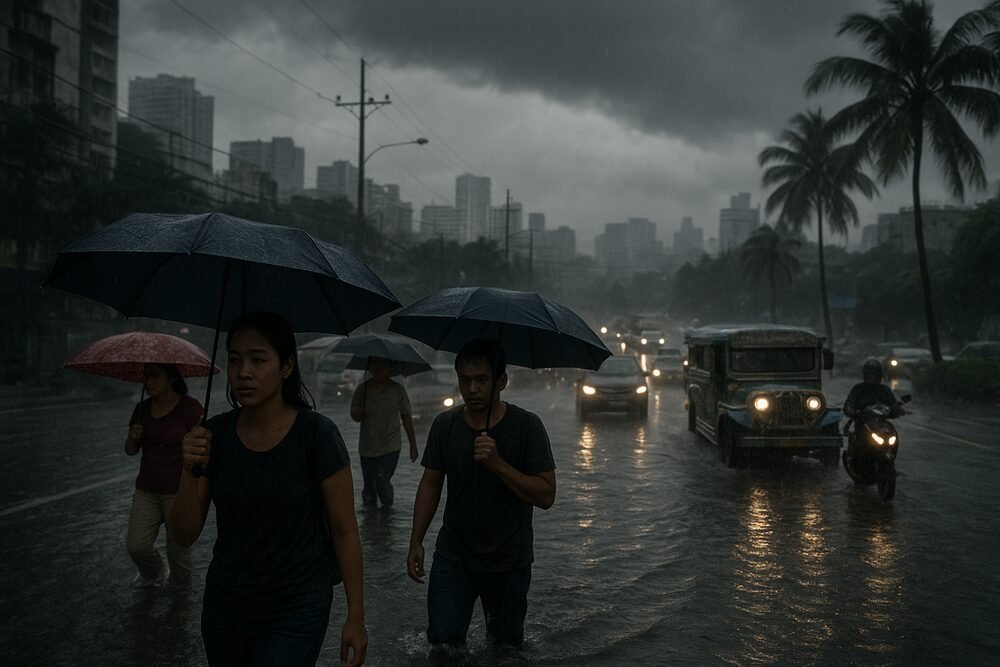
The unsettled weather has brought moderate to heavy rainfall—estimated at 50 to 100 millimeters within 24 hours in several areas—raising the risk of flash floods and landslides, particularly in low-lying and mountainous communities. While no nationwide emergency has been declared, authorities are urging vigilance as saturated soils increase the danger in vulnerable areas.
Shear Line Triggers Persistent Rains
In its 4 a.m. bulletin on Sunday, PAGASA reported that the shear line continues to affect eastern sections of Northern and Central Luzon, including Cagayan, Isabela, Aurora, Quezon, and Rizal, with cloudy skies and scattered rains also reaching Metro Manila and parts of Central Luzon.
“Cloudy skies with scattered rains and isolated thunderstorms are expected over Cagayan, Isabela, Aurora, Quezon, and Rizal due to the shear line, which may trigger moderate to at times heavy rains and possible flooding or landslides,” PAGASA said.
The shear line is the atmospheric boundary where opposing air masses converge, often unleashing widespread rain. “The shear line forms when cold winds from the northeast monsoon collide with warm winds from the Pacific Ocean, often resulting in widespread rains,” PAGASA explained.
In practical terms, the phenomenon acts like a slow-moving weather conveyor belt, feeding moisture into affected provinces hour after hour.
Visayas and Southern Luzon Also Affected
The weather system has not been confined to Luzon. Parts of the Visayas—including Eastern Samar, Northern Samar, Samar, Leyte, and Western Visayas—have also experienced episodes of moderate to heavy rains in recent days. Sorsogon and other areas in the Bicol Region remain under watch as rainfall continues.
PAGASA cautioned that rainfall totals may exceed projections in upland areas. “PAGASA cautioned that the volume of rainfall could be significantly greater in hilly and elevated regions,” the agency said in an earlier advisory.
As of February 15, rains persist across Samar provinces, while easterlies are bringing scattered showers to parts of Palawan and Western Visayas. Although lighter than shear line-induced rains, these showers may still cause localized flooding.
Amihan Brings Cooler, Damp Conditions
Meanwhile, the Amihan continues to influence northern Luzon, including the Ilocos Region, Cordillera Administrative Region (CAR), and Cagayan Valley. Residents there are experiencing cooler temperatures and intermittent light rains.
In Metro Manila, temperatures recently ranged from a minimum of 24.6°C to a maximum of 28.7°C, reflecting the monsoon’s moderating effect. Light to moderate winds have also generated moderately rough seas along northern and eastern seaboards.
Though less intense than the shear line, the northeast monsoon adds a steady chill and dampness, particularly in open and elevated areas.
Flooding, Class Suspensions, Local Disruptions
Heavy rainfall earlier this month prompted local governments to suspend classes in several areas, including parts of Sorsogon and Northern Samar, as a precaution against flooding and landslides.
On February 8, flooding was reported in Barangay Sabangan in Caramoran, Catanduanes after prolonged rains inundated low-lying sections of the community. Rains intensified through February 10 before gradually shifting in concentration.
For many residents, the impact is immediate and practical: slower commutes, waterlogged roads, delayed fishing trips and disrupted market activity. In upland and rural towns, the threat of landslides hangs heavily over hillside settlements where soil has absorbed days of rainfall.
“Residents in affected areas were advised to remain vigilant for possible flooding and landslides, particularly in low-lying and mountainous areas,” PAGASA said.
No Storm Signal, But Continued Vigilance Urged
Despite the prolonged rainfall, there are no tropical cyclone wind signals currently in place. However, PAGASA continues to monitor developments and stresses preparedness under existing disaster risk reduction protocols.
The weather service has advised the public to monitor official bulletins and heed warnings from local authorities, particularly where rivers are swollen and slopes remain unstable.
As the shear line and Amihan maintain their grip over parts of the archipelago, the immediate forecast offers little respite. For communities across Luzon and the Visayas, the coming days will require patience—and caution—under skies that show few signs of clearing.