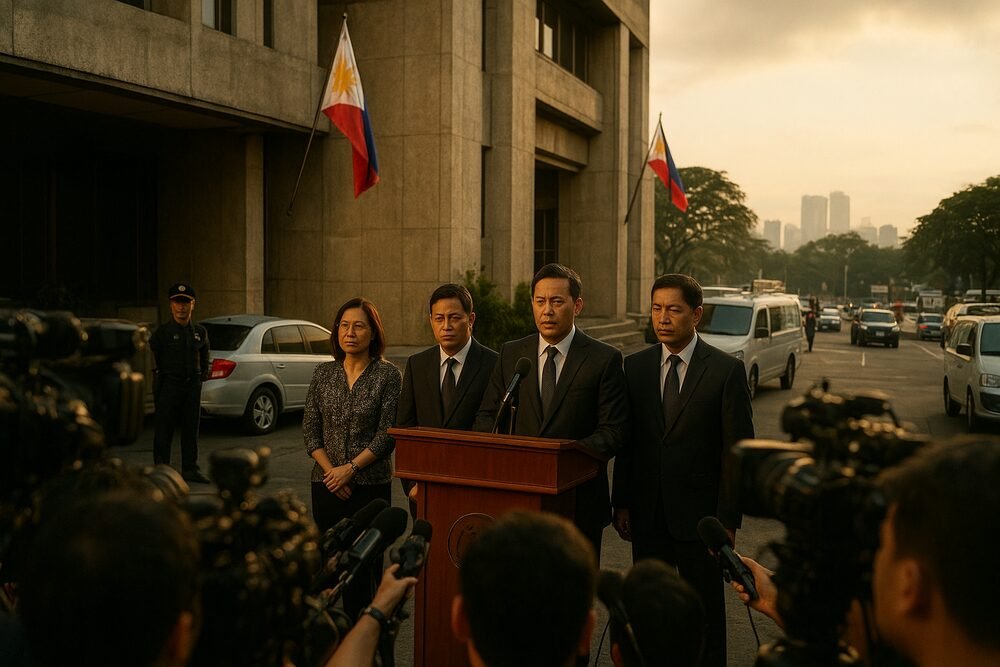
Philippine Senate President Vicente “Tito” Sotto III has rejected claims that Senator Imee Marcos was removed as chairperson of the Senate Committee on Foreign Relations because she refused to sign a resolution condemning Chinese diplomatic attacks, insisting the leadership change was driven by internal bloc arrangements rather than her position on Beijing.
Sotto’s denial comes amid heightened tensions in the Philippine Senate over relations with China, following a public rebuke by the Chinese Embassy of Philippine officials defending Manila’s position in the West Philippine Sea. The dispute has exposed sharp divisions within the legislature on how forcefully the country should confront Beijing’s actions.
A Leadership Change Amid Diplomatic Tensions
Marcos, who has chaired the Foreign Relations Committee since the previous Congress, belongs to the Senate minority bloc. Sotto said that as the new session progressed, the majority bloc decided to assert control over key committees — a standard practice in the chamber — including Foreign Relations.
“Nung una, hindi naman namin ginalaw ’yun… But apparently things didn’t work out that way,” Sotto said in a Zoom interview on January 30, stressing that the decision had been under discussion well before the controversy erupted. When asked directly whether Marcos’s refusal to sign the China resolution triggered her replacement, he was unequivocal: “It has nothing to do with that.”
Senate President Pro Tempore Panfilo “Ping” Lacson later confirmed that Marcos had already been informed of the impending change, which is expected to be formalised in plenary in the coming days. Senator Erwin Tulfo has publicly expressed interest in taking over the post.
The Resolution That Sparked the Row
At the centre of the controversy is Senate Resolution No. 256, signed by 15 senators, which condemns statements made by the Chinese Embassy in Manila as inconsistent with diplomatic norms. The resolution urges the Department of Foreign Affairs (DFA) to defend Philippine officials from what sponsors described as foreign intimidation.
Nine senators did not sign the measure, including Marcos and Minority Leader Alan Peter Cayetano, along with several lawmakers aligned with former president Rodrigo Duterte. On January 27, the Senate deferred plenary adoption of the resolution after Cayetano called for a committee hearing, underscoring the chamber’s split.
The diplomatic clash began after a Philippine Coast Guard social media post featured caricatures of Chinese President Xi Jinping during an academic event. The Chinese Embassy criticised the imagery, prompting backlash from senators who viewed the response as an attempt to police Filipino speech.
Marcos Counters With Call for Restraint
Rather than endorse Resolution No. 256, Marcos filed her own measure, Senate Resolution No. 267, urging government officials to exercise “circumspect professionalism” in foreign affairs and to respect the DFA’s lead role in diplomacy.
“Reckless statements and intemperate rhetoric can have real consequences on bilateral relations,” Marcos warned, particularly in sensitive areas such as the maritime domain. Her stance reflects a more cautious approach to China, prioritising stability in bilateral ties over confrontational rhetoric.
Dueling Views on Sovereignty and Diplomacy
Supporters of Resolution No. 256 argue that the Chinese Embassy crossed a line by criticising Philippine officials for defending national sovereignty. Senator Francis “Kiko” Pangilinan, one of the signatories, said Beijing’s statements sought to obscure the reality of Chinese aggression.
“Defending our rights as a nation is not a provocation,” Pangilinan said, framing the dispute as a test of whether the Philippines can speak freely without foreign reprisal.
Sotto himself floated the idea that the Senate could consider declaring Chinese Embassy Deputy Spokesperson Guo Wei persona non grata, highlighting the seriousness with which majority lawmakers view the incident.
What It Means Beyond the Senate
For ordinary Filipinos, the reshuffling of Senate committee leadership has little immediate impact. No changes to laws, prices, transport, or public services are tied to the move. Yet the episode reflects broader tensions over the West Philippine Sea — disputes that affect fishing communities in coastal regions and shape the country’s long-term security posture.
The Senate is expected to revisit the resolution early next week, with the Foreign Relations Committee at the centre of the debate. Whether the leadership change will cool tempers or sharpen divisions remains to be seen.
For now, Sotto has drawn a clear line: Marcos’s removal, he says, is a matter of numbers and bloc politics — not a punishment for crossing Beijing.