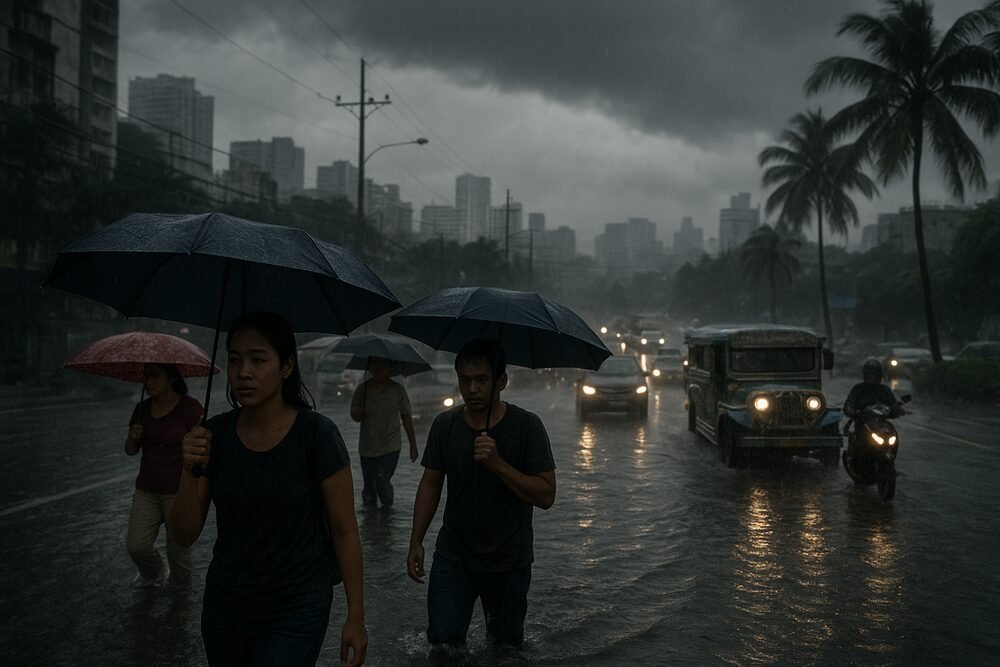
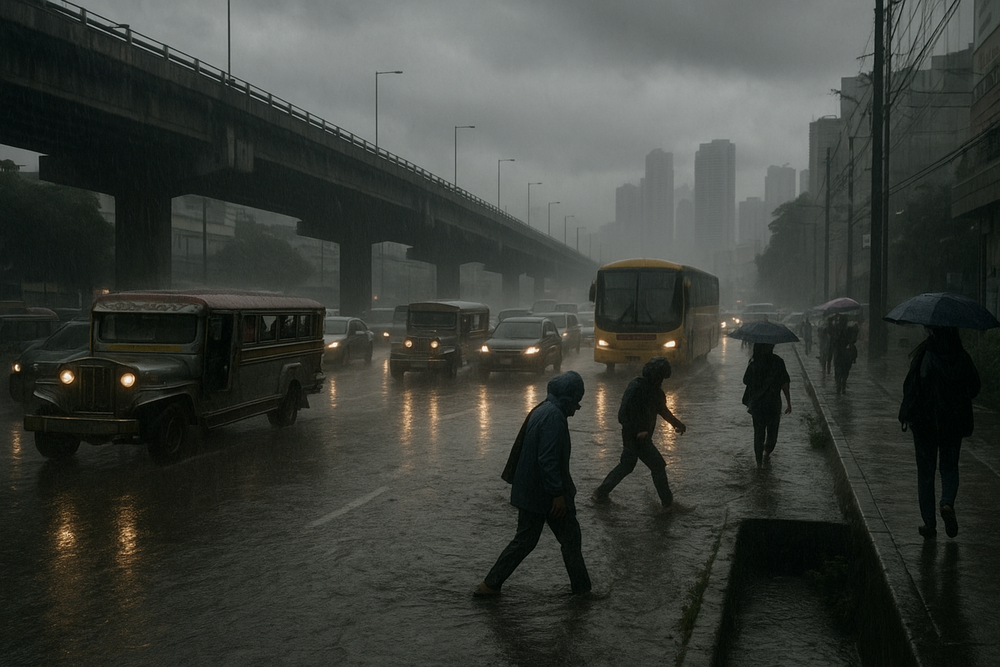
MANILA — A shifting mix of weather systems is set to drench parts of Southern Luzon, the Visayas and Mindanao this week, as the shear line and a weakening northeast monsoon, or amihan, trigger scattered rains and thunderstorms, the Philippine Atmospheric, Geophysical and Astronomical Services Administration (PAGASA) said.
While much of Metro Manila and large portions of Luzon can expect partly cloudy skies with isolated light rains, communities along the eastern seaboard and in Bicol and Eastern Visayas face a higher risk of flooding and landslides. PAGASA said it is not monitoring any tropical cyclones or low-pressure areas inside the Philippine Area of Responsibility, and no gale warnings have been raised.
Shear Line Lingers Over Southern Luzon and Visayas
The shear line — a weather boundary formed when cold and warm air masses collide — continues to hover over Southern Luzon, including Quezon, Albay, Sorsogon and Masbate, and extends to parts of the Visayas and Mindanao. The system is producing cloudy skies with scattered rains and isolated thunderstorms.
PAGASA meteorologist Loreidin de La Cruz-Galicia said the weather pattern remains active over the central and southern parts of the country.
“There remains an active shear line impacting the eastern regions of the Visayas and Mindanao, contributing to precipitation over large areas of these regions,” she said during a February 21 briefing.
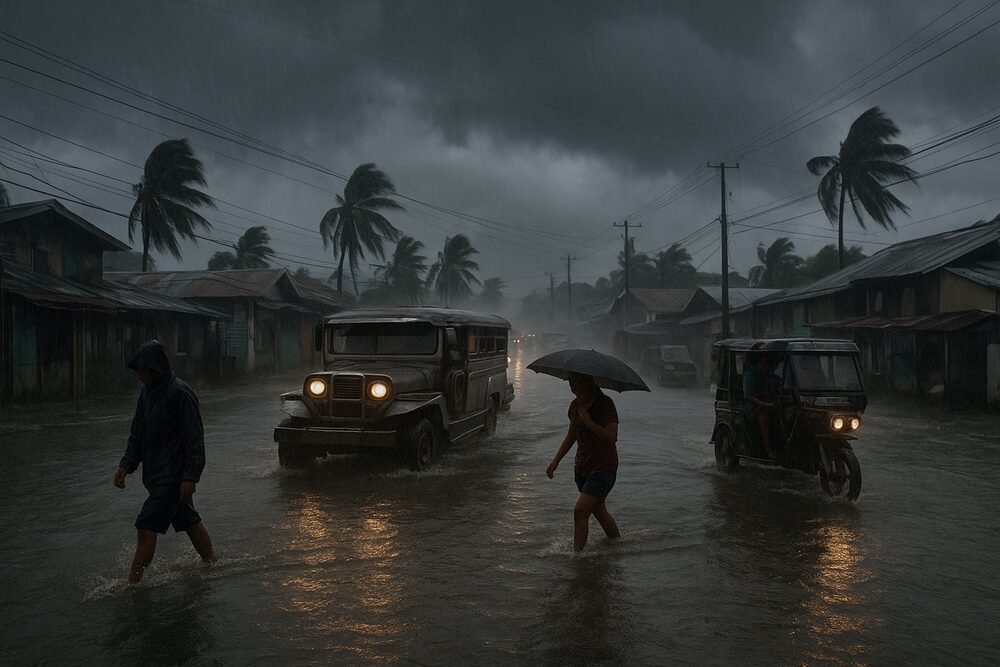
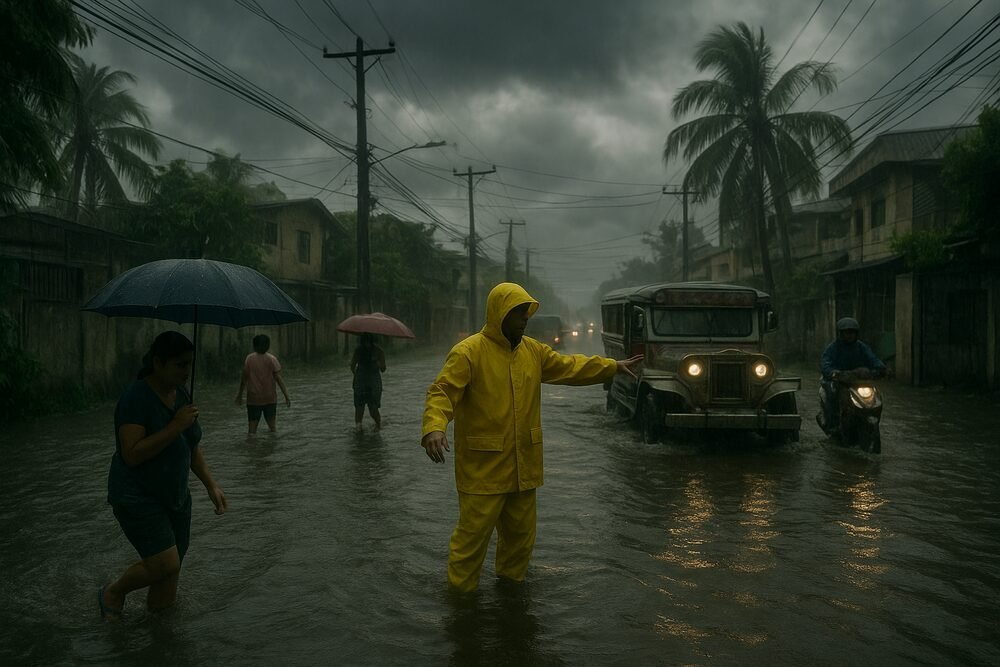
Residents in affected provinces, particularly in Eastern Visayas and Bicol, have been advised to remain alert for moderate to occasionally heavy rains that may trigger flash floods or landslides, especially in mountainous and low-lying areas.
Amihan Weakens, Warmer Days Ahead
At the same time, the amihan, which has brought cooler air to Northern and Central Luzon since its onset on October 27, 2025, is gradually losing strength.
“The amihan will continue to weaken over the next two to three days, while the easterlies… will be the dominant weather system,” PAGASA specialist Aldczar Aurelio said on February 23.
The monsoon continues to bring cloudy skies and light rains over Cagayan, Isabela and Aurora. In an earlier advisory, PAGASA noted: “Inaasahan nga natin ang Amihan o Northeast Monsoon magdadala ng maulap na papawirin at mga mahihinang pag-ulan sa lugar ng Cagayan, Isabela pati na rin sa may Aurora.”
As the amihan weakens, forecasters expect a gradual shift toward warmer and more humid conditions in the coming days.
Easterlies Take the Lead
With the monsoon fading, easterlies — warm winds coming from the Pacific — are beginning to dominate. These winds are bringing isolated rain showers to Palawan, the rest of the Visayas, parts of Luzon including Metro Manila, and the rest of Mindanao.
Temperature forecasts in key cities reflect a warmer trend:
Iloilo: 26°C to 31°C
Cebu: 25°C to 31°C
Zamboanga: 25°C to 33°C
Davao: 24°C to 33°C
Unlike the shear line, easterlies typically bring brief, localized downpours rather than prolonged rainfall.
No Cyclones, Seas Remain Safe
Despite the unstable weather in certain areas, PAGASA confirmed that no tropical cyclones or low-pressure areas are currently being monitored within the Philippine Area of Responsibility. Sea conditions across the archipelago remain generally moderate, with no gale warnings in effect, making it safe for small fishing boats and other light vessels to venture out.
The current amihan season follows the previous cycle that ended on March 26, 2025, underscoring the Philippines’ near year-round exposure to shifting wind systems and converging air masses.
Daily Disruptions for Communities
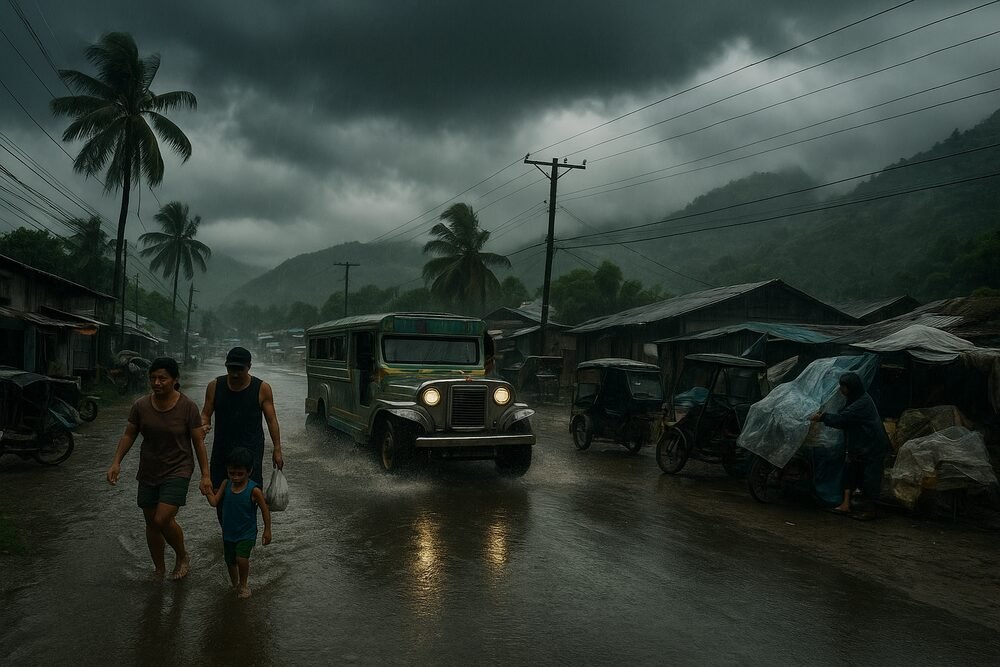
For residents in rain-affected provinces, the impact is immediate and practical. In Albay, Sorsogon, Masbate and Northern Samar, intermittent downpours can disrupt farm work, small-scale fishing and daily transport. Muddy roads and swollen streams pose hazards for rural communities.
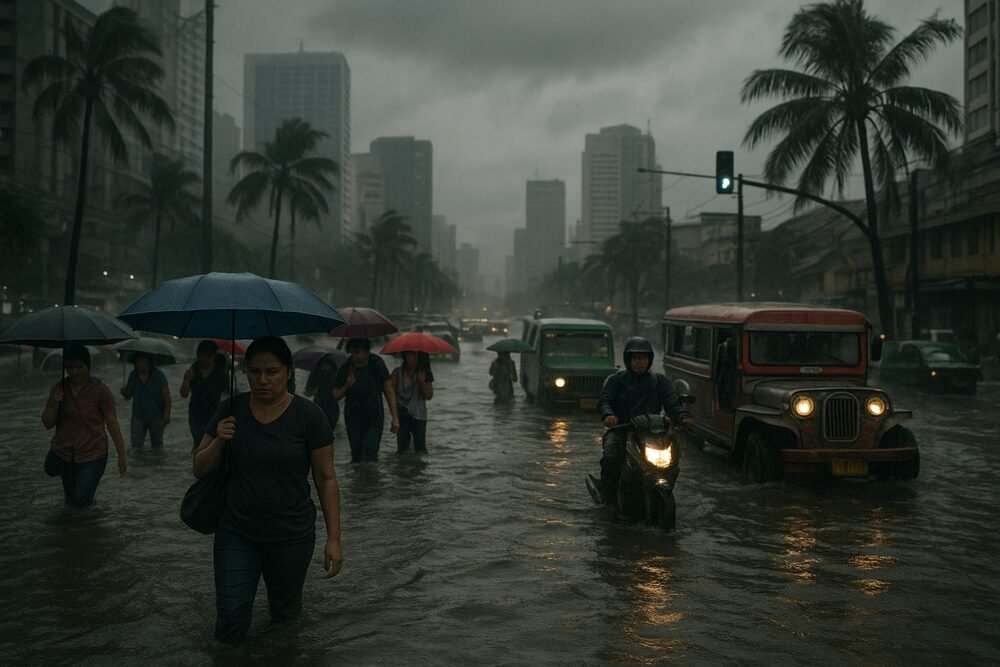
In Metro Manila and other urban centers experiencing lighter rains, the effect is subtler but familiar: slower commutes, damp market stalls and fewer customers for street vendors during sudden showers.
Local government units in vulnerable areas continue to monitor river levels and hillside communities as a precaution.
A Transition Period
Weather experts describe the coming days as a transitional phase — a seesaw between the retreating cool winds of the northeast monsoon and the returning warmth of the easterlies. The shear line, like a crease across the sky, holds enough energy to unleash heavy rain where conditions converge.
For now, PAGASA’s message remains consistent: stay alert in flood-prone areas, monitor official advisories and prepare for a gradual return to warmer, more humid days as March approaches.