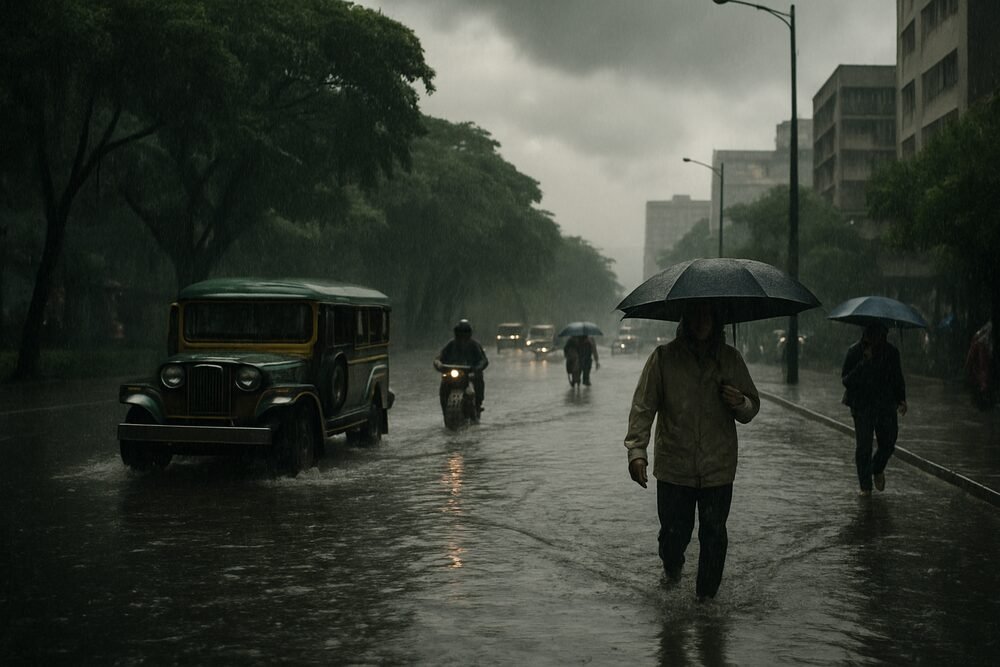
MANILA — A Low Pressure Area (LPA) trough lingering outside the Philippine Area of Responsibility is expected to drench swathes of the Visayas and Mindanao, with forecasters warning that rainfall may extend to parts of Luzon, including Metro Manila, in the coming days.
The Philippine Atmospheric, Geophysical and Astronomical Services Administration (PAGASA) said the system’s trailing edge — often described as the “tail” of the LPA — will bring cloudy skies and scattered rain showers beginning Monday, March 9. While the weather disturbance remains outside Philippine territory, its reach is already being felt.
Rain Bands Sweep Across Central and Southern Regions
In an advisory aired March 8, PAGASA said: “Buntot ng LPA sa labas ng bansa, asahang magpapaulan sa Visayas, Mindanao, Sorosogon, at Masbate ngayong Lunes, Marso 9, 2026.” (Translation: “The tail of the LPA is outside the country; rains are expected over Visayas, Mindanao, Sorosogon, and Masbate this Monday, March 9, 2026.”)
The trough — a stretch of atmospheric instability trailing from the main low-pressure core — acts like a conveyor belt for moisture. Even without crossing into Philippine waters, it can funnel thick rain clouds over land, producing intermittent downpours and overcast skies.
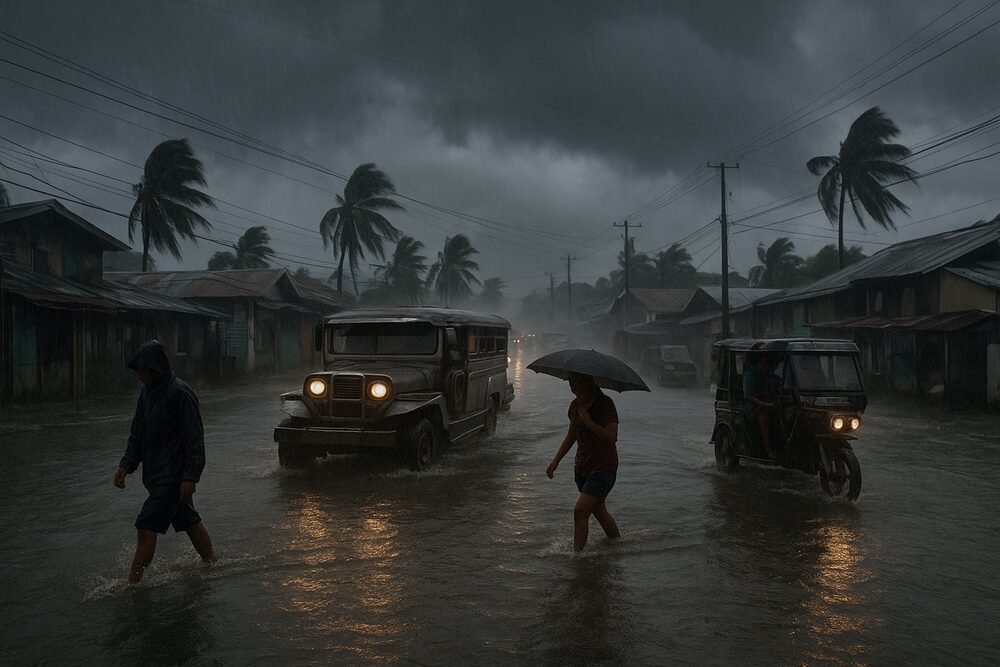
Provinces in the Visayas and Mindanao are likely to experience the brunt of the rainfall, with Sorsogon and Masbate also placed under close watch. Forecasters warn that persistent showers may lead to localized flooding and possible landslides in mountainous terrain.
Metro Manila Braces for Amihan-Driven Showers
Beyond the LPA’s direct influence, the northeast monsoon, or amihan, is expected to bring additional rain to parts of Luzon.
PAGASA said on March 9: “Posible ang pag-ulan sa Metro Manila dahil sa amihan na nakaaapekto sa ilang bahagi ng Luzon ngayong Martes, Marso 10, 2026, ayon sa PAGASA.” (Translation: “Possible rainfall in Metro Manila due to the amihan affecting some parts of Luzon this Tuesday, March 10, 2026, according to PAGASA.”)
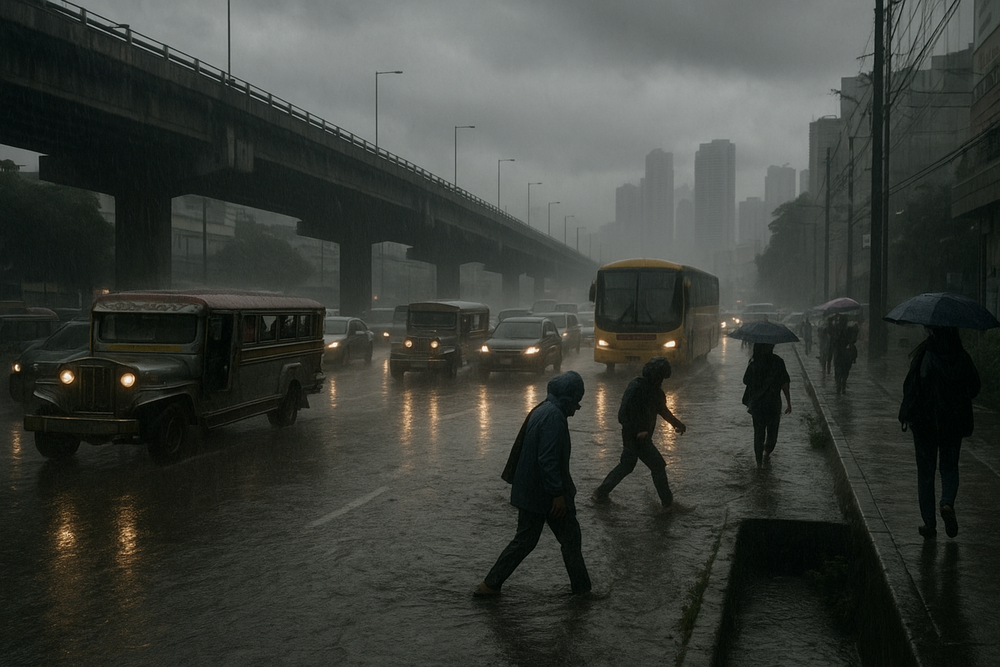
While the projected rainfall in the capital is not expected to be extreme, even moderate showers can strain a metropolis long accustomed to drainage challenges. Low-lying communities and major traffic corridors remain vulnerable to temporary flooding during sustained rain.
Earlier Monitoring Showed Moderate Storm Potential
The LPA was first detected east of Mindanao on February 3, 2026. At the time, PAGASA noted a moderate chance that the system could develop into a tropical storm within 24 hours if it entered the Philippine Area of Responsibility.
Though it has not intensified into a named storm, authorities continue to monitor its evolution closely. Weather systems in the western Pacific can reorganize quickly, particularly when fueled by warm sea surface temperatures.
Ripples Across Agriculture and Transport
For farming communities in Mindanao and the Visayas, the rainfall presents a double-edged sword. While showers may replenish irrigation reservoirs during the dry season, prolonged downpours risk waterlogging rice paddies and vegetable fields, potentially delaying harvests and affecting incomes.
Transport operators and logistics firms are also adjusting operations. Rough seas may interrupt inter-island ferry services, while slippery highways and reduced visibility pose hazards for cargo trucks and provincial buses. Urban commuters may face longer travel times as rainfall compounds rush-hour congestion.
Preparedness Measures Activated
The evolving weather conditions fall under the protocols of the National Disaster Risk Reduction and Management Act of 2010 (R.A. 10121). Local Government Units across affected regions are expected to coordinate with disaster response agencies to monitor flood-prone and landslide-prone areas.
Infrastructure authorities are assessing road networks, while agricultural offices are advising farmers on crop protection measures. Emergency response groups remain on standby should rainfall intensify.
A Familiar Pattern, A Renewed Vigilance
Seasonal shifts driven by the amihan and transient low-pressure systems are recurring features of the Philippine climate. Yet their impacts vary sharply by region and terrain. In upland villages, saturated soils can give way with little warning; in coastal towns, rough waters can idle fishing boats and disrupt livelihoods overnight.
For now, PAGASA continues to track the LPA’s movement and development. Authorities urge residents in Visayas, Mindanao, Sorsogon, Masbate, and Metro Manila to monitor official bulletins and remain alert for sudden changes in weather conditions.
As the nation moves deeper into March, the skies over the central and southern Philippines serve as a reminder that even a weather system beyond national borders can cast a long and rainy shadow.