The Philippine economy is expected to expand at a steadier but slower pace over the next two years, with a state think tank projecting growth that falls short of government ambitions and underscores lingering structural risks. The Philippine Institute for Development Studies (PIDS) said this week that gross domestic product is likely to grow by 5% in 2025 and 5.3% in 2026, mirroring forecasts by major multilateral lenders but highlighting constraints from governance concerns, climate shocks and a fragile global outlook.
The projections, presented during a PIDS webinar in mid-January, place the Philippines among Asia’s faster-growing economies but below its own potential—and below official targets that once aspired to push growth firmly above the 6% mark.
Growth Slows Below Government Targets
The PIDS outlook aligns closely with the Asian Development Bank and the World Bank, both of which see Philippine growth settling around the 5% range as post-pandemic momentum fades. That trajectory, however, remains below the government’s 5.5% to 6.5% growth target for 2025, which officials now privately concede is unlikely to be met.
Data so far explain the downgrade. After averaging 5.4% to 5.5% in the first half of 2025, economic growth slowed sharply to 4% in the third quarter, its weakest pace in four years. The deceleration pulled average growth for the first nine months of the year to roughly 5%, making a stronger rebound in the final quarter difficult.
Dr. John Paolo Rivera, a senior research fellow at PIDS, said the think tank’s projections were “very much aligned with the forecast of multilateral agencies—the Asian Development Bank and the World Bank.” He added that while the numbers suggest resilience, they also reveal limits.
“We remain below the economy’s pre-pandemic potential,” Rivera said. “While these figures signal stability, they do not yet tell us that economic transformation is happening.”
Infrastructure Pullback Weighs on Momentum
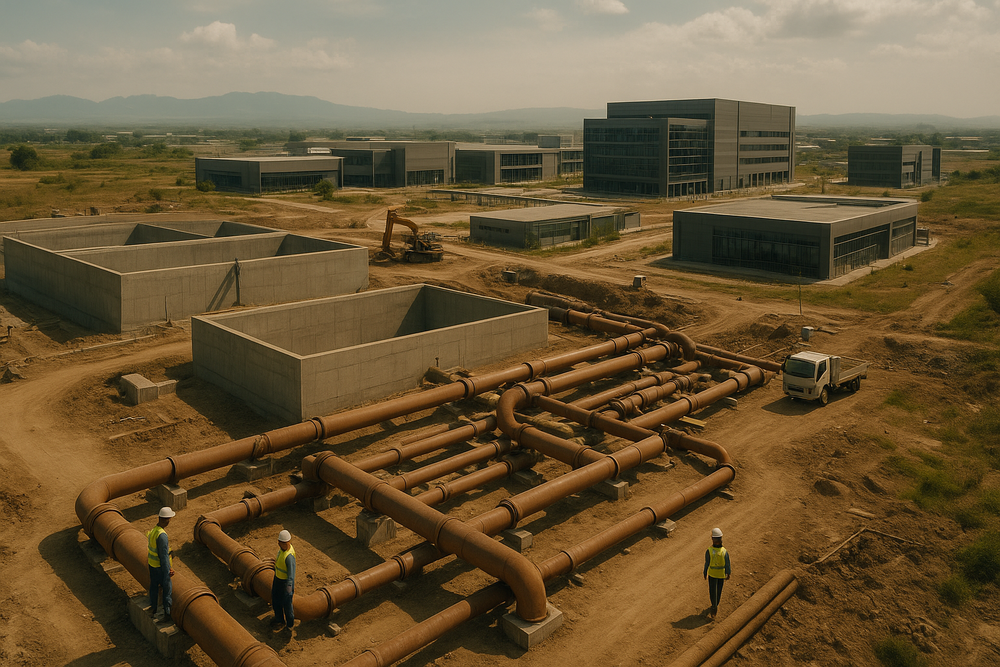
A key drag on growth has been a sudden slowdown in public infrastructure spending, particularly in flood control projects. Ongoing probes into alleged irregularities forced the suspension or review of several major works, rippling through construction and related industries in the third quarter.
This pause in spending acted like a bottleneck in what had been a key growth engine, compounding the effects of weaker global trade and heightened uncertainty after new US tariffs introduced in April 2025. The Philippine economy, heavily reliant on services and domestic consumption, absorbed the shock better than some peers—but not without cost.
With public construction faltering, overall GDP growth lost momentum just as the government had hoped to accelerate spending to reach its targets.
Inflation Eases, But Investment Lags
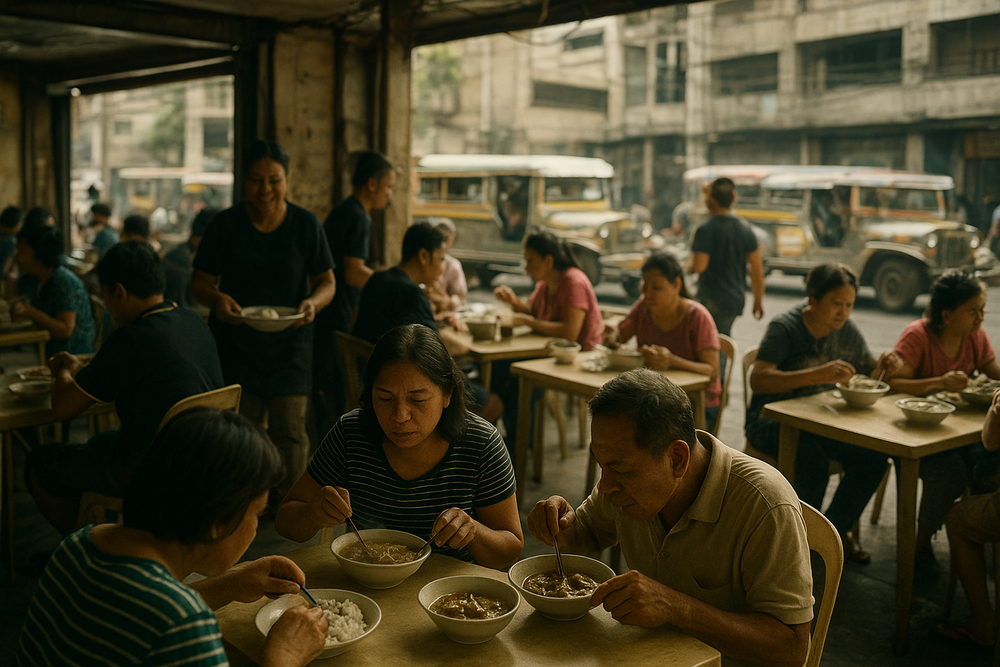
One bright spot in the outlook is inflation. Average inflation fell to 3.2% in 2024 and dropped further to 1.7% by October 2025, comfortably within the Bangko Sentral ng Pilipinas’ 2–4% target range. Lower inflation has eased pressure on household budgets, particularly for food and transport, and opened the door for monetary easing.
Cheaper borrowing costs could help small businesses and consumers, but economists warn that rate cuts alone cannot compensate for weak investment sentiment. Governance issues, including high-profile corruption investigations, risk eroding policy credibility at a time when Southeast Asia is competing fiercely for supply-chain relocations.
Economist Leonardo Lanzona of Ateneo de Manila University cautioned against overreliance on fiscal restraint without deeper reforms, describing “fiscal discipline” as “not a strategy at all” for sustaining growth.
Respectable by Regional Standards, But Not Transformational
Despite the headwinds, officials argue that a 5% growth rate remains respectable. Department of Economy, Planning, and Development Secretary Arsenio Balisacan said earlier this month that if growth holds near that level for the full year, the Philippines would remain one of Asia’s stronger performers.
“If we maintain a five percent growth for the full year… it positions us among the fastest growing economies in Asia,” Balisacan said. “In the ASEAN context, we would be just behind Vietnam.”
The government now expects full-year 2025 growth to land around 4.8% to 5%. Looking ahead, officials are banking on the 2026 national budget to lift growth back to the 5%–6% range, with longer-term targets rising gradually toward 2028.
What It Means for Ordinary Filipinos
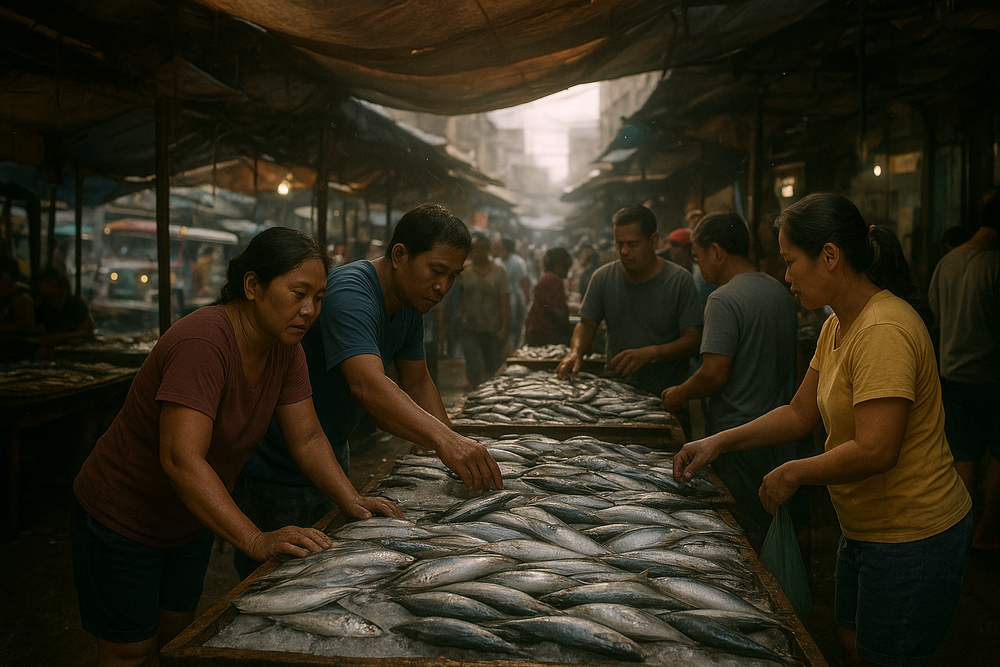
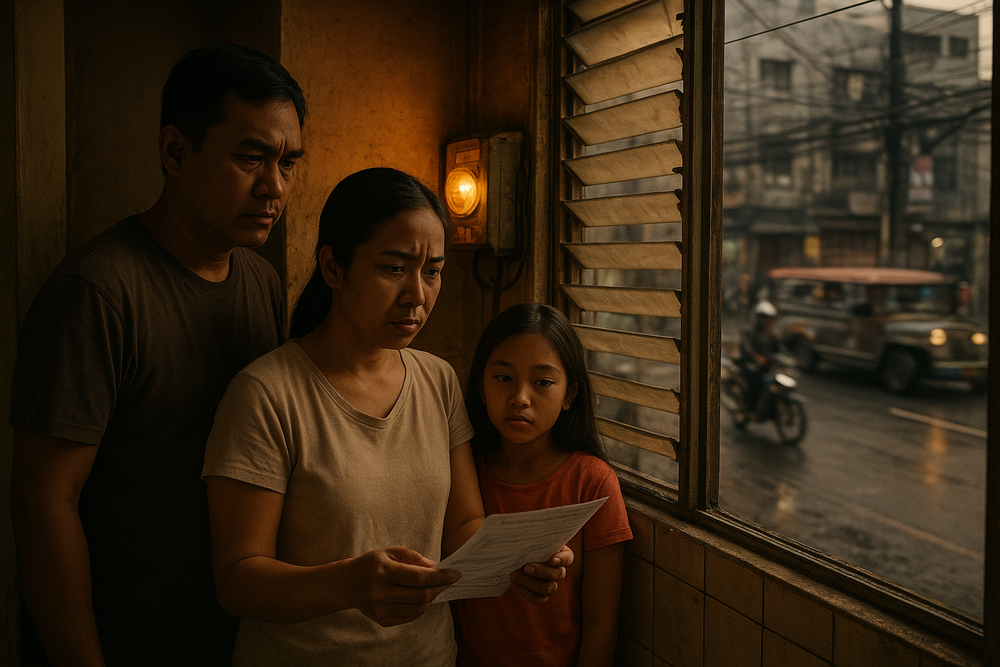
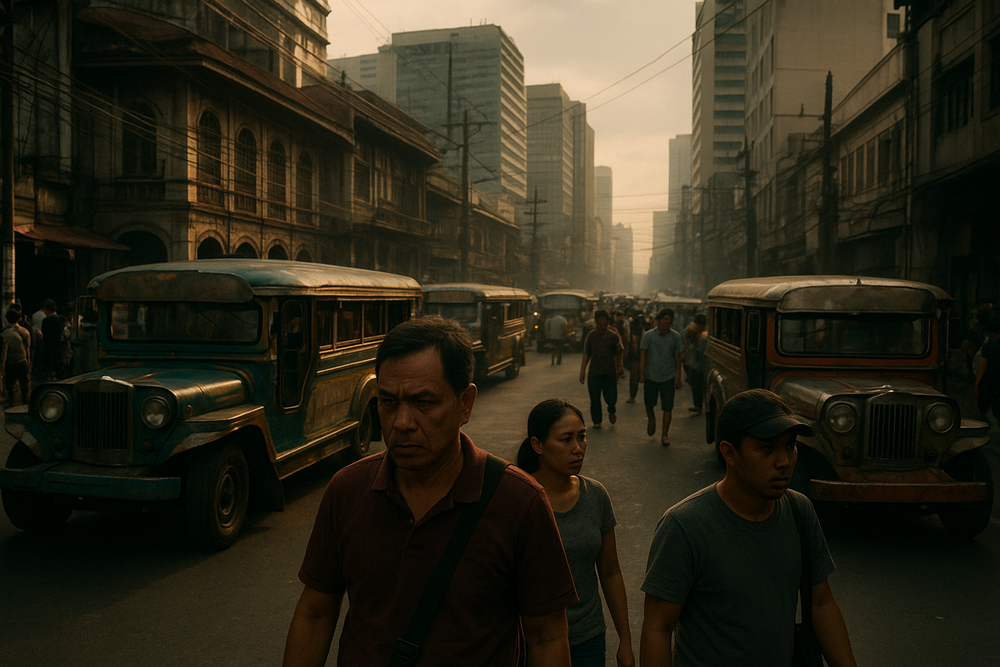
For households across the archipelago, the projected growth path offers stability rather than breakthroughs. Moderate expansion means jobs will continue to be created, but not fast enough to deliver broad wage gains or absorb underemployment, particularly in the informal and service sectors.
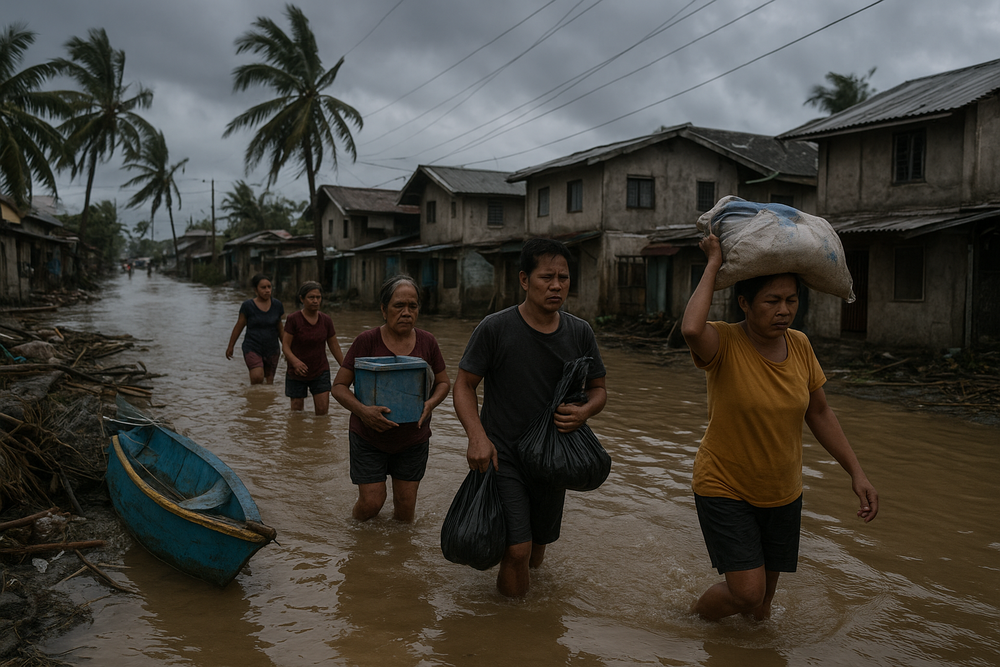
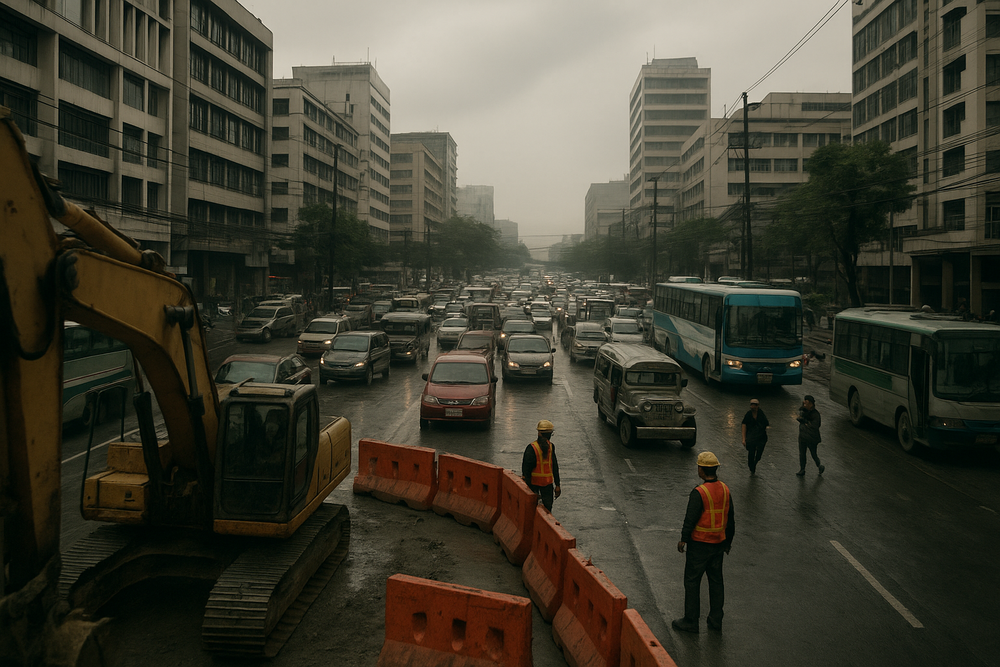
The slowdown in infrastructure spending has tangible effects: longer commutes, persistent flood risks and higher indirect costs for families and small businesses. At the same time, easing inflation has brought relief at the checkout counter, softening the blow of slower growth.
Still, analysts warn that without stronger investment and credible governance reforms, the Philippines risks missing a narrow window to secure higher-value industries—from advanced manufacturing to resilient business process outsourcing as automation reshapes the sector.
Data Still Pending, Risks Remain
The Philippine Statistics Authority is set to release official fourth-quarter and full-year 2025 GDP figures on 29 January 2026, which will confirm whether growth stayed near the 5% mark or slipped further.
For now, the PIDS forecast sketches an economy moving forward but constrained—like a vessel navigating calmer inflationary waters while carrying extra weight from governance challenges and external shocks. The next two years, economists say, will test whether stability can be converted into lasting transformation.