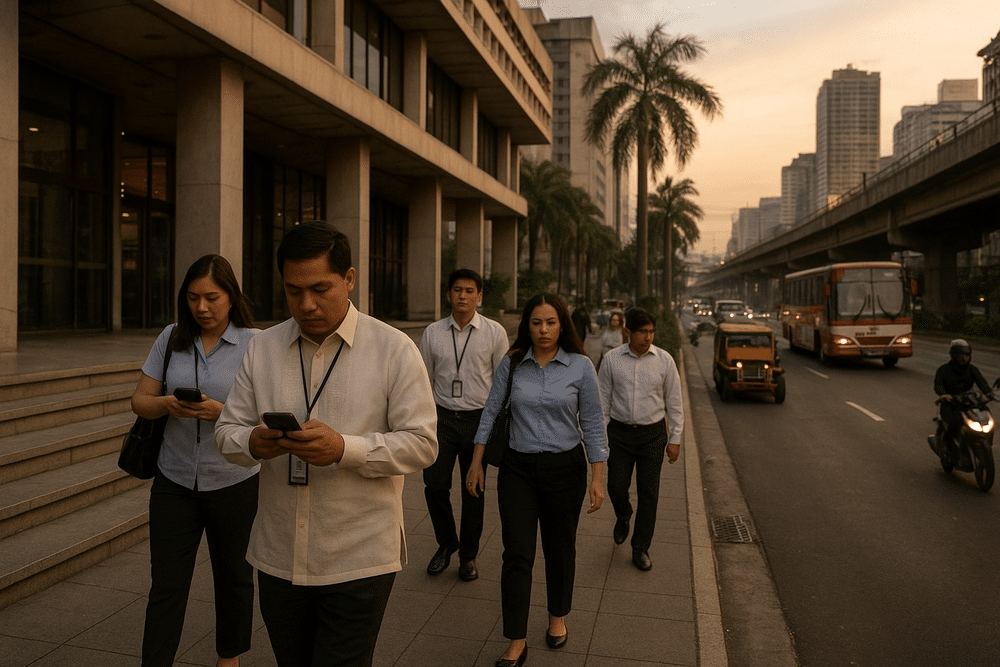
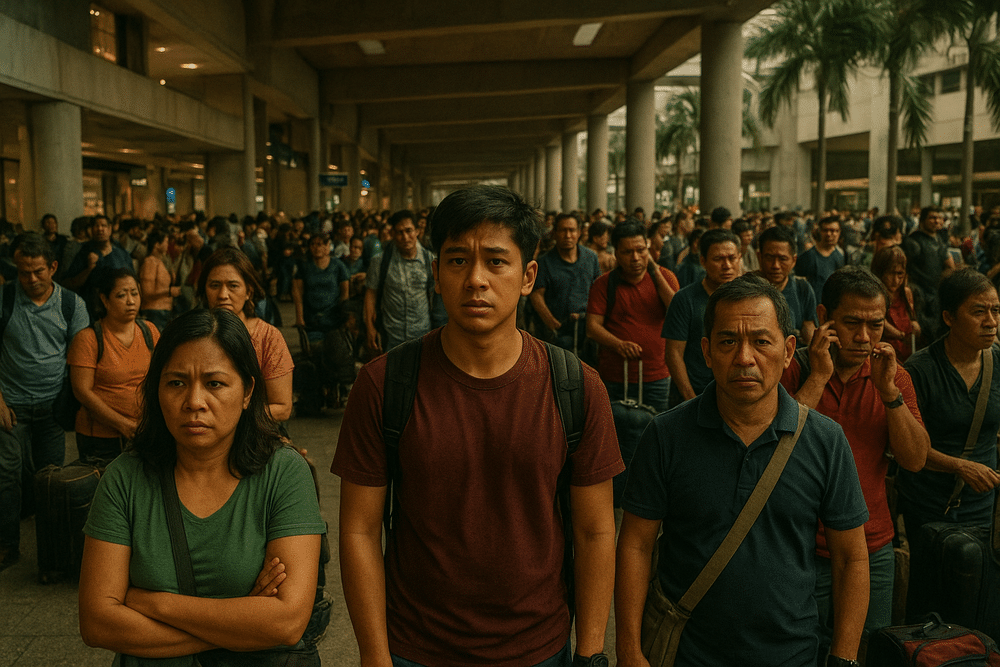
The Philippines has shifted thousands of government employees to a four-day work week starting March 9, 2026, as President Ferdinand Marcos Jr. moves to blunt the economic shock of soaring oil prices triggered by the escalating conflict involving Iran.
The temporary measure, ordered through Memorandum Circular No. 114, applies to selected executive branch offices and compresses the work schedule to 7 a.m. to 6 p.m., Monday through Thursday. Agencies providing emergency and essential services — including police, firefighters and frontline public offices — are exempt.
The move underscores how turbulence in the Middle East is rippling through energy-importing economies worldwide. For the Philippines, heavily dependent on imported fuel, rising oil prices have become both a fiscal and political pressure point.
A Contingency Measure Amid Rising Fuel Costs
Announcing the shift on March 7, Mr Marcos described it as a temporary response to fuel volatility tied to the Iran crisis.
“In our efforts starting Monday March , we temporarily adopt a four-day work week in certain executive branch offices. This does not apply to those engaged in emergency or essential services, including police, firefighters, and other frontline services,” the president said.
He also instructed “all government departments to cut electricity usage and fuel costs by 10 to 20 percent,” framing the workweek change as part of a broader energy-conservation campaign.
The directive remains in force “until lifted or revoked sooner by the president,” signalling that its lifespan depends in part on global oil markets.
How the New Schedule Works
Under the compressed arrangement, affected government employees will complete their weekly hours across four extended days. Offices will close on Fridays, except for those engaged in field, operational, or emergency duties.
The Metropolitan Manila Development Authority (MMDA), among the agencies implementing the shift, clarified that “[o]ffices engaged in essential, field, operational, or emergency response duties located outside the MMDA Main Building will not be part of Four-Day Week Scheme this Circular to ensure continuous service delivery to the public.”
Some logistical adjustments are already evident. MMDA shuttle services to remote areas including PIT Lawton, MCU and Fairview are suspended on Fridays, while core routes serving the main building remain operational from Monday to Thursday.
Pilot Data Points to Productivity Gains
The temporary policy coincides with separate pilot programs conducted earlier this year by the Department of Labor and Employment (DOLE) in Iloilo City and Davao City.
According to government data, those trials recorded:
15 percent increase in productivity
89 percent worker satisfaction
22 percent reduction in traffic in pilot areas
Estimated ₱2,000 in monthly fuel savings per employee
For ordinary Filipino workers, the appeal is tangible. Fewer commuting days mean lower fuel expenses and less time spent in traffic-clogged cities. A three-day weekend, proponents argue, offers space for family life and personal responsibilities often squeezed by long daily commutes.
Environmental advocates also point to reduced congestion and fuel use as an indirect benefit — a small but measurable cut in emissions in urban centres.
Temporary Order, Separate Legislative Debate
The current shift applies only to executive branch offices and is distinct from House Bill 4484, a proposal now under national debate that would institutionalise a permanent four-day workweek across sectors.
The bill envisions reorganising the standard 32 to 40-hour workweek into four days, maintaining pay protections and overtime safeguards. Expanded trials of the concept are planned for the fourth quarter of 2026.
Business groups have reacted cautiously to the broader proposal.
The Philippine Chamber of Commerce and Industry warned that any permanent change must be “evidence-based and considerate of sector-specific needs.” For manufacturing, it said, “we have been functioning with limited resources, and further reducing work days could jeopardize our commitments.”
Industries dependent on round-the-clock operations, including the business process outsourcing sector and call centres, have flagged potential disruption if a mandatory four-day model were introduced nationwide.
Private Sector: Watching and Waiting
For now, the president’s order does not compel private companies to follow suit. Firms may adopt alternative work arrangements under the Telecommuting Act of 2018 (Republic Act No. 11165), but participation remains voluntary.
That distinction means the immediate impact will be concentrated among government workers, while the private sector largely continues on existing schedules — at least until energy prices or legislative action force deeper adjustments.
A Global Crisis Felt at the Office Desk
The four-day work week in Manila and other government hubs is, at heart, a domestic response to a distant conflict. Yet it illustrates the fragile chain linking oil fields in the Middle East to office desks in Southeast Asia.
As oil prices climb, governments must find ways to cushion households without derailing public services. The Philippines has chosen, for now, to trim the workweek rather than trim wages — trading longer office hours for fewer commuting days.
Whether the measure proves a short-term bridge or a catalyst for lasting change will depend on forces far beyond the archipelago’s shores.