Philippines Faces Widespread Rain Amid Weak La Niña
Three weather systems—the northeast monsoon, a shear line, and the easterlies—are bringing rain across large swathes of the Philippines, shifting the country from January’s patchy dry spell in parts of Luzon to widespread above-normal rainfall in February, according to the Philippine Atmospheric, Geophysical and Astronomical Services Administration (PAGASA).
From February 1 to 22, 2026, 43 provinces recorded above-normal rainfall, reflecting a marked change from the previous month, when Northern Luzon experienced below to way-below normal precipitation. The evolving weather pattern, PAGASA said, remains consistent with weak La Niña conditions, with a 60 percent probability of transitioning to ENSO-neutral conditions between February and April.
A Confluence of Weather Systems
The country’s current rainfall is the result of several systems operating at once—each affecting different regions like overlapping brushstrokes on a map.
The northeast monsoon, or “amihan,” continues to influence Luzon, while a shear line—where cool and warm air masses meet—has brought persistent cloud cover and rain to central and eastern sections of Luzon. Meanwhile, the easterlies, or warm winds from the Pacific Ocean, are driving rain showers and thunderstorms across parts of Mindanao.
As of mid-February, PAGASA reported no active tropical cyclones within or outside the Philippine Area of Responsibility (PAR). “There is still no tropical cyclone or low-pressure area being monitored inside or outside the Philippine Area of Responsibility,” PAGASA weather specialist Chenel Dominguez said during a February 11 briefing.
Still, recent weeks have not been without storm activity. Tropical Storm Ada (January 14–21) and Tropical Storm Basyang (February 3–7) both entered PAR, affecting Northern Luzon and Mindanao during their passage.
Where the Rains Are Falling
The rainfall has not been evenly distributed.
- 43 provinces recorded above-normal rainfall from February 1–22.
- 20 provinces saw near-normal rainfall.
- 11 provinces experienced below-normal rainfall.
- 11 provinces had way below-normal rainfall.
In Northern Luzon, including Cagayan, Isabela, Aurora, Quezon and Camarines Norte, the amihan has brought cloudy skies with moderate to heavy rains. “A surge of the amihan is also expected,” Dominguez said, warning of intensified rainfall episodes.
On Valentine’s Day, PAGASA weather expert Loriedin de la Cruz-Galicia underscored the impact of the shear line. “The shear line, which is the meeting point of warm and cool air masses, will lead to cloudy conditions with a high likelihood of rain” over several Luzon provinces, she said.
Further south, Caraga and the Davao Region have experienced cloudy skies with scattered moderate to heavy rains and thunderstorms due to the easterlies. Despite the unsettled weather, de la Cruz-Galicia noted that no gale warnings were in effect and no low-pressure system was expected to enter PAR in the days immediately following the briefing.
From Dry Spell to Saturation
The February totals mark a sharp pivot from January’s rainfall distribution. Last month:
- 34 provinces recorded above-normal rainfall.
- 11 provinces saw near-normal rainfall.
- 25 provinces experienced below-normal rainfall.
- 15 provinces had way below-normal rainfall, particularly in Northern Luzon.
The turnaround underscores the volatility of the country’s monsoon-driven climate. While no extreme temperature records were broken during the January–February period, the redistribution of rainfall has implications for agriculture, infrastructure and daily life.
Risks to Farms, Roads and Coastal Waters
In agricultural provinces such as Cagayan Valley and parts of Mindanao, prolonged above-normal rainfall raises the risk of waterlogged rice fields and damaged vegetable crops. Low-lying farms are particularly vulnerable to standing water, which can suppress yields and disrupt planting cycles.
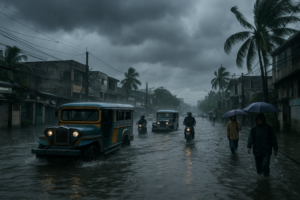
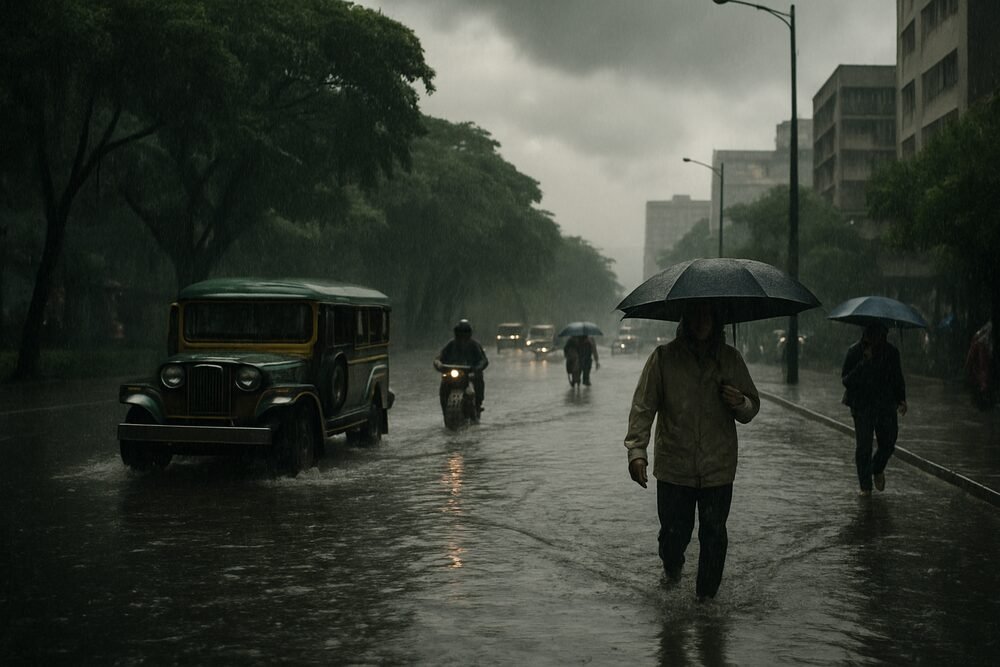
Urban centres, including Metro Manila and provincial capitals, face familiar challenges during sustained rainfall: flooded roadways, traffic gridlock and transport disruptions. Informal settlements in flood-prone barangays are especially exposed, as limited drainage infrastructure leaves homes susceptible to rapid inundation.
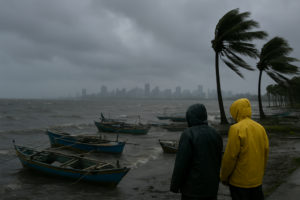
In coastal and fishing communities, the easterlies can produce rougher sea conditions, restricting small fishing vessels from venturing offshore and cutting into daily incomes.
Public health officials also remain alert. Water accumulation increases the risk of mosquito breeding and waterborne illnesses, particularly in densely populated areas.
Climate Context and Outlook
PAGASA links the current conditions to weak La Niña, which typically enhances rainfall in parts of the country. However, climate models indicate a 60 percent likelihood of a shift to ENSO-neutral conditions between February and April 2026, suggesting that the heightened rainfall pattern may ease in the coming months.
For now, the combination of monsoon winds, colliding air masses and Pacific moisture continues to shape daily forecasts across the archipelago. In a nation where weather dictates harvests, school schedules and the rhythm of commuter traffic, even the absence of a typhoon does not mean calm skies—only a different kind of rain.