MANILA — Warm winds sweeping in from the Pacific are expected to bring isolated rain showers and thunderstorms across the Philippines in the coming days, as the weather bureau says the easterlies remain the dominant weather system nationwide. While the northeast monsoon, or amihan, may briefly reassert itself over parts of Luzon, forecasters stress that overall conditions will remain manageable, with no tropical cyclones and no gale warnings in effect.
The Philippine Atmospheric, Geophysical and Astronomical Services Administration (PAGASA) reported on Sunday that most areas will experience partly cloudy to cloudy skies, punctuated by short-lived downpours, especially in the afternoons and evenings.
Warm, Humid Days Ahead
“Warm and humid conditions are expected to prevail across the Philippines as the easterlies… continue to be the dominant weather system,” PAGASA specialist Chenel Dominguez said in a Feb. 25 briefing.
Dominguez noted that rainfall will generally be localized and brief. “Hanggang hapon na kung may mga pag-ulan man ay ito po ay isolated rain showers o kaya mga localized thunderstorm lalo na sa hapon at sa gabi,” she said, explaining that most showers are expected later in the day.
Forecast temperatures from Feb. 26 to March 1 underscore the seasonal warmth:
- Baguio City: 15–25°C
- Laoag City: 23–31°C
- Metro Manila: 22–30°C
- Tagaytay City: 20–29°C
- Puerto Princesa City: 25–31°C
- Bacolod City: 24–31°C
- Metro Cebu: 24–32°C
- Iloilo City: 23–31°C
- Metro Davao: 24–32°C
- Valencia City: 23–32°C
- Zamboanga City: 24–34°C
Humidity is likely to intensify the heat, particularly in urban centers where concrete and traffic trap warmth long after sunset.
No Storms on the Horizon
As of Sunday, PAGASA reported no low-pressure areas or tropical cyclones within the Philippine Area of Responsibility. That absence offers a measure of stability as the country transitions toward the hotter months.
Meteorologist Veronica Torres said conditions remain broadly favorable. “We are also observing… favorable weather conditions throughout Luzon, including Metro Manila, where localized thunderstorms are the only concern,” she said in a March 1 update.
Winds across the archipelago will be light to moderate from the east to northeast, with coastal waters remaining slight to moderate. Only the northern seaboards of Luzon may see moderate to rough conditions. Importantly, authorities have issued no gale warnings, allowing fishing and inter-island travel to continue uninterrupted.
Amihan’s Possible Return
The amihan, which earlier brought cooler air to parts of Luzon and the Visayas in mid-February, may make a limited return over the weekend. Forecasters say any resurgence will be milder than previous episodes, potentially bringing cooler mornings in northern Luzon but not drastically altering the broader weather pattern.
Since late December, weather systems have alternated between the shear line, easterlies and monsoon winds. By Feb. 25, PAGASA confirmed that the easterlies had regained dominance — a pattern that typically signals the gradual pivot from cool-season breezes to pre-summer heat.
Daily Life Under Scattered Showers
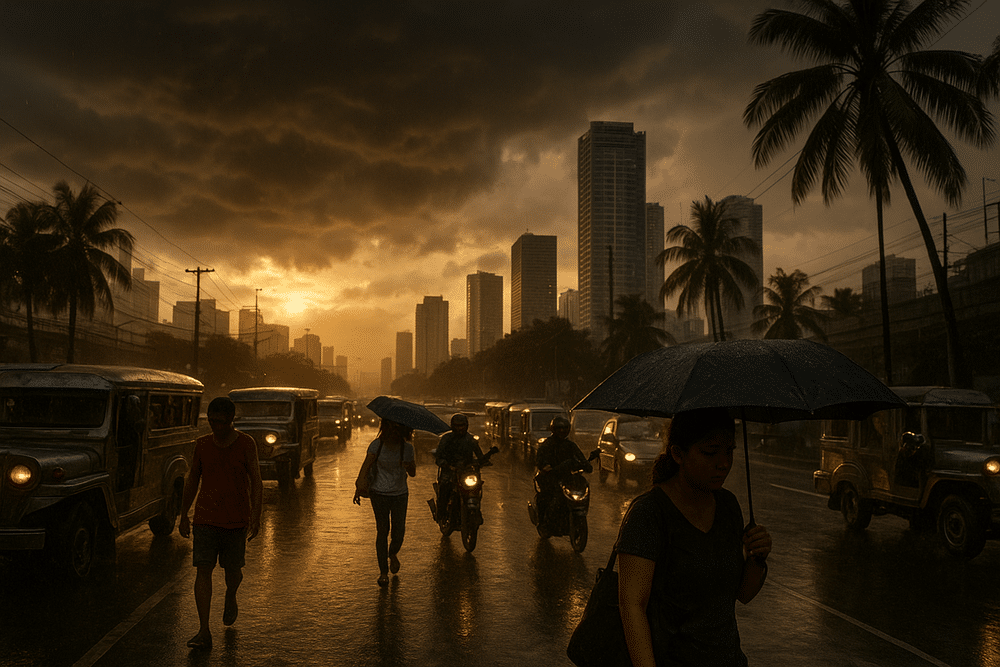
Though less dramatic than a typhoon, isolated thunderstorms can still disrupt daily routines. Sudden downpours flood low-lying barangays, snarl afternoon traffic in Metro Manila and delay jeepney and tricycle services. In upland areas such as Baguio and Tagaytay, localized storms raise the risk of minor landslides.
Farmers in parts of the Visayas and Mindanao are watching the humidity closely. Intermittent rains can nourish crops but also create conditions for pests and disease if prolonged. Meanwhile, fisherfolk stand to benefit from calm seas, sustaining their livelihoods without restrictions.
The conditions also arrive as many Catholic communities begin preparations for Lent. Outdoor processions and religious gatherings may proceed without major weather threats, though organizers remain alert to sudden cloudbursts.
Preparedness Still Required
Under the Philippine Disaster Risk Reduction and Management Act of 2010 (Republic Act No. 10121), local governments are required to respond promptly to weather advisories and prepare for hazards such as flash floods and landslides — even from localized thunderstorms.
For now, officials emphasize vigilance rather than alarm. The easterlies may lack the destructive force of a cyclone, but like a slow-turning faucet, they can release bursts of rain with little warning.
As March begins, the forecast points to a familiar rhythm: sunny, humid mornings giving way to clouds by late afternoon. For millions of Filipinos, it is a reminder that in a tropical nation, even an ordinary weather day carries the possibility of sudden rain.