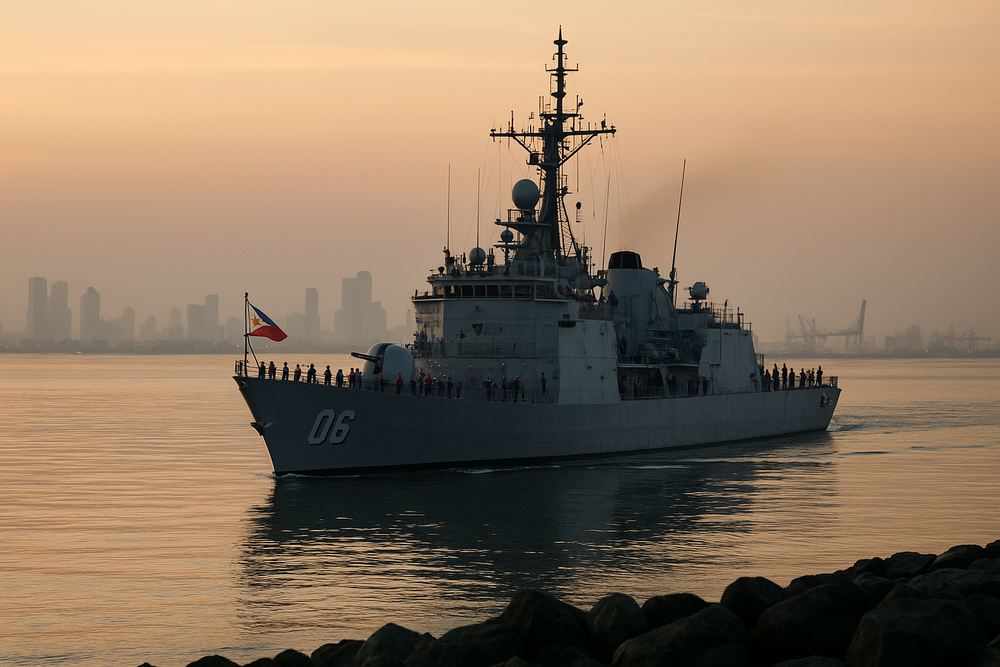
The Philippine Navy will sail into the Bay of Bengal this month as part of a major show of international maritime cooperation, joining for the first time India’s International Fleet Review (IFR) and the accompanying Multilateral Naval Exercise MILAN 2026. The deployment, led by the guided-missile frigate BRP Miguel Malvar (FFG‑06), marks a significant step in Manila’s effort to project a modern and outward-looking naval force across the Indo‑Pacific.
Held in the eastern Indian port city of Visakhapatnam from February 15 to 25, the high‑profile naval gathering brings together warships, aircraft and maritime leaders from 23 nations. For the Philippines, officials say, the mission signals both growing operational confidence and a deepening strategic relationship with India.
A First for the Philippine Navy on the Indian Stage
The Philippine Navy confirmed that BRP Miguel Malvar departed home waters on February 5, carrying more than 100 personnel including medical staff. It is the service’s first participation in an Indian-hosted international fleet review — a ceremonial yet strategically loaded event showcasing naval power and cooperation.
The main spectacle, set for February 18, will see India’s president review dozens of foreign and Indian warships assembled off Visakhapatnam, the headquarters of the Indian Navy’s Eastern Naval Command. The review will be followed immediately by MILAN 2026, a week‑long series of sea and shore-based exercises.
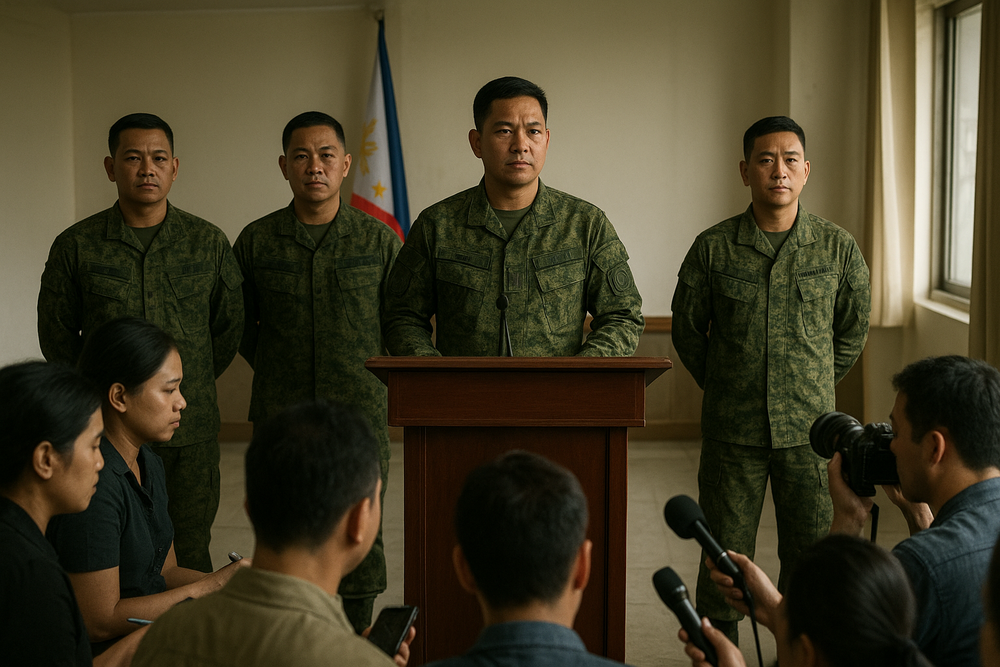
“The first activity would be the International Fleet Review, to be followed immediately by the multinational exercise,” Philippine Navy spokesperson Capt. Marissa Martinez said in a briefing. “The multinational exercise is composed of several events that includes patrols, includes HADR activities, and also other activities to surface warfare.”
Showcasing a Modern Frigate and Long-Range Reach
At the heart of the Philippine contingent is the 3,200‑ton Miguel Malvar‑class frigate, among the most capable surface combatants in the Navy’s inventory. Designed for anti‑ship, anti‑submarine and anti‑air warfare, the ship represents the technological backbone of the Navy’s modernization drive.
Its presence in Indian waters — thousands of nautical miles from the Philippine archipelago — is being touted as proof of the fleet’s growing endurance.
“We know for a fact that India is very far,” Capt. Martinez said. “So, it just proves the capability of our ships… its capability to go across that area.”
Beyond hardware, officers view the mission as an investment in people. The exercises will test crews in complex, multinational environments, from coordinated patrols to search-and-rescue drills — training scenarios likened by planners to a maritime chessboard, where every move depends on trust, timing, and communication.
MILAN 2026: Drills Amid a Crowded Indo‑Pacific
The MILAN exercises, running from February 19 to 26, will focus on anti-submarine warfare, air defense, maritime domain awareness, surface warfare, and humanitarian assistance and disaster response (HADR). Participating navies include those of Australia, France, Japan, the United Kingdom, the United States, Vietnam and South Africa, among others.
India, the host nation, plans to deploy at least 90 ships and 45 aircraft, underscoring its ambition to position itself as a central security partner in the Indo‑Pacific. The event aligns with New Delhi’s Act East Policy, which aims to strengthen political, economic and military ties with Southeast Asia.
For Manila, regular engagement with India complements existing maritime cooperation, particularly as both countries navigate an increasingly contested regional seascape.
Vision 2040 and the Quiet Domestic Impact
The deployment feeds directly into the Philippine Navy’s long‑term blueprint known as Vision 2040, which seeks to build a modern, multidomain, self‑reliant naval force capable of working seamlessly with partners.
“Because of that vision, your navy has several initiatives in order to not only develop its platforms on warfare but also be involved in the conduct of exercises, maritime cooperative activities,” Capt. Martinez said. “And one of this is the exercise in India.”
For most Filipinos, the mission will unfold far from daily life, with no immediate impact on domestic security or commerce. Yet defense analysts note that the long-term dividends — enhanced readiness, stronger partnerships, and improved disaster-response skills — could ripple back home, particularly for coastal communities vulnerable to typhoons and maritime emergencies.
As the BRP Miguel Malvar takes its place among fleets from across the globe, the message is clear: the Philippine Navy is intent on being seen not just as a guardian of national waters, but as an active, credible partner in shaping the region’s maritime future.