The Philippine Coast Guard (PCG) has intensified search-and-rescue operations in the West Philippine Sea for four missing Filipino seafarers after the Singapore-flagged cargo vessel M/V Devon Bay capsized while en route to China. The vessel, carrying iron ore and crewed entirely by Filipinos, went down within the Philippine Exclusive Economic Zone (EEZ), underscoring both the human toll of maritime accidents and the geopolitical complexity of rescue efforts in disputed waters.
Vessel Capsizes in Rough Seas Off Pangasinan
According to official reports, the 56,000-deadweight-ton dry bulk carrier began listing at a steep 25-degree angle on the night of Thursday, Jan. 22, after departing Gutalac, Zamboanga del Norte, bound for ports in southern China. A distress alert placed the ship’s last known position about 141 nautical miles west of Sabangan Point, Pangasinan, squarely within waters claimed by the Philippines.
The distress signal was first relayed by the vessel’s operator, K Line Roro Bulk Ship Management Co. Ltd., prompting swift notification of maritime authorities. Built in 2013 and measuring nearly 190 metres in length, the Devon Bay was owned by a Singapore subsidiary of Japan’s Kawasaki Kisen Kaisha (“K” Line).
Seventeen Rescued, Four Still Missing
Of the 21 Filipino crew members on board, 17 were rescued by the China Coast Guard (CCG) following a large-scale maritime rescue launched early Friday morning. The Chinese Embassy in Manila said 14 survivors are in stable condition, while two crew members were confirmed dead and one remains under emergency medical care.
The fate of the remaining four crew members remains unknown.
PCG Deploys Ships and Aircraft for Continuing Search
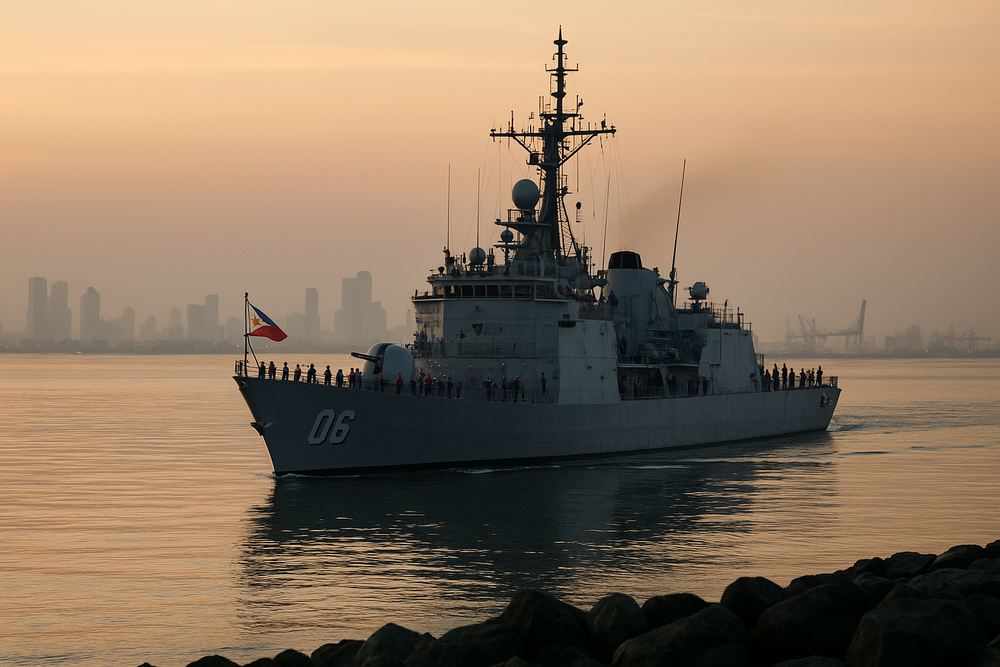
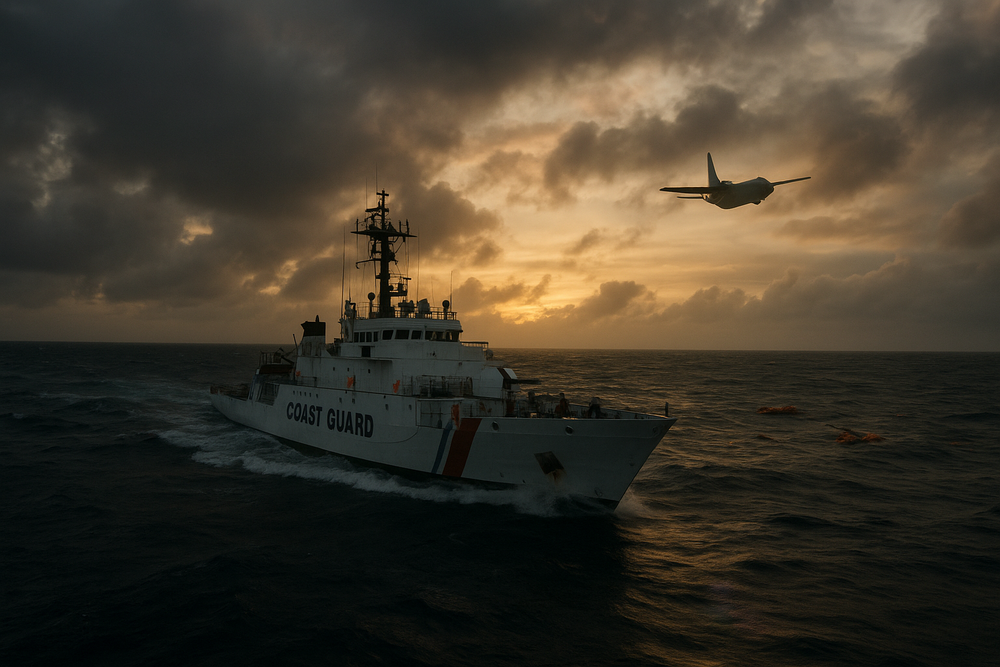
The PCG has taken the lead in searching for the missing seafarers, deploying the offshore patrol vessels BRP Teresa Magbanua (MRRV-9701) and BRP Cape San Agustin (MRRV-4408), along with fixed-wing surveillance aircraft. Search flights resumed at 7:20 a.m. on Saturday, sweeping wide sectors of sea where currents could have carried survivors.
During an aerial survey, PCG crews reported an oil sheen on the water’s surface—an environmental marker that also serves as a silent trace of the vessel’s final moments.
From the bridge of the BRP Teresa Magbanua, the Coast Guard issued radio calls urging nearby vessels to assist. “All vessels transiting in the area are requested to proceed with caution, maintain a sharp lookout and render assistance as necessary,” a PCG radio operator said.
Rescue in Disputed Waters Tests International Coordination
The incident occurred near Scarborough Shoal—known in China as Huangyan Dao—a long-standing flashpoint in the South China Sea. China has said the vessel went down about 55 nautical miles northwest of Huangyan Dao, while Philippine authorities place the site firmly within the country’s EEZ.
Despite competing territorial claims, both sides have pointed to international maritime law as the governing framework. Under the United Nations Convention on the Law of the Sea (UNCLOS), states are obliged to render assistance to anyone in distress at sea, regardless of jurisdiction.
The PCG confirmed it is coordinating through established communication channels with Chinese authorities and commercial ships passing through the area.
Families Await Answers as Search Continues
For the families of the missing crew, scattered across coastal towns and rural communities in the Philippines, the wait has stretched into an anxious vigil. Filipino seafarers form the backbone of the global shipping industry, and their remittances sustain millions of households—making every loss at sea ripple far beyond the horizon.
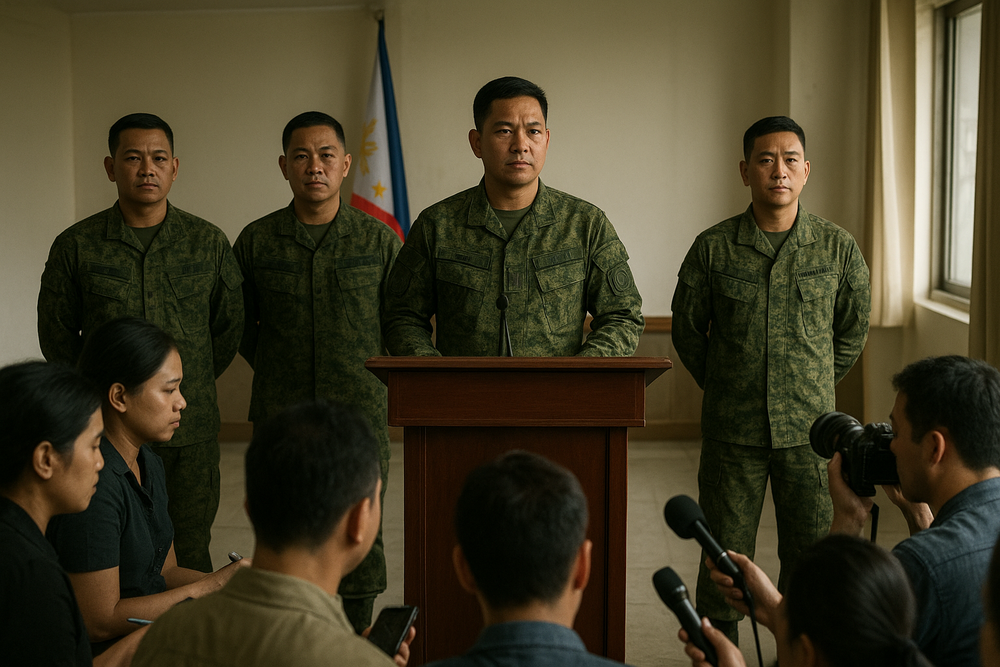
In a statement, PCG spokesperson Capt. Noemie Cayabyab said the agency remains focused on the search. “The Coast Guard continues to closely monitor the situation and remains fully committed to ensuring the safety of the remaining crew members.”
As daylight fades and search grids expand, the operation has become a race against time—an effort to find four lives adrift in a vast expanse of sea, where the boundaries on maps matter far less than the human stakes involved.